
The House in White

An Iceberg House. A minimalist villa in Poland
The House in White, designed by Polish UCEES studio, combines modern form with environmentally-friendly solutions and exceptional attention to detail.
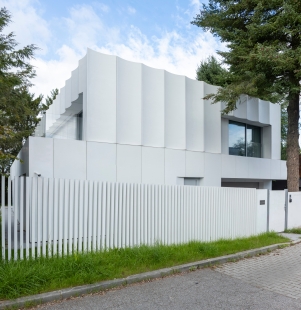
The building takes its name from its white walls and fences. It is located in Wola Justowska, the most prestigious residential district of Krakow. The district is widely known as Krakow's Beverly Hills – a luxurious neighborhood in LA, home to the rich and famous.
The former village near Krakow owes its popularity mostly to its location: it's close to the center while remaining green – a rare combination in big city agglomerations. It's also situated next to the largest woodland park in the Krakow area, the Zoo, and Piłsudski's Mound.
From the very beginning, the architects focused on the typical urban villa as the appropriate form for the house. The flat roof building, situated on a small plot and surrounded by greenery, was meant to draw attention and provoke thought. Rather than competing with the surrounding architecture, it was designed to show respect for the nearby modernist villa.
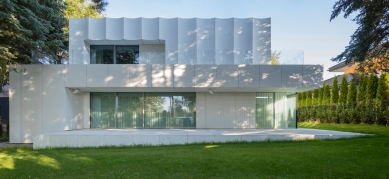
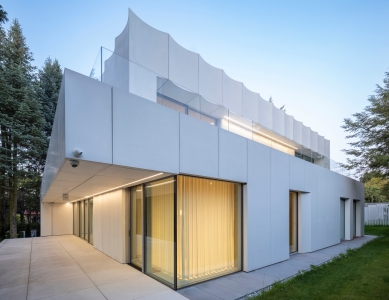
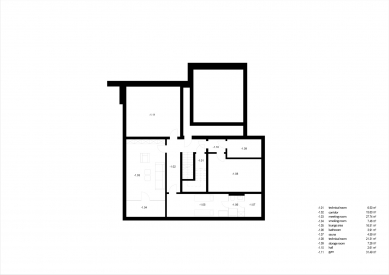
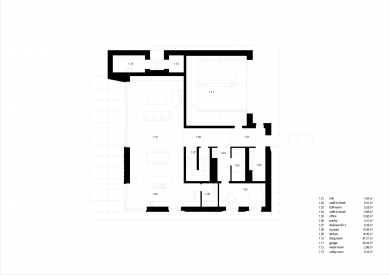
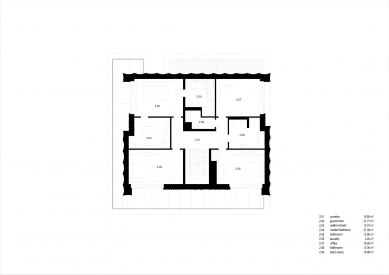
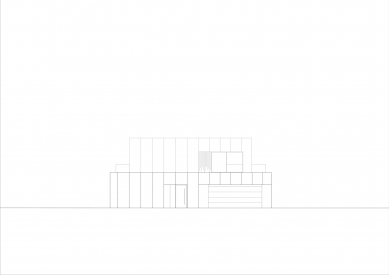
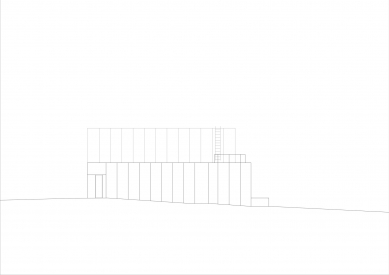
The architects designed the building on an almost square plan. The compact, uniform white cube was designed with shape and texture as the only tools.
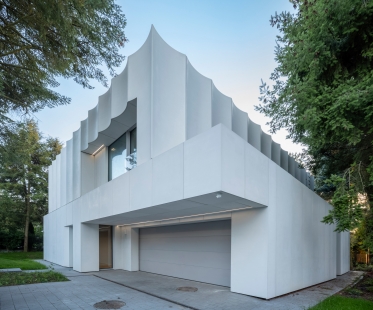
The primary construction material was concrete. White cement was used to form 3D fiberglass-reinforced panels that cover the building's façade from base to roof. They enabled a modern and dynamic architectural expression to be created that stands out against the surrounding buildings.
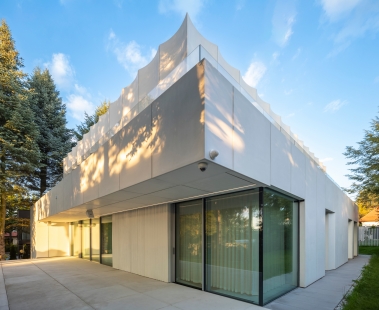
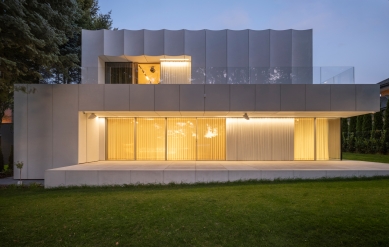
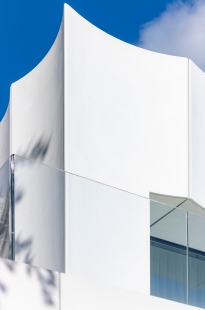
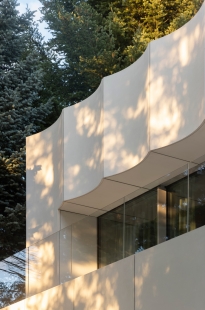
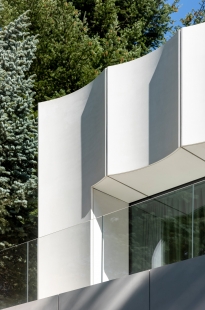
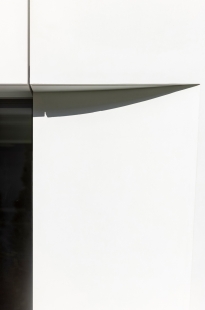
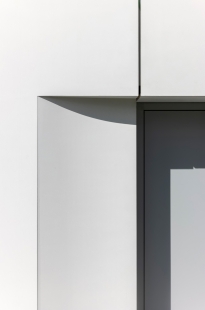
The house was designed to impress from first contact, but more importantly, to maintain that impression over time. Its architectural form was shaped through the process of "chiseling away" the cube's layers. Thus, the diminished upper floor was created along with sculpted, concave lens-shaped forms, recessed ground-floor terraces, windows and meticulously "milled" concrete façade details.
Concrete slabs create a complete whole like a jigsaw puzzle across the façade. That's why no metalwork was included in the design: there are no sills, cornices or overhangs made from materials other than concrete. The only exception is glass in the windows and a transparent, nearly invisible balustrade upstairs.
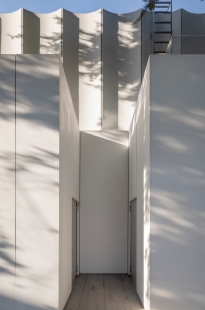
The final expression of the House in White's character results from critical attention to detail. Each connection point of the façade elements, the flat and 3D slabs and their integration with the window and door joinery, was the result of deliberate reflection and precise design.
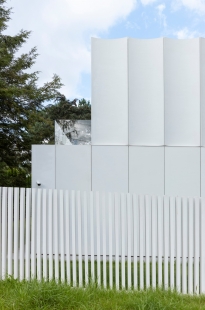
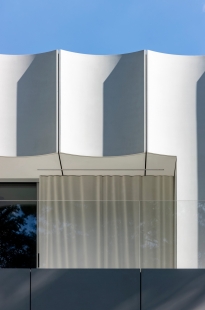
This detail is present throughout the entire height of the building. It appears in the recesses in the form of rounded attics, the sudden but rhythmic breaking of the façade lines and the flooring and outline of the terraces. It also extends beyond the building's form itself – through the vertical fence poles and the smooth, uniform lining of the main gate and gateway.
The subtlety of the solutions means their full expression can only be perceived from close range. Precision of execution and architectural rigor give the building both a refined and minimalist character.
All planned spatial solutions, cascading gradually in both the building's projection and height, bestow a distinctive theatrical quality upon the structure. They underscore the dialogue between the open form facing the garden and the more closed, monolithic expression on the opposite side. While the protruding awnings, supports and differentiated façade texture have been designed to create dynamic form while minimizing light reflection to protect the local fauna.
The designers of the House in White put significant emphasis on green solutions. The material for the GRC panels covering the façade was based on TioCem cement, which removes nitrogen oxides from polluted air. This is a groundbreaking technology, and the House in White serves as a proving ground for facade concretes with anti-smog properties in single-family housing.
The building's placement on the plot allowed all existing trees to be preserved, making them an undeniable asset to the site. Environmental stewardship is also demonstrated through the use of ventilation systems with heat recovery, photovoltaic panels, rainwater collection systems and green terraces.
The House in White, designed by Polish UCEES studio, combines modern form with environmentally-friendly solutions and exceptional attention to detail.
The building takes its name from its white walls and fences. It is located in Wola Justowska, the most prestigious residential district of Krakow. The district is widely known as Krakow's Beverly Hills – a luxurious neighborhood in LA, home to the rich and famous.
The former village near Krakow owes its popularity mostly to its location: it's close to the center while remaining green – a rare combination in big city agglomerations. It's also situated next to the largest woodland park in the Krakow area, the Zoo, and Piłsudski's Mound.
From the very beginning, the architects focused on the typical urban villa as the appropriate form for the house. The flat roof building, situated on a small plot and surrounded by greenery, was meant to draw attention and provoke thought. Rather than competing with the surrounding architecture, it was designed to show respect for the nearby modernist villa.
The architects designed the building on an almost square plan. The compact, uniform white cube was designed with shape and texture as the only tools.
The primary construction material was concrete. White cement was used to form 3D fiberglass-reinforced panels that cover the building's façade from base to roof. They enabled a modern and dynamic architectural expression to be created that stands out against the surrounding buildings.
The house was designed to impress from first contact, but more importantly, to maintain that impression over time. Its architectural form was shaped through the process of "chiseling away" the cube's layers. Thus, the diminished upper floor was created along with sculpted, concave lens-shaped forms, recessed ground-floor terraces, windows and meticulously "milled" concrete façade details.
Concrete slabs create a complete whole like a jigsaw puzzle across the façade. That's why no metalwork was included in the design: there are no sills, cornices or overhangs made from materials other than concrete. The only exception is glass in the windows and a transparent, nearly invisible balustrade upstairs.
The final expression of the House in White's character results from critical attention to detail. Each connection point of the façade elements, the flat and 3D slabs and their integration with the window and door joinery, was the result of deliberate reflection and precise design.
This detail is present throughout the entire height of the building. It appears in the recesses in the form of rounded attics, the sudden but rhythmic breaking of the façade lines and the flooring and outline of the terraces. It also extends beyond the building's form itself – through the vertical fence poles and the smooth, uniform lining of the main gate and gateway.
The subtlety of the solutions means their full expression can only be perceived from close range. Precision of execution and architectural rigor give the building both a refined and minimalist character.
All planned spatial solutions, cascading gradually in both the building's projection and height, bestow a distinctive theatrical quality upon the structure. They underscore the dialogue between the open form facing the garden and the more closed, monolithic expression on the opposite side. While the protruding awnings, supports and differentiated façade texture have been designed to create dynamic form while minimizing light reflection to protect the local fauna.
The designers of the House in White put significant emphasis on green solutions. The material for the GRC panels covering the façade was based on TioCem cement, which removes nitrogen oxides from polluted air. This is a groundbreaking technology, and the House in White serves as a proving ground for facade concretes with anti-smog properties in single-family housing.
The building's placement on the plot allowed all existing trees to be preserved, making them an undeniable asset to the site. Environmental stewardship is also demonstrated through the use of ventilation systems with heat recovery, photovoltaic panels, rainwater collection systems and green terraces.
UCEES studio













0 comments
add comment