
Carl Orff Museum

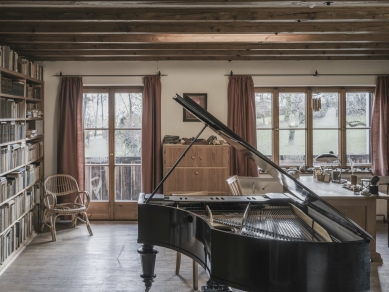
In Dießen am Ammersee there is a museum dedicated to the life and work of the composer and music educator Carl Orff – the listed property was Orff’s last place of residence and work. The historical buildings were carefully renovated to preserve their original character; at the same time, the new spaces continue the history of the site.
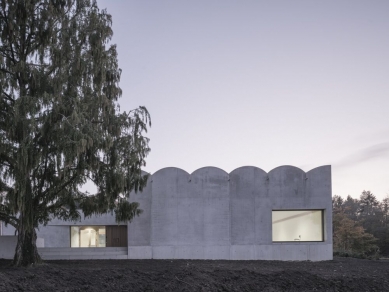
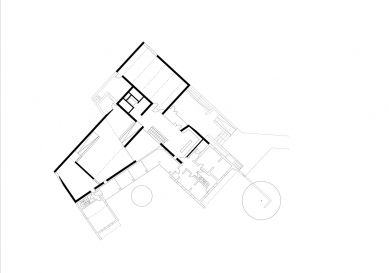
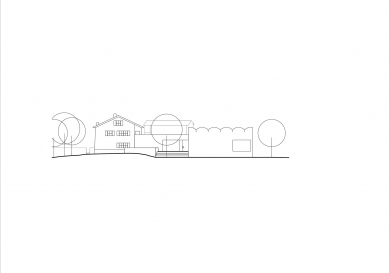
The extension building, made of highly thermally insulated infralightweight concrete, integrates respectfully into the historical complex. Together with the existing buildings, the pergola, and the vibrant landscape park, a harmonious ensemble is created, which is balanced in its height development and allows visitors a barrier-free tour.
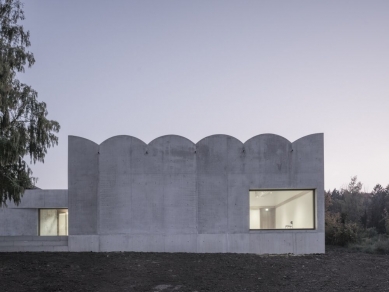
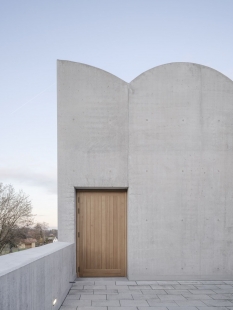
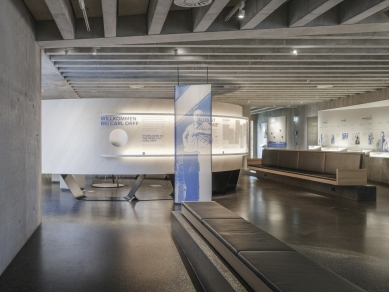
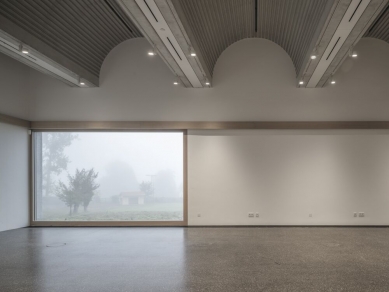
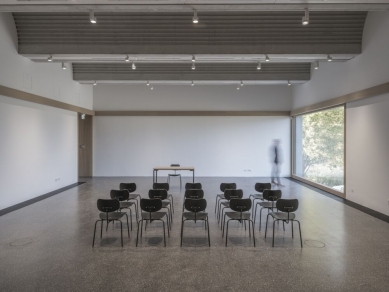
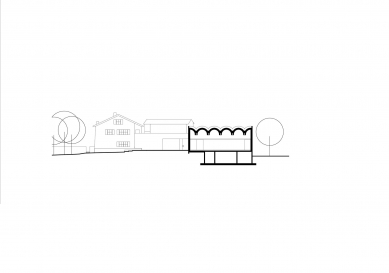
With the quiet rhythm of its barrel vaults, the high hall for temporary exhibitions and events defines the address of the new museum. The foyer serves as a central distribution space: through targeted visual and spatial references, it connects the residential house and the new exhibition areas with each other. The work house is also included in the tour via the permanent exhibition.
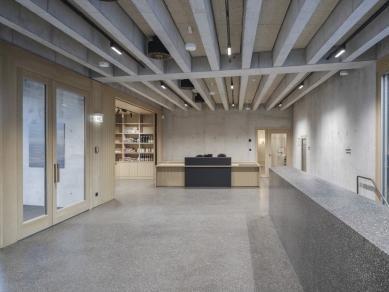
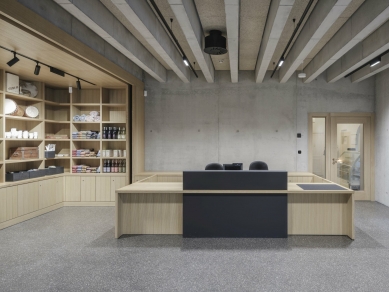
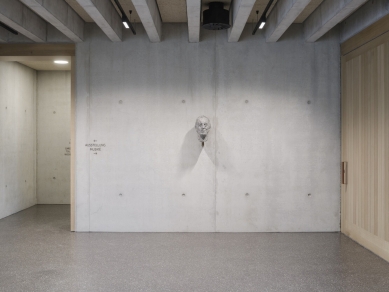
In the exhibition rooms, openings frame the view of the park and Lake Ammersee. In the extension building, Carl Orff’s idea of elemental music is reflected in an architecture reduced to the essentials and conceived holistically: proportion, light, material, and jointing form a unity whose effect is sensually tangible and of timeless, universal validity. This reduction creates spaces of great intensity. The monolithic construction of infralightweight concrete gives them a clear order and a concentrated atmosphere that directs the focus entirely to the experience of the exhibition. Like a stage, the architecture places the space in the service of the staging. The concrete rib constructions quote the wooden beam ceilings of the existing building and span wide, column-free spaces that can be flexibly utilized.
The climate-stable, massive construction also allows for a reduction in building services. This creates an overall image of powerful, precisely designed simplicity: in addition to the raw concrete, built-in elements made of oak and a floor of polished mastic asphalt define the interior image. Only the high hall is accentuated within the sequence of rooms by its white finish.
The extension building, made of highly thermally insulated infralightweight concrete, integrates respectfully into the historical complex. Together with the existing buildings, the pergola, and the vibrant landscape park, a harmonious ensemble is created, which is balanced in its height development and allows visitors a barrier-free tour.
With the quiet rhythm of its barrel vaults, the high hall for temporary exhibitions and events defines the address of the new museum. The foyer serves as a central distribution space: through targeted visual and spatial references, it connects the residential house and the new exhibition areas with each other. The work house is also included in the tour via the permanent exhibition.
In the exhibition rooms, openings frame the view of the park and Lake Ammersee. In the extension building, Carl Orff’s idea of elemental music is reflected in an architecture reduced to the essentials and conceived holistically: proportion, light, material, and jointing form a unity whose effect is sensually tangible and of timeless, universal validity. This reduction creates spaces of great intensity. The monolithic construction of infralightweight concrete gives them a clear order and a concentrated atmosphere that directs the focus entirely to the experience of the exhibition. Like a stage, the architecture places the space in the service of the staging. The concrete rib constructions quote the wooden beam ceilings of the existing building and span wide, column-free spaces that can be flexibly utilized.
The climate-stable, massive construction also allows for a reduction in building services. This creates an overall image of powerful, precisely designed simplicity: in addition to the raw concrete, built-in elements made of oak and a floor of polished mastic asphalt define the interior image. Only the high hall is accentuated within the sequence of rooms by its white finish.
meck architekten






0 comments
add comment