
KOTINI
[ from Finnish "KOTI" home and "-NI" my; KOTINI = my home ]

The Story of the Building
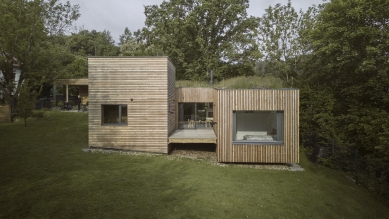
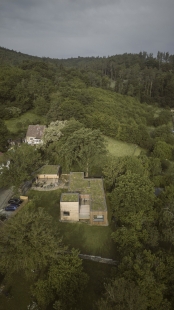
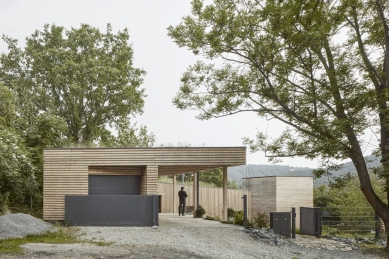
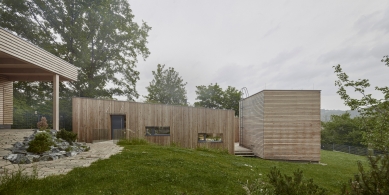
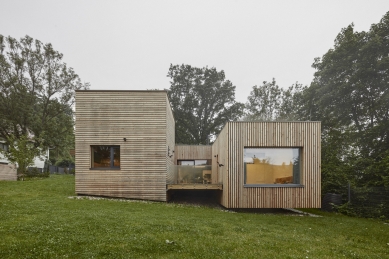
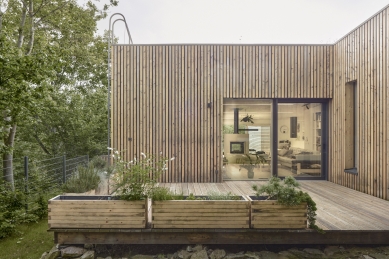
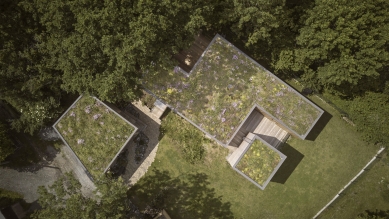
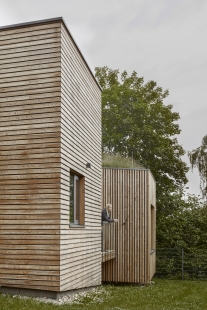
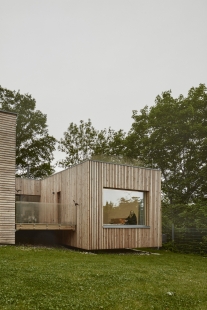
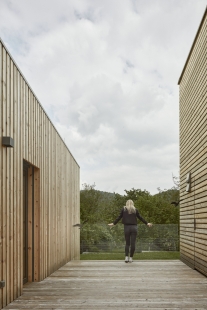
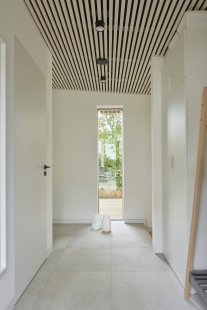
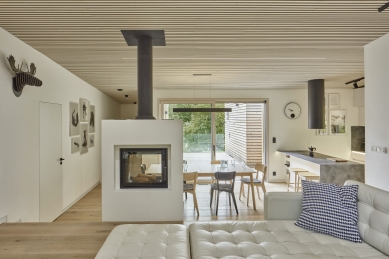
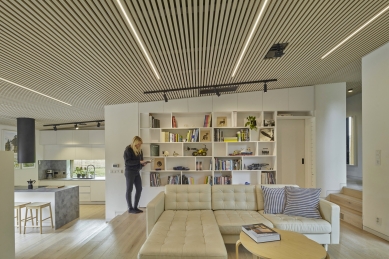
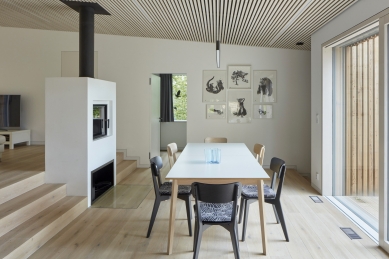
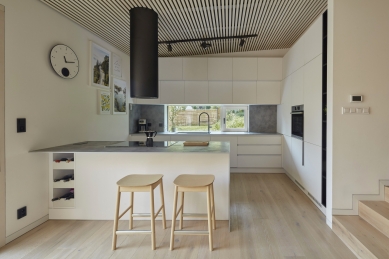
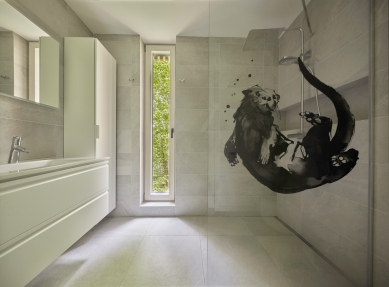
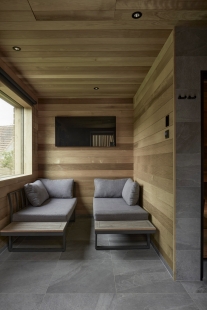
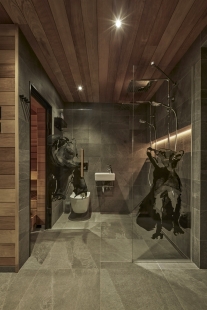
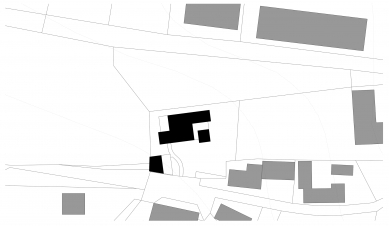
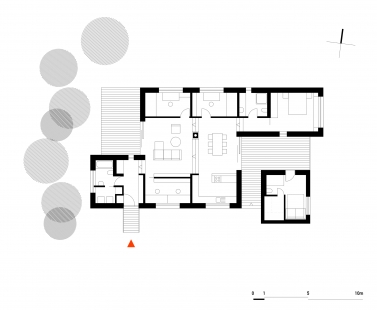
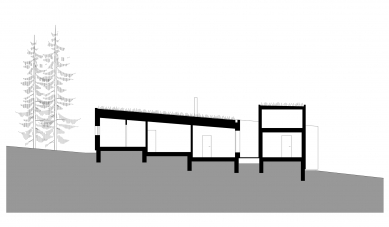
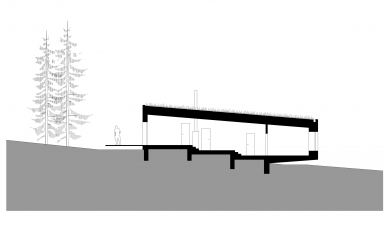
Vlaďka and Martin dreamed of a house for weekend getaways away from the bustling metropolis. The plot of land they acquired through family was hidden in greenery, not far from the forest, and bordered by mature deciduous trees. From the first concept, we aimed to minimize interventions in the site and align with the surrounding nature. What we took from the land, we moved one level up to the roofs, where intensive greenery thrives. The roof helps maintain biodiversity and visually allows the building to blend in with its surroundings. The wooden facade will age naturally, gaining a fine silver patina, making the house almost invisible. It is part of the forest. The sloped terrain dictated the logic of the entire design. We designed three solitary masses on the plot. At its highest point, where the entrance is, there sits a garage with a covered carport. The main house is set lower, further from the road. Its ground-level mass follows the terrain of the plot. This rhythm of different levels creates a variable spatial composition. Inside the house, there are four height levels connected by leveling stairs. The entrance to the house features a vestibule, a living space with a study, a dining area with a kitchen and fireplace, and at the lowest level, a bedroom with a "window seat" that levitates above the terrain. The living area and dining room connect to outdoor wooden terraces. The entire composition culminates in a vertical mass, a tower, housing a Finnish sauna with a cooling area. It can be used independently of the main house and offers a cozy space for guests. Bears, otters, foxes, and artworks by Finnish artist Teemu Järvi complement the Nordic interior. The challenging access to the land also defined the construction of the house, which was built using a nailed wooden structure from KVH spruce profiles. The house is primarily heated by an air-to-water heat pump, with secondary heating from a wood-burning fireplace. Air exchange is ensured by central heat recovery. The sloping roof is covered with intensive greenery with irrigation.
Sustainability of Architecture
The design is based on respect for the site and the minimization of interventions in the landscape. The house responds to the sloped terrain, preserves the character of the plot and the existing greenery, and naturally blends with its surroundings. The vegetation removed during construction is compensated by an intensive green roof, which supports biodiversity and improves the microclimate. The wood used in the construction is sourced from certified origins without chemical impregnation, making it one of the most environmentally friendly building materials. It is a natural, renewable resource with a low carbon footprint, capable of long-term CO2 binding. The structural system made of spruce KVH profiles represents an efficient and eco-friendly method of construction, and the natural wood facade is designed without surface treatments, emphasizing natural aging and minimal maintenance requirements. The thermal technical parameters of the building approach those required for a passive house. Heating is provided by an air-to-water heat pump and air exchange by central heat recovery, keeping operating costs low.
Vlaďka and Martin dreamed of a house for weekend getaways away from the bustling metropolis. The plot of land they acquired through family was hidden in greenery, not far from the forest, and bordered by mature deciduous trees. From the first concept, we aimed to minimize interventions in the site and align with the surrounding nature. What we took from the land, we moved one level up to the roofs, where intensive greenery thrives. The roof helps maintain biodiversity and visually allows the building to blend in with its surroundings. The wooden facade will age naturally, gaining a fine silver patina, making the house almost invisible. It is part of the forest. The sloped terrain dictated the logic of the entire design. We designed three solitary masses on the plot. At its highest point, where the entrance is, there sits a garage with a covered carport. The main house is set lower, further from the road. Its ground-level mass follows the terrain of the plot. This rhythm of different levels creates a variable spatial composition. Inside the house, there are four height levels connected by leveling stairs. The entrance to the house features a vestibule, a living space with a study, a dining area with a kitchen and fireplace, and at the lowest level, a bedroom with a "window seat" that levitates above the terrain. The living area and dining room connect to outdoor wooden terraces. The entire composition culminates in a vertical mass, a tower, housing a Finnish sauna with a cooling area. It can be used independently of the main house and offers a cozy space for guests. Bears, otters, foxes, and artworks by Finnish artist Teemu Järvi complement the Nordic interior. The challenging access to the land also defined the construction of the house, which was built using a nailed wooden structure from KVH spruce profiles. The house is primarily heated by an air-to-water heat pump, with secondary heating from a wood-burning fireplace. Air exchange is ensured by central heat recovery. The sloping roof is covered with intensive greenery with irrigation.
Sustainability of Architecture
The design is based on respect for the site and the minimization of interventions in the landscape. The house responds to the sloped terrain, preserves the character of the plot and the existing greenery, and naturally blends with its surroundings. The vegetation removed during construction is compensated by an intensive green roof, which supports biodiversity and improves the microclimate. The wood used in the construction is sourced from certified origins without chemical impregnation, making it one of the most environmentally friendly building materials. It is a natural, renewable resource with a low carbon footprint, capable of long-term CO2 binding. The structural system made of spruce KVH profiles represents an efficient and eco-friendly method of construction, and the natural wood facade is designed without surface treatments, emphasizing natural aging and minimal maintenance requirements. The thermal technical parameters of the building approach those required for a passive house. Heating is provided by an air-to-water heat pump and air exchange by central heat recovery, keeping operating costs low.
The English translation is powered by AI tool. Switch to Czech to view the original text source.


1 comment
add comment
Subject
Author
Date
orientace a zónování
...
15.04.26 04:31
show all comments