
KUMST

KUMST is a creative center in Brno dedicated to the development of the local creative community. The project is initiated and operated by a public institution - the South Moravian Innovation Center (JIC). KUMST acts as an accelerator for the local creative community and supports the growth of small and medium-sized enterprises by offering office and studio spaces for rent, as well as consulting and a space for self-presentation.
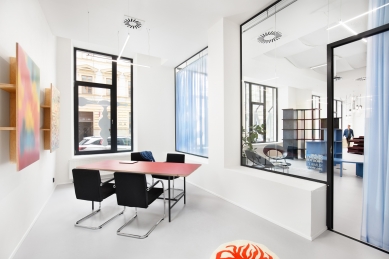
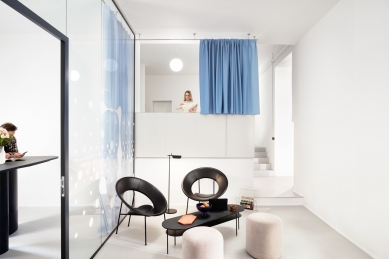
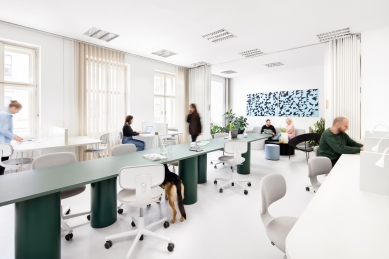
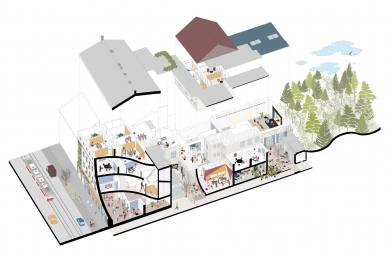
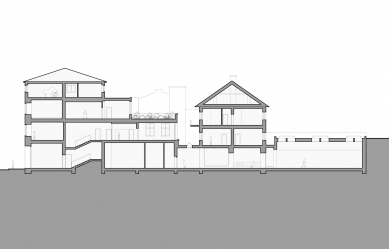
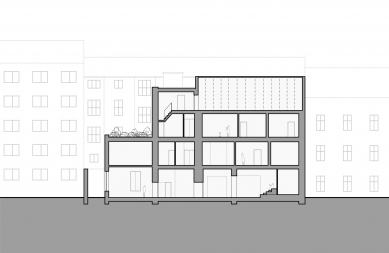
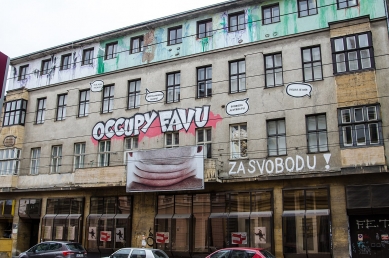
KOGAA was involved in the process of building and operating KUMST not only as the main architect but also actively participated in the development of the entire “ecosystem.” The city of Brno lacked a platform for connecting creators from creative industries, as well as specialized lecture halls and cultural events. In just a few years of its operation, KUMST has become a platform for events from significant institutions, such as the New European Bauhaus. The influence of such spaces is crucial for the growth of the second largest city and the region, from which many brilliant young professionals often leave after studying for opportunities in larger cities. The task of KUMST is to support these people in establishing and growing their local businesses. Therefore, it was a challenge during the design phase not only to adapt the existing building to a new function that facilitates relationships and interactions but also to come up with new typologies of workspaces and common areas where the emerging community could collaborate and meet, as well as present themselves to the public. Given the limited budget, most surfaces and infrastructure remained untouched, except for the functional change of the entire electrical installation. The renovation of the space was divided into phases so that users could start activating the space as soon as possible.
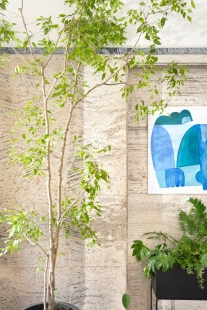
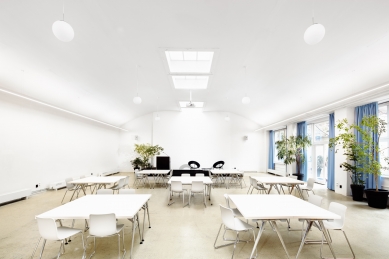
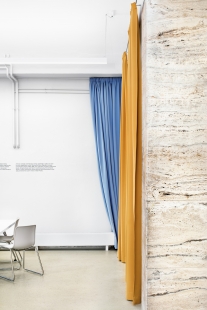
During the realization, emphasis was placed on opening up spaces and highlighting important moments, as well as removing materials and parts of structures that were not original components of the building. For example, the ceiling element of the glass block skylights that brought natural light into the building was previously concealed by a drywall ceiling. The drywall was removed during the renovation, and the ceiling was opened and restored to its original state. The travertine columns in the main event hall and travertine cladding in the entrance hall were also preserved.
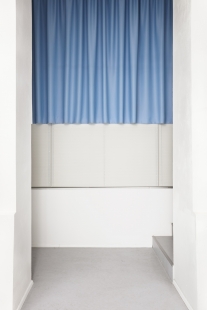
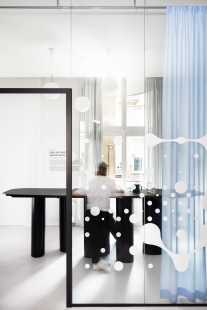
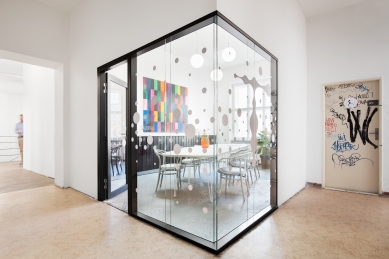
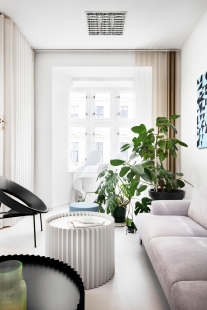
The interior design was contributed by local designer Denisa Strmisková, whose main idea was to sensitively blend the relationship between interior and exterior architecture with the authenticity of the functionalist building. In both the architectural and interior solutions of the renovation, the focus was primarily on “cleaning” the spaces to their original basis and working with colors and materials that would inspire users to create and present their work.
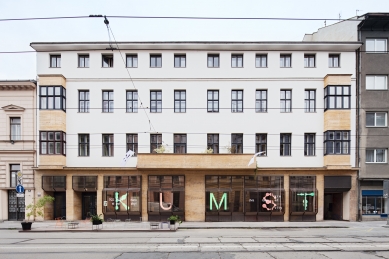
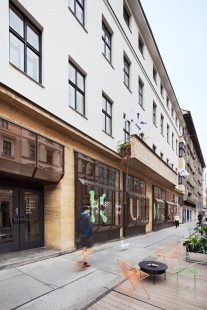
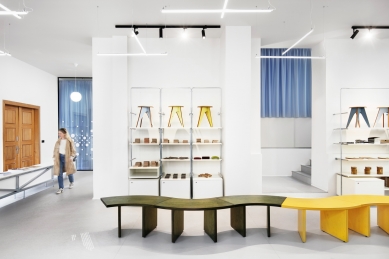
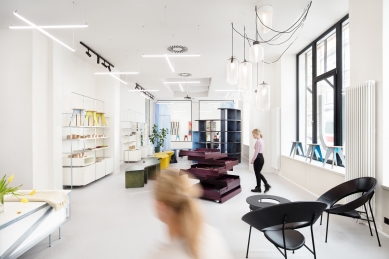
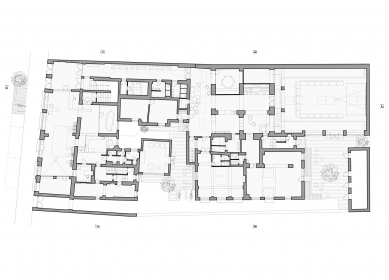
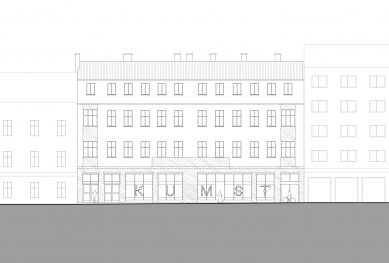
Upon entering the space, visitors are greeted by an open multifunctional hall, which serves as a venue for exhibitions of local creators and is directly oriented to the street with large mirrored and tinted windows featuring the characteristic design of the original building. The hall, visible from street level, connects with the city and functions as a showcase for design, art, fashion, and other creative businesses that the incubator encompasses.
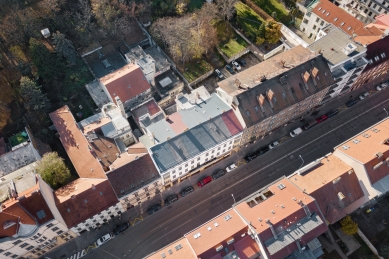
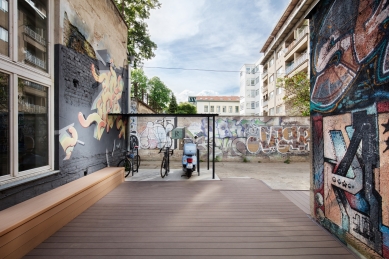
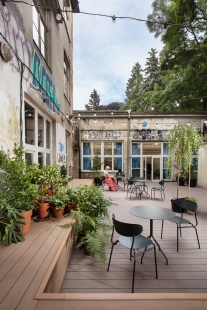
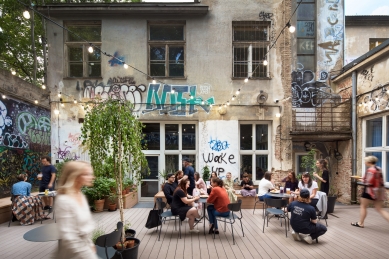
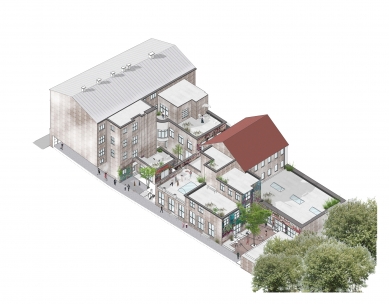
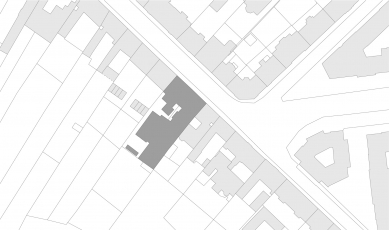
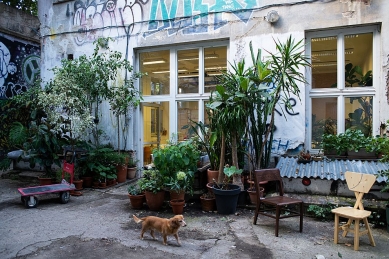
Among the larger interventions in the design are two outdoor courtyards, which gained purpose through the activation of a side passage from the main street. By adding wooden platforms to level the surface terrain and integrated benches for seating, these spaces became extensions of the interiors where events such as food or fashion markets take place. At the same time, they became places for informal meetings between creators and the local community.
KOGAA was involved in the process of building and operating KUMST not only as the main architect but also actively participated in the development of the entire “ecosystem.” The city of Brno lacked a platform for connecting creators from creative industries, as well as specialized lecture halls and cultural events. In just a few years of its operation, KUMST has become a platform for events from significant institutions, such as the New European Bauhaus. The influence of such spaces is crucial for the growth of the second largest city and the region, from which many brilliant young professionals often leave after studying for opportunities in larger cities. The task of KUMST is to support these people in establishing and growing their local businesses. Therefore, it was a challenge during the design phase not only to adapt the existing building to a new function that facilitates relationships and interactions but also to come up with new typologies of workspaces and common areas where the emerging community could collaborate and meet, as well as present themselves to the public. Given the limited budget, most surfaces and infrastructure remained untouched, except for the functional change of the entire electrical installation. The renovation of the space was divided into phases so that users could start activating the space as soon as possible.
During the realization, emphasis was placed on opening up spaces and highlighting important moments, as well as removing materials and parts of structures that were not original components of the building. For example, the ceiling element of the glass block skylights that brought natural light into the building was previously concealed by a drywall ceiling. The drywall was removed during the renovation, and the ceiling was opened and restored to its original state. The travertine columns in the main event hall and travertine cladding in the entrance hall were also preserved.
The interior design was contributed by local designer Denisa Strmisková, whose main idea was to sensitively blend the relationship between interior and exterior architecture with the authenticity of the functionalist building. In both the architectural and interior solutions of the renovation, the focus was primarily on “cleaning” the spaces to their original basis and working with colors and materials that would inspire users to create and present their work.
Upon entering the space, visitors are greeted by an open multifunctional hall, which serves as a venue for exhibitions of local creators and is directly oriented to the street with large mirrored and tinted windows featuring the characteristic design of the original building. The hall, visible from street level, connects with the city and functions as a showcase for design, art, fashion, and other creative businesses that the incubator encompasses.
Among the larger interventions in the design are two outdoor courtyards, which gained purpose through the activation of a side passage from the main street. By adding wooden platforms to level the surface terrain and integrated benches for seating, these spaces became extensions of the interiors where events such as food or fashion markets take place. At the same time, they became places for informal meetings between creators and the local community.
KOGAA
The English translation is powered by AI tool. Switch to Czech to view the original text source.












0 comments
add comment