
Municipal Savings Bank
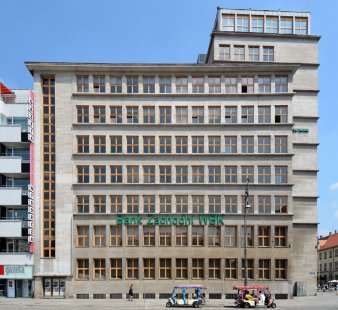
Bank Zachodni WBK S.A.

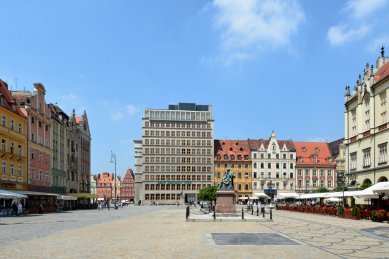
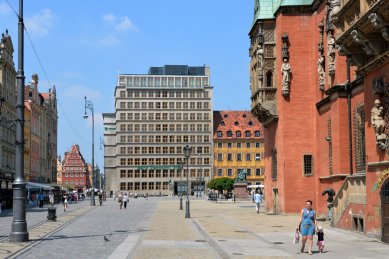
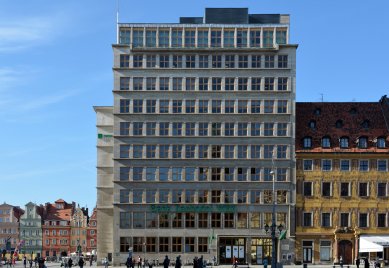
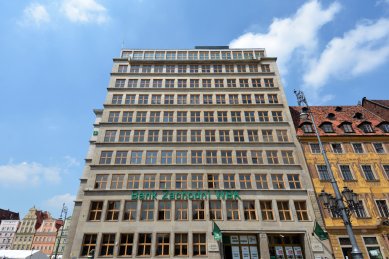
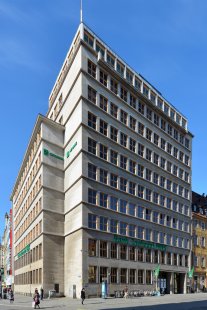
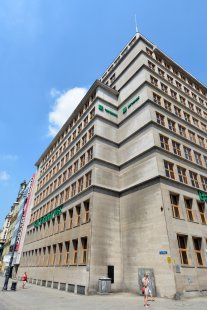
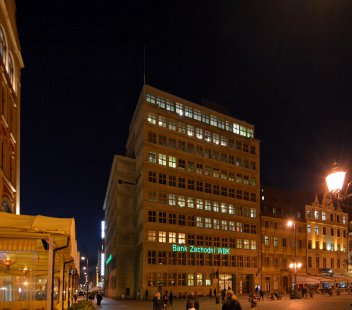
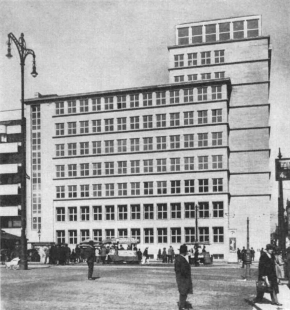
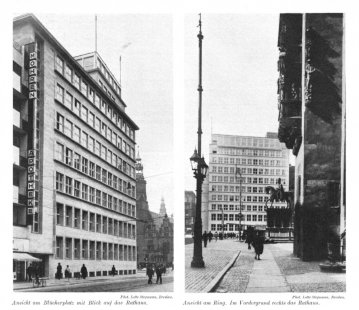
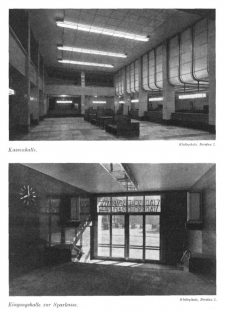
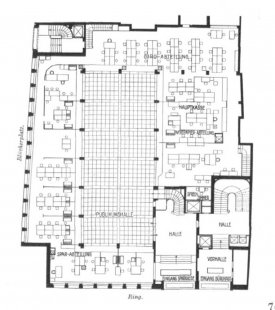
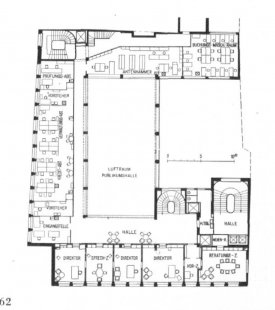
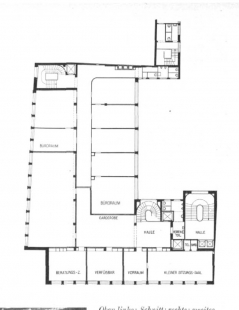
The building of the municipal savings bank is, after the post office (1926-29) by Lothar Neumann, the second tall building in Wrocław, which was then part of the Weimar Republic. The winning project for the building on a prominent plot in the historic center was created in 1929 by architect Heinrich Rump. The competition was carefully prepared, and the savings bank, among other things, committed to supporting investments in new housing developments on the outskirts of the city following its expansion in 1928. The savings bank building was intended to represent the first phase of a planned extensive redevelopment of the inner city, which ultimately did not materialize. The savings bank consists of two volumes creating a massive corner. It has ten floors facing the City Hall Square (Rynek), while the other part facing Salt Square (Plac Solny) is three stories lower and directly adjoins the Rading Pharmacy. The reinforced concrete structure allowed for a free interior layout that follows a strictly functional logic of a bank building. With the exception of the highest tenth floor, clad in nickel-plated sheet metal, the rest of the facade is covered with travertine slabs. The only decoration protruding from the flat facade is a window sill running around the entire house. The flat roof only confirms the overall austere character of the savings bank. The main hall with bank counter is lined with light marble, creating a contrast to the entrance vestibule lined with dark stone. The cashier's hall is topped with a rounded glass ceiling with artificial lighting. Natural daylight enters the hall from the side courtyard. The entrance portal is adorned with a flat relief by Gustav Adolf Schmidt depicting a commercial allegory. The relief stylistically mimics Egyptian art, which became very popular after the discovery of Tutankhamun's tomb in 1922. The vestibule was added in 1937.
The English translation is powered by AI tool. Switch to Czech to view the original text source.





0 comments
add comment