
Panel apartment with exposed concrete

The reconstruction of a 55 m² panel apartment works with the contrast between the rawness of the original concrete structures and the delicate elements of the new interior. Specifically, this end apartment type G57 does not have a balcony or loggia, allowing for the utilization of a larger floor area for better living spaces.
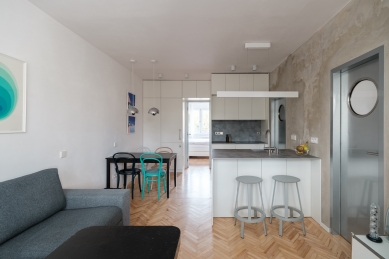
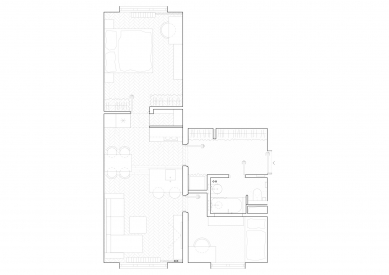
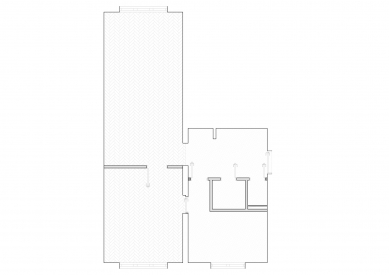
The original layout of 2+1 was transformed into a 3+kk by opening up the main living space, focusing on maximizing the use of the limited area and future flexibility for a larger family.
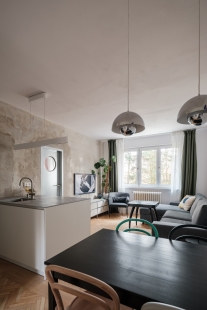
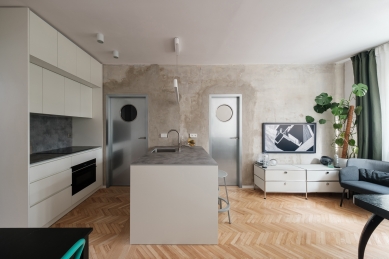
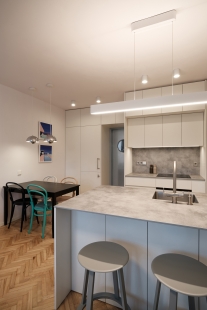
A significant intervention was the complete modification of the water and sewage systems leading from the main risers into the central part of the layout. The new solution allowed the kitchen to be placed in the center of the apartment along with the dining and living space while also creating a new separate room serving as a children's bedroom.
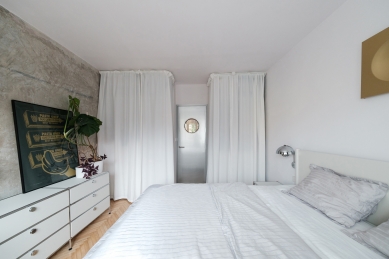
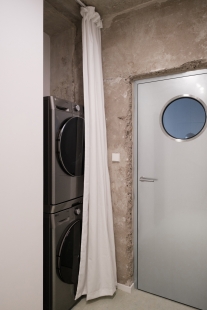
The design also includes the possibility of future adaptation of the layout for two children — by swapping the functions of the parents' bedroom and the children's room. The partition behind the washing machine is therefore designed to allow its upper part to be removed, creating space for a wardrobe accessible from the parents' bedroom.
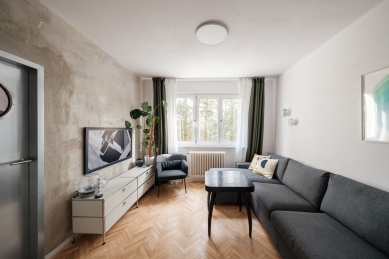
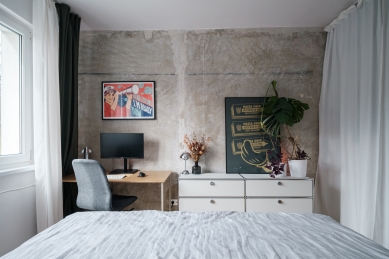
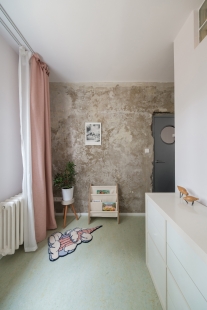
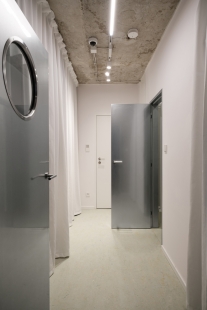
The interior reveals the original character of the panel construction through exposed concrete walls, an exposed ceiling in the hallway, and roughly hewn door openings. These raw elements contrast with soft curtains that replace built-in wardrobes in some parts of the apartment and simultaneously soften the atmosphere and acoustics of the interior.
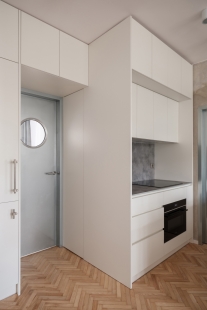
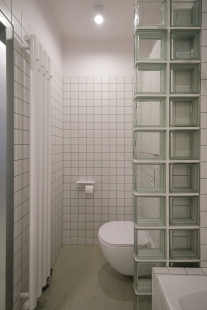
Built-in furniture was primarily used in the kitchen, where a compact pantry for food storage was created. Carpentry elements were also effectively used in the bathroom, for example, in the form of a small storage cabinet above the toilet, which also conceals access to the risers.
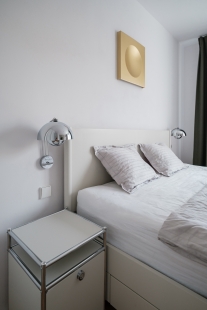
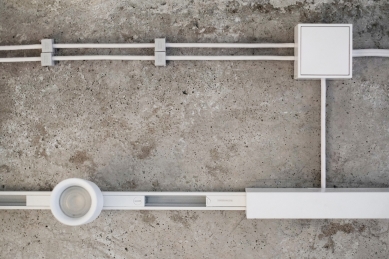
Technical and material details play an important role. The construction work had to be carried out with high precision, particularly with the metal doors featuring hidden hinges and frames aligned in one plane with the wall. The industrial character of the interior is accentuated by exposed cable conduits on the ceiling in the hallway or by chrome and stainless steel elements of fixtures, faucets, and heavy-duty handles on the refrigerator.
The original wooden floor was refurbished. As it was not extended to the walls after the removal of the baseboards, a band of new ash boards was added around the apartment's perimeter. The floor is also complemented by the footprint of the removed partition in the form of a band of ash parquet running across the kitchen and dining area.
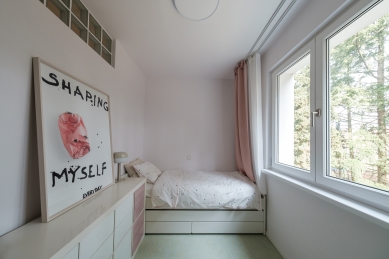
The original radiators under the windows were also preserved, including their size and shape. They underwent complete disassembly, cleaning, sandblasting, and a new white lacquer finish.
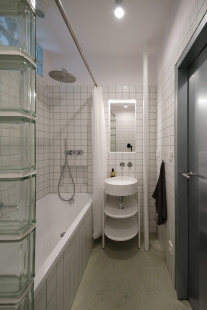
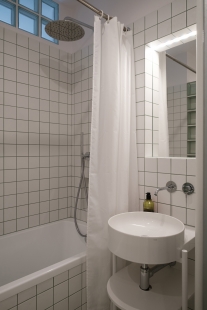
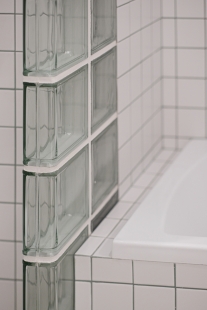
Natural marmoleum was used for the flooring in the hallway and children's room. The bathroom features a simple grid of white tiles complemented by a lightly green grout that matches the shade of the marmoleum. Luxfers in a similar tone bring daylight into the depth of the layout through the children's room.
The entire bathroom with a toilet is enclosed by partitions made of double gypsum board with internal sound insulation. The original heating pipes for the whole house also run through the bathroom, which could not be relocated. The pipes were left exposed, naturally contributing to the heating of the room.
The entire apartment is equipped with a smart lighting system that responds to the time of day.
The project works with a limited budget and commonly available materials, used in a straightforward manner without unnecessary decorativeness.
The original layout of 2+1 was transformed into a 3+kk by opening up the main living space, focusing on maximizing the use of the limited area and future flexibility for a larger family.
A significant intervention was the complete modification of the water and sewage systems leading from the main risers into the central part of the layout. The new solution allowed the kitchen to be placed in the center of the apartment along with the dining and living space while also creating a new separate room serving as a children's bedroom.
The design also includes the possibility of future adaptation of the layout for two children — by swapping the functions of the parents' bedroom and the children's room. The partition behind the washing machine is therefore designed to allow its upper part to be removed, creating space for a wardrobe accessible from the parents' bedroom.
The interior reveals the original character of the panel construction through exposed concrete walls, an exposed ceiling in the hallway, and roughly hewn door openings. These raw elements contrast with soft curtains that replace built-in wardrobes in some parts of the apartment and simultaneously soften the atmosphere and acoustics of the interior.
Built-in furniture was primarily used in the kitchen, where a compact pantry for food storage was created. Carpentry elements were also effectively used in the bathroom, for example, in the form of a small storage cabinet above the toilet, which also conceals access to the risers.
Technical and material details play an important role. The construction work had to be carried out with high precision, particularly with the metal doors featuring hidden hinges and frames aligned in one plane with the wall. The industrial character of the interior is accentuated by exposed cable conduits on the ceiling in the hallway or by chrome and stainless steel elements of fixtures, faucets, and heavy-duty handles on the refrigerator.
The original wooden floor was refurbished. As it was not extended to the walls after the removal of the baseboards, a band of new ash boards was added around the apartment's perimeter. The floor is also complemented by the footprint of the removed partition in the form of a band of ash parquet running across the kitchen and dining area.
The original radiators under the windows were also preserved, including their size and shape. They underwent complete disassembly, cleaning, sandblasting, and a new white lacquer finish.
Natural marmoleum was used for the flooring in the hallway and children's room. The bathroom features a simple grid of white tiles complemented by a lightly green grout that matches the shade of the marmoleum. Luxfers in a similar tone bring daylight into the depth of the layout through the children's room.
The entire bathroom with a toilet is enclosed by partitions made of double gypsum board with internal sound insulation. The original heating pipes for the whole house also run through the bathroom, which could not be relocated. The pipes were left exposed, naturally contributing to the heating of the room.
The entire apartment is equipped with a smart lighting system that responds to the time of day.
The project works with a limited budget and commonly available materials, used in a straightforward manner without unnecessary decorativeness.
intuit architects
The English translation is powered by AI tool. Switch to Czech to view the original text source.


0 comments
add comment