
Villa by the lake

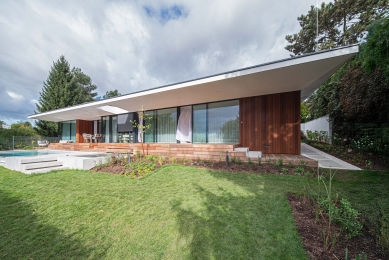
The Villa by the Lake project represents the reconstruction of an original family house in Prague, located in immediate proximity to the lake. The building is situated opposite a wine bar with direct access to the water surface, which is also owned by the investor and was designed by our studio. Both structures are separated by only a narrow pathway and together form a compact whole set in the tranquil natural environment by the lake.
The main goal of the design was to preserve the natural character of the site and sensitively integrate the reconstruction into the surrounding landscape so that the new architectural expression does not disrupt the atmosphere of the locality. It is a single-story building, the layout of which was adjusted to provide the owners with greater comfort, more space, and at the same time allowed for the implementation of modern technologies and new interior solutions.
The architectural expression of the house is based on minimalist forms. The dominant elements are large-format glazed surfaces (Schüco aluminum sliding systems) and frameless windows, which ensure direct visual contact with the surrounding landscape and the lake's surface. On the entire southern side of the building, an accessible terrace is designed, which can be entered from every living room. The terrace thus naturally connects the interior of the house with the exterior and allows the residents to fully utilize the potential of the unique location by the water.
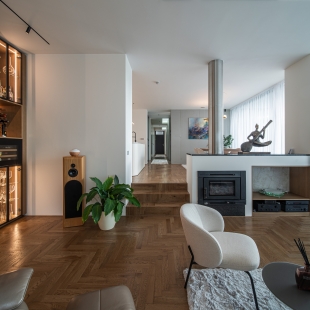
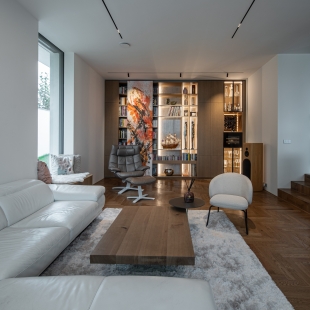
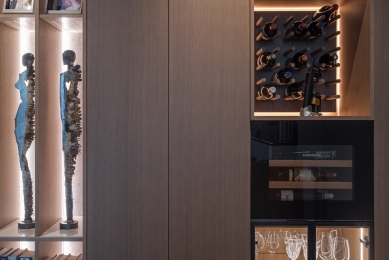
The interior was conceived as a villa full of art – a space where works of art naturally become part of everyday life. The intention of the design was to discreetly and sensitively incorporate quality art into ordinary living, as it significantly contributes to shaping the atmosphere and quality of the living environment. Therefore, in each living room, there is an authorial element – a painting, a sculpture, a 3D fresco, or an artistic detail integrated directly into the interior constructions.
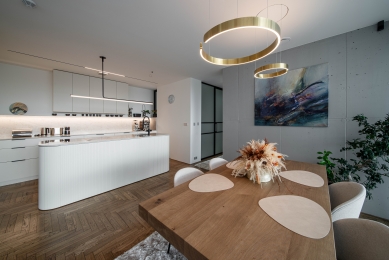
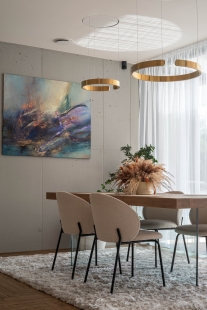
The material solution of the interior is based on a combination of natural materials. Wood plays a dominant role (Afromosia on the facade, oak veneer in the interior), complemented by stone cladding and tiling. These materials are supplemented by visible concrete, which gently disrupts the otherwise natural material palette in the dining area and gives the interior a contemporary expression.
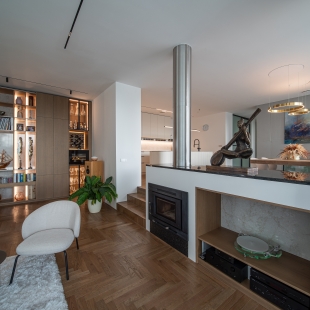
The interior floor material solution is based on the functional organization of individual spaces and at the same time supports the overall concept of using natural and quality materials. In the hallway, living area, and dining room with kitchen, wooden flooring is used, which adds natural warmth to the interior and visual continuity between the main living parts of the house.
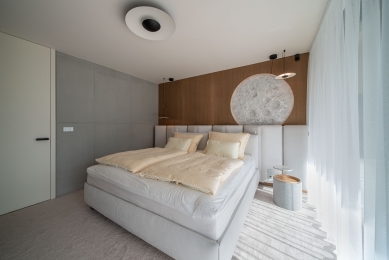
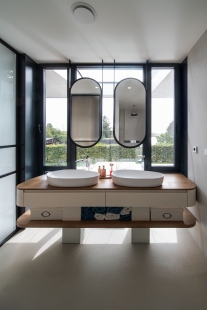
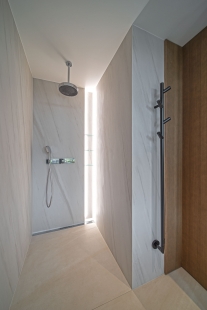
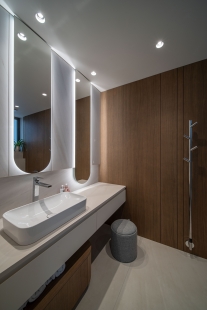
In the bedroom and rooms, a carpet is chosen, which contributes to higher comfort and creates a calmer and cozier atmosphere meant for relaxation. The bathrooms are designed with stone tiles, which correspond in structure and durability to the character of these spaces and also connect with the material concept of the interior.
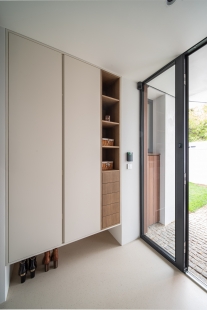
In the fitness zone, entrance areas, and technical rooms, marmoleum is used, which is a practical, durable, and aesthetically clean solution suitable for more heavily used spaces. This combination of materials creates a harmonious whole that respects both the functional requirements of individual rooms and the overall architectural concept of the house.
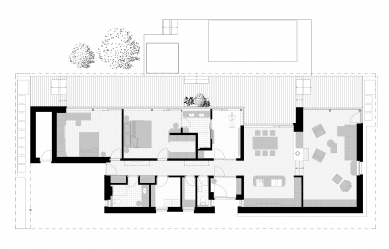
The building is accessed through an entrance hallway, which smoothly connects to the main communication corridor linking the individual rooms of the house.
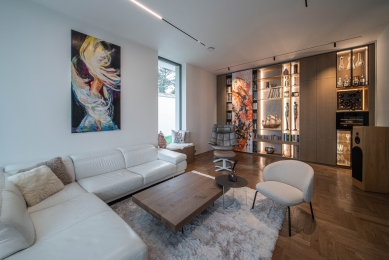
From the hallway, there is access to the dining room with kitchen, which is followed by the living area. The living area is height-wise separated from the dining part, which gently delineates the individual functional zones while maintaining an open and airy character of the space.
The private part of the house is composed of a bedroom, which is directly connected to the bathroom and fitness zone. These spaces are also accessible from the hallway, ensuring their flexible use. The layout also includes a separate room, a separate bathroom, and technical facilities complemented by a separate toilet.
The overall layout thus creates a clearly structured space that naturally separates the social and private parts of the house while providing residents with a comfortable and logical arrangement of individual functions.
Due to the layout of the building, a longer hallway was created in the central part. To brighten it, two rectangular skylights have been integrated into the ceiling, which bring natural light into the interior during the day and serve as design lighting elements in the evening.
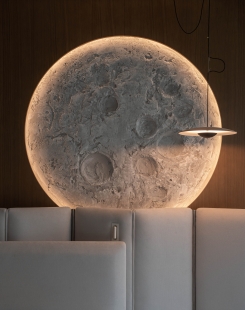
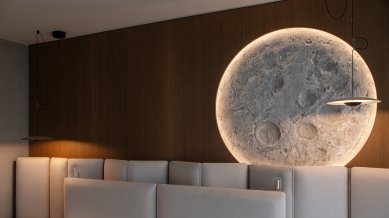
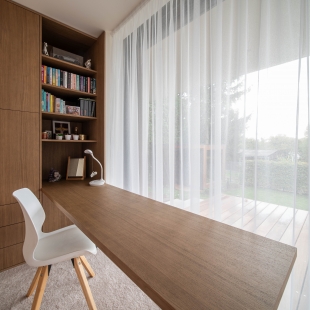
In the living area, the artistic dominant is a sliding painting by artist Andera Ehred, which complements the library and serves as a significant artistic accent in the space. Another work by this artist is also placed in the dining room. In the bedroom, there is a 3D fresco of the moon by artist Jožka Stančík, which is integrated into the wooden wall and creates a subtle and poetic character of the space. Another Stančík work is located in a room tuned in pink tones.
In the corridor, a significant material contrast is designed, which emphasizes the minimalist character of the interior. On one side is a visible concrete wall that introduces a raw and contemporary architectural expression to the space. On the opposite side, a white cladding solution with integrated doors from the company Dorsis is used.
This solution creates a clean and compact surface, where the doors naturally blend with the cladding and do not disrupt the overall composition of the space. The corridor is also enclosed by glass partitions, also supplied by Dorsis, which allow light to pass between the individual parts of the interior.
The combination of visible concrete, white cladding surfaces, and glass elements thus creates a clean, elegant, and simultaneously original architectural solution that emphasizes the overall concept of the house.
The entire interior is equipped with modern technologies that ensure the comfortable and efficient operation of the house. The reconstruction thus connects minimalist architecture, natural materials, contemporary technologies, and art into one harmonious whole.
Based on the client's feedback, the building meets both practical and aesthetic requirements. Life in a minimalist interior complemented by natural materials and art creates a harmonious environment that fully corresponds to the owners' vision of quality and inspiring living.
The main goal of the design was to preserve the natural character of the site and sensitively integrate the reconstruction into the surrounding landscape so that the new architectural expression does not disrupt the atmosphere of the locality. It is a single-story building, the layout of which was adjusted to provide the owners with greater comfort, more space, and at the same time allowed for the implementation of modern technologies and new interior solutions.
The architectural expression of the house is based on minimalist forms. The dominant elements are large-format glazed surfaces (Schüco aluminum sliding systems) and frameless windows, which ensure direct visual contact with the surrounding landscape and the lake's surface. On the entire southern side of the building, an accessible terrace is designed, which can be entered from every living room. The terrace thus naturally connects the interior of the house with the exterior and allows the residents to fully utilize the potential of the unique location by the water.
The interior was conceived as a villa full of art – a space where works of art naturally become part of everyday life. The intention of the design was to discreetly and sensitively incorporate quality art into ordinary living, as it significantly contributes to shaping the atmosphere and quality of the living environment. Therefore, in each living room, there is an authorial element – a painting, a sculpture, a 3D fresco, or an artistic detail integrated directly into the interior constructions.
The material solution of the interior is based on a combination of natural materials. Wood plays a dominant role (Afromosia on the facade, oak veneer in the interior), complemented by stone cladding and tiling. These materials are supplemented by visible concrete, which gently disrupts the otherwise natural material palette in the dining area and gives the interior a contemporary expression.
The interior floor material solution is based on the functional organization of individual spaces and at the same time supports the overall concept of using natural and quality materials. In the hallway, living area, and dining room with kitchen, wooden flooring is used, which adds natural warmth to the interior and visual continuity between the main living parts of the house.
In the bedroom and rooms, a carpet is chosen, which contributes to higher comfort and creates a calmer and cozier atmosphere meant for relaxation. The bathrooms are designed with stone tiles, which correspond in structure and durability to the character of these spaces and also connect with the material concept of the interior.
In the fitness zone, entrance areas, and technical rooms, marmoleum is used, which is a practical, durable, and aesthetically clean solution suitable for more heavily used spaces. This combination of materials creates a harmonious whole that respects both the functional requirements of individual rooms and the overall architectural concept of the house.
The building is accessed through an entrance hallway, which smoothly connects to the main communication corridor linking the individual rooms of the house.
From the hallway, there is access to the dining room with kitchen, which is followed by the living area. The living area is height-wise separated from the dining part, which gently delineates the individual functional zones while maintaining an open and airy character of the space.
The private part of the house is composed of a bedroom, which is directly connected to the bathroom and fitness zone. These spaces are also accessible from the hallway, ensuring their flexible use. The layout also includes a separate room, a separate bathroom, and technical facilities complemented by a separate toilet.
The overall layout thus creates a clearly structured space that naturally separates the social and private parts of the house while providing residents with a comfortable and logical arrangement of individual functions.
Due to the layout of the building, a longer hallway was created in the central part. To brighten it, two rectangular skylights have been integrated into the ceiling, which bring natural light into the interior during the day and serve as design lighting elements in the evening.
In the living area, the artistic dominant is a sliding painting by artist Andera Ehred, which complements the library and serves as a significant artistic accent in the space. Another work by this artist is also placed in the dining room. In the bedroom, there is a 3D fresco of the moon by artist Jožka Stančík, which is integrated into the wooden wall and creates a subtle and poetic character of the space. Another Stančík work is located in a room tuned in pink tones.
In the corridor, a significant material contrast is designed, which emphasizes the minimalist character of the interior. On one side is a visible concrete wall that introduces a raw and contemporary architectural expression to the space. On the opposite side, a white cladding solution with integrated doors from the company Dorsis is used.
This solution creates a clean and compact surface, where the doors naturally blend with the cladding and do not disrupt the overall composition of the space. The corridor is also enclosed by glass partitions, also supplied by Dorsis, which allow light to pass between the individual parts of the interior.
The combination of visible concrete, white cladding surfaces, and glass elements thus creates a clean, elegant, and simultaneously original architectural solution that emphasizes the overall concept of the house.
The entire interior is equipped with modern technologies that ensure the comfortable and efficient operation of the house. The reconstruction thus connects minimalist architecture, natural materials, contemporary technologies, and art into one harmonious whole.
Based on the client's feedback, the building meets both practical and aesthetic requirements. Life in a minimalist interior complemented by natural materials and art creates a harmonious environment that fully corresponds to the owners' vision of quality and inspiring living.
The English translation is powered by AI tool. Switch to Czech to view the original text source.








0 comments
add comment