
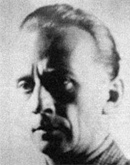
Wacław Jerzy Hryniewicz
*10. 1. 1909 – St. Petersburg, Russia
Biography
He graduated from the Faculty of Architecture at the Technical University of Warsaw and subsequently began working as an architect. In 1937, he participated in the design of the Polish pavilion at the International Exhibition of Modern Art, Technology, and Life in Paris. After the Soviet invasion of Poland, he was captured by the Soviets in September 1939. In 1941, based on the Sikorski-Mayski Agreement, he was released from a labor camp and allowed to join the Polish Armed Forces in the USSR under the command of General Władysław Anders. The resulting 2nd Polish Corps became a pillar of the Polish Armed Forces in the West in 1942. As part of the 2nd Corps, he participated in the Battle of Monte Cassino in 1944. During the battle, on May 18, General Anders decided to establish a war cemetery for the soldiers who died there. Together with Jerzy Skolimowski, he designed the necropolis, which was built at the turn of 1944 and 1945. After the end of World War II, he settled permanently in Great Britain. He died in London but was buried in his cemetery in Italian Monte Cassino.
He graduated from the Faculty of Architecture at the Technical University of Warsaw and subsequently began working as an architect. In 1937, he participated in the design of the Polish pavilion at the International Exhibition of Modern Art, Technology, and Life in Paris. After the Soviet invasion of Poland, he was captured by the Soviets in September 1939. In 1941, based on the Sikorski-Mayski Agreement, he was released from a labor camp and allowed to join the Polish Armed Forces in the USSR under the command of General Władysław Anders. The resulting 2nd Polish Corps became a pillar of the Polish Armed Forces in the West in 1942. As part of the 2nd Corps, he participated in the Battle of Monte Cassino in 1944. During the battle, on May 18, General Anders decided to establish a war cemetery for the soldiers who died there. Together with Jerzy Skolimowski, he designed the necropolis, which was built at the turn of 1944 and 1945. After the end of World War II, he settled permanently in Great Britain. He died in London but was buried in his cemetery in Italian Monte Cassino.
The English translation is powered by AI tool. Switch to Czech to view the original text source.