
Cottage with a view of Černá hora

At the beginning, there was the determination of a three-generation family to build a base for spending time together in the mountains.
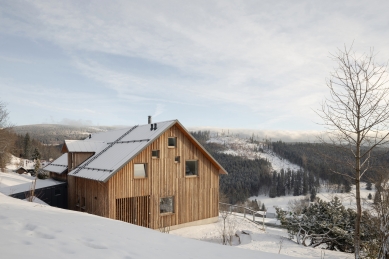
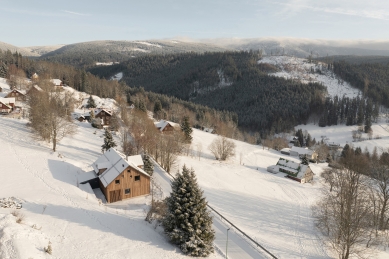
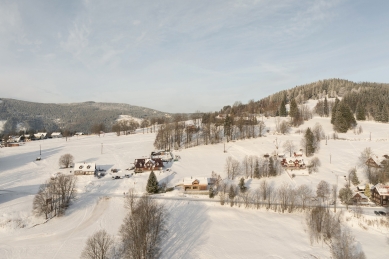
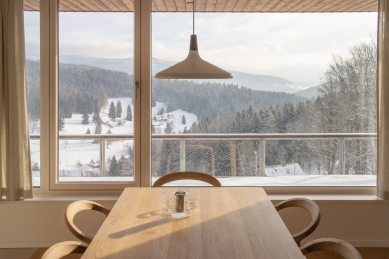
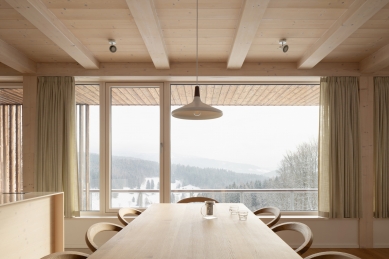
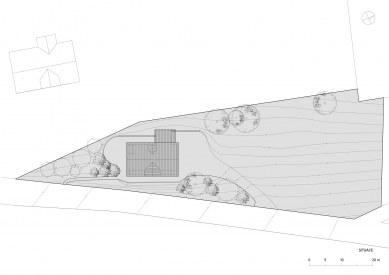
The sloping land in Strážné offered a unique view across the valley to the ridges of the Krkonoš mountains, highlighted by the dominant Černá hora. Its location also promised the possibility to put on ski boots at home and the skis just a little further away. However, it presented specific challenges due to many local regulations that the design had to respond to.
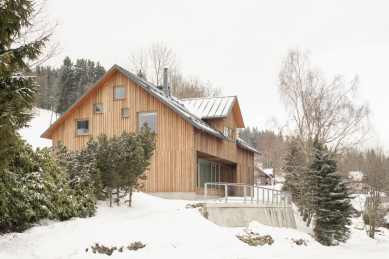
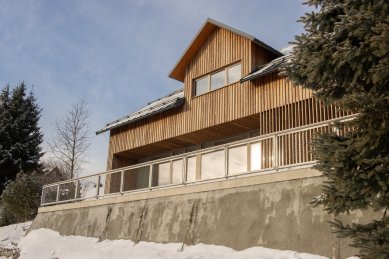
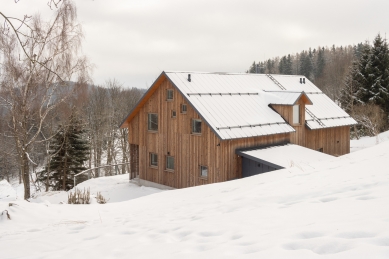
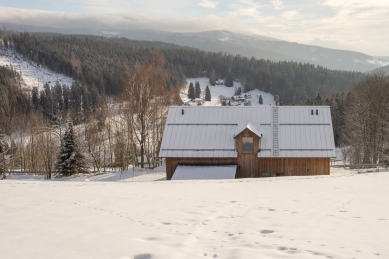
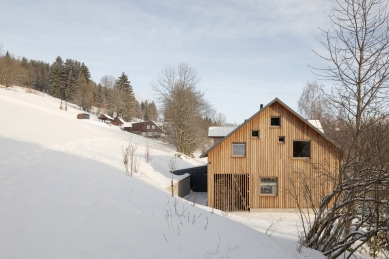
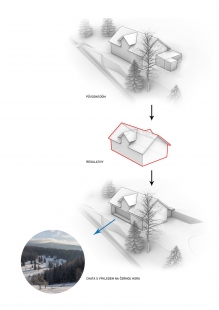
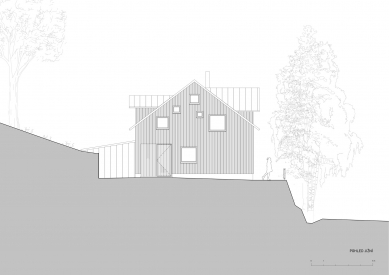
The plot is connected to the traditional shape of a house that stood on a leveled plateau on the slope above the road, surrounded by spruces and an old birch tree. The old house left its imprint on this place, not only literally but also formally, as construction is only permitted within its footprint. But what is its conceptual footprint? The house cleverly resisted the demanding mountain conditions, while also responding to the needs, habits, and capabilities of its inhabitants. When we cleanse its shape from random extensions, an archetypal form with a gabled roof featuring slim overhangs and dormers remains. These elements are still justified in Krkonoš conditions today. The steep roof effectively handles the snow, while the overhangs protect the gables from changing weather, and the dormers help to expand and illuminate the central part of the attic. However, the living needs and possibilities of the mountain inhabitants and visitors have changed more over the centuries and decades than the weather. Thus, the shape footprint opens up to light and views outside. The recessed entrance with large windows creates a transition between the landscape and the interior.
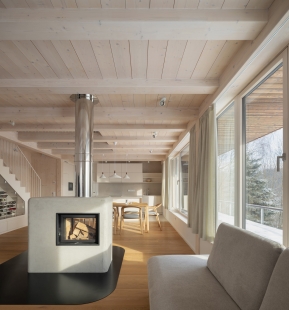
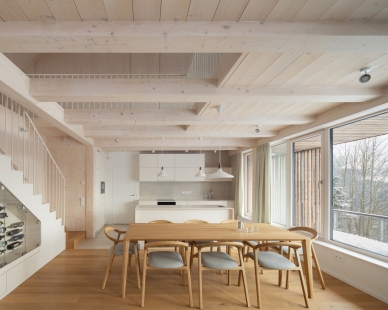
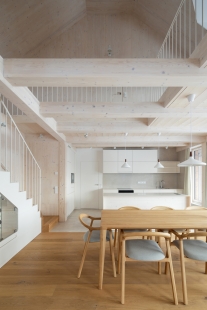
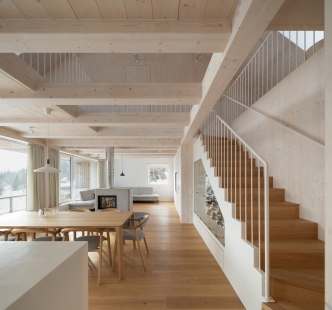
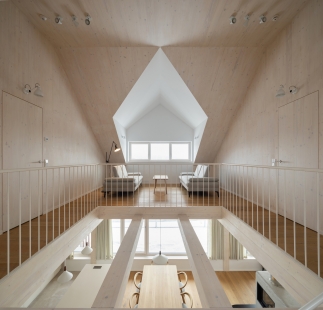
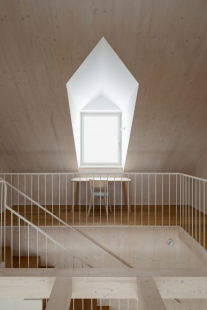
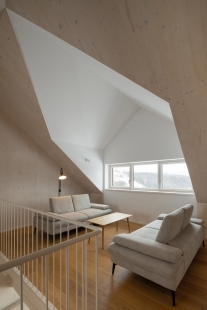
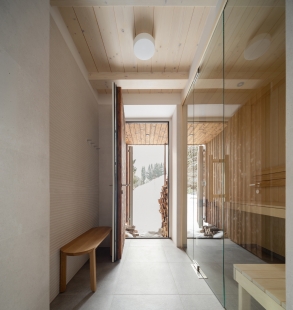
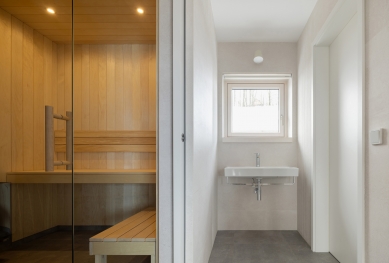
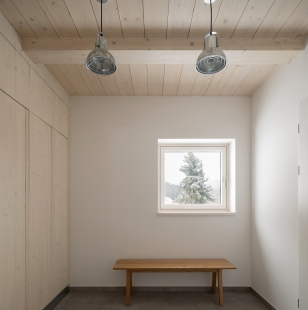
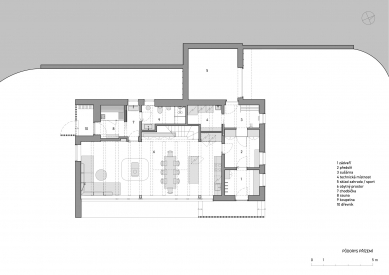
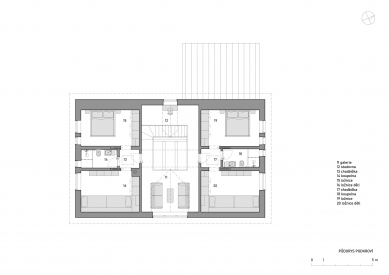
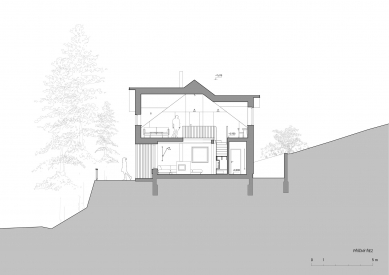
The internal layout reflects the practical functioning needs of a family mountain lodge and the spatial hierarchy. The most important spaces are those where family members can spend time together after returning from the slope or a hike. Cooking, dining together, relaxing with the children over a fairy tale, chatting by the fireplace in the evening, playing cards or board games. The heart of the house is therefore a space with a kitchen, dining table, fireplace stove, wine cellar, and seating that opens up views of the mountain ridges and connects to the gallery upstairs. The section under the roof with opposing dormers creates an exceptional framework for further family moments. While the communal spaces are generously sized, the bedrooms and bathrooms in the attic are designed more sparingly. The sauna on the ground floor allows you to quickly step outside and cool off in the snow in winter. The technical facilities of the house, which include a ski storage as well as a drying room, facilitate both summer and winter operations.
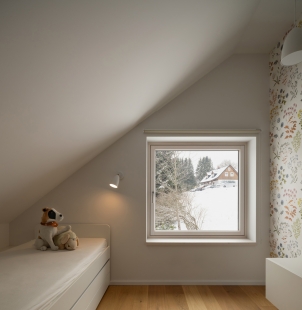
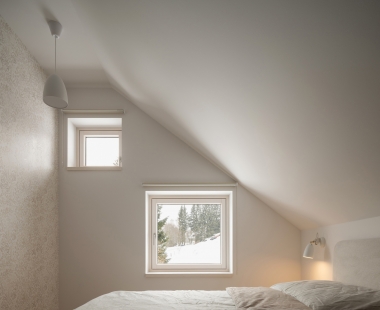
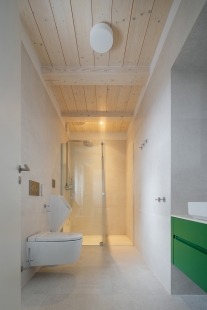
Light internal surfaces highlight the colors of nature outside. Exposed structural elements made of bleached spruce are complemented by a cladding of spruce bioboards and a warm tone of the oak laminate floor, dining table, and durable benches.
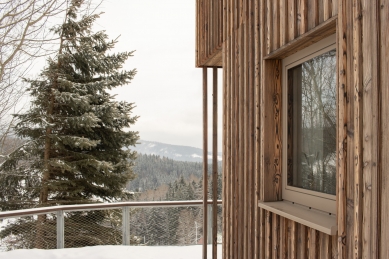
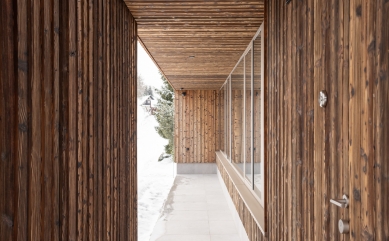
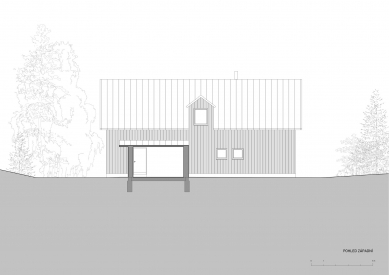
The structural system consists of a lightweight wooden skeleton. The façade is designed with larch boards and battens. Due to the demanding climatic conditions, the wood has been charred, brushed, and treated with oil. This treatment has enhanced the natural grain of the wood and given the surface a variable honey hue. The entrance to the house and the sauna is protected by a subtle trellis made of larch beams, which aligns with the regular rhythm of the façade's cladding. On the windward side near the slope, the house is complemented by a storage, which, like the roof, is clad with gray metal sheeting with seams.
The sloping land in Strážné offered a unique view across the valley to the ridges of the Krkonoš mountains, highlighted by the dominant Černá hora. Its location also promised the possibility to put on ski boots at home and the skis just a little further away. However, it presented specific challenges due to many local regulations that the design had to respond to.
The plot is connected to the traditional shape of a house that stood on a leveled plateau on the slope above the road, surrounded by spruces and an old birch tree. The old house left its imprint on this place, not only literally but also formally, as construction is only permitted within its footprint. But what is its conceptual footprint? The house cleverly resisted the demanding mountain conditions, while also responding to the needs, habits, and capabilities of its inhabitants. When we cleanse its shape from random extensions, an archetypal form with a gabled roof featuring slim overhangs and dormers remains. These elements are still justified in Krkonoš conditions today. The steep roof effectively handles the snow, while the overhangs protect the gables from changing weather, and the dormers help to expand and illuminate the central part of the attic. However, the living needs and possibilities of the mountain inhabitants and visitors have changed more over the centuries and decades than the weather. Thus, the shape footprint opens up to light and views outside. The recessed entrance with large windows creates a transition between the landscape and the interior.
The internal layout reflects the practical functioning needs of a family mountain lodge and the spatial hierarchy. The most important spaces are those where family members can spend time together after returning from the slope or a hike. Cooking, dining together, relaxing with the children over a fairy tale, chatting by the fireplace in the evening, playing cards or board games. The heart of the house is therefore a space with a kitchen, dining table, fireplace stove, wine cellar, and seating that opens up views of the mountain ridges and connects to the gallery upstairs. The section under the roof with opposing dormers creates an exceptional framework for further family moments. While the communal spaces are generously sized, the bedrooms and bathrooms in the attic are designed more sparingly. The sauna on the ground floor allows you to quickly step outside and cool off in the snow in winter. The technical facilities of the house, which include a ski storage as well as a drying room, facilitate both summer and winter operations.
Light internal surfaces highlight the colors of nature outside. Exposed structural elements made of bleached spruce are complemented by a cladding of spruce bioboards and a warm tone of the oak laminate floor, dining table, and durable benches.
The structural system consists of a lightweight wooden skeleton. The façade is designed with larch boards and battens. Due to the demanding climatic conditions, the wood has been charred, brushed, and treated with oil. This treatment has enhanced the natural grain of the wood and given the surface a variable honey hue. The entrance to the house and the sauna is protected by a subtle trellis made of larch beams, which aligns with the regular rhythm of the façade's cladding. On the windward side near the slope, the house is complemented by a storage, which, like the roof, is clad with gray metal sheeting with seams.
System Recovery Architects
The English translation is powered by AI tool. Switch to Czech to view the original text source.



0 comments
add comment