
Home for the Elderly with Kindergarten in Horní Jirčany

On the periphery of this small village, set in a development of small houses, there was once a vacant plot of land, covered by forest on one side. The width of the adjacent roads showed that it was originally more of a recreational area full of cottages and summer houses. Nearby, steady traffic flows along a busy road, separated from the aforementioned land by an overgrown earth bank. Today a bold investor’s plan has resulted in a set of buildings combining a home for the elderly with a kindergarten.
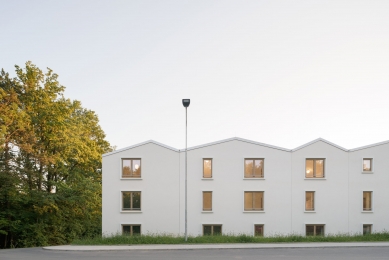
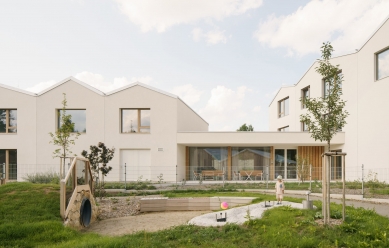
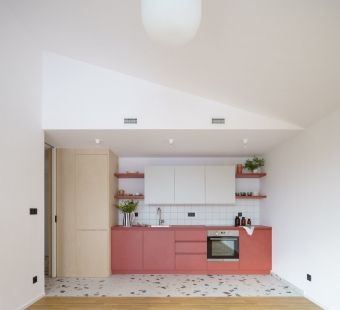
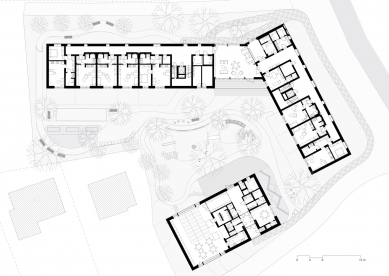
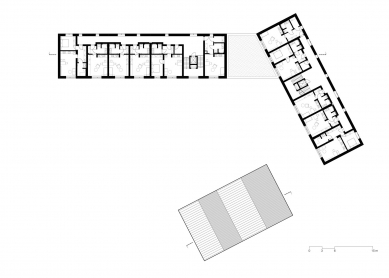
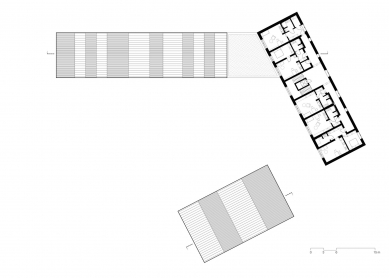
Connected by a glass corridor with a green roof, the buildings of the elderly care facility serve as a noise barrier for the internal residential garden shared by both facilities. While the flats face the sunny garden, the internal housing access paths face the road.
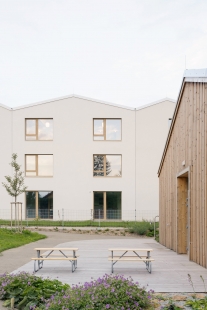
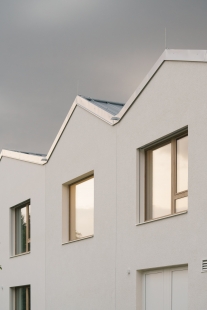
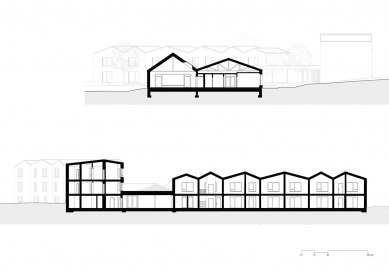
The division of the structures into smaller subunits with separate roofs helps to give the project a more human scale. The façades of the individual ‘houses’ feature different grains of plaster with a consistent colour scheme, creating a subtle difference in shade depending on the direction of the sun’s rays.
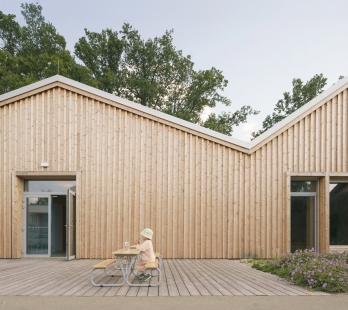
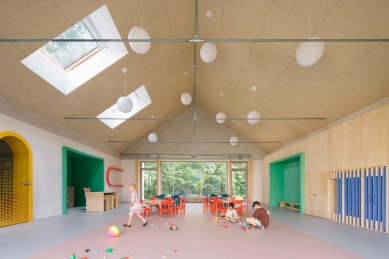
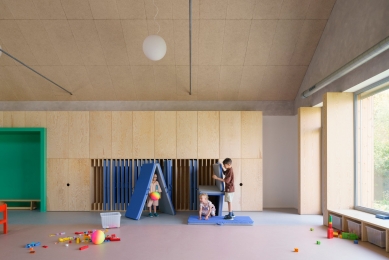
A single-classroom kindergarten is situated close to the forest edge. The building follows the morphology set by the retirement home. At first glance, one can tell that they belong together, yet the different treatment of the façade creates a striking contrast.
Similarly to the care flats, the layout allows children to exit directly into the internal play space.
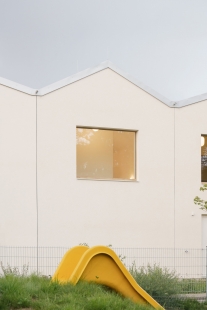
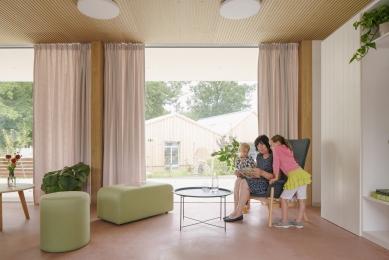
The garden is a key space for interaction between the children and older people. The play elements are predominantly natural in form. Grassed embankments, raised wooden walkways between herbaceous borders and a watercourse with small dykes, coalesce without detracting from the garden’s parkland character. For legislative reasons, a low fence divides the garden from the neighbourhood beyond.
Connected by a glass corridor with a green roof, the buildings of the elderly care facility serve as a noise barrier for the internal residential garden shared by both facilities. While the flats face the sunny garden, the internal housing access paths face the road.
The division of the structures into smaller subunits with separate roofs helps to give the project a more human scale. The façades of the individual ‘houses’ feature different grains of plaster with a consistent colour scheme, creating a subtle difference in shade depending on the direction of the sun’s rays.
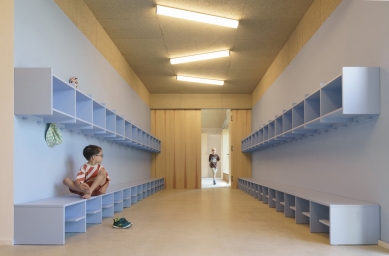
A single-classroom kindergarten is situated close to the forest edge. The building follows the morphology set by the retirement home. At first glance, one can tell that they belong together, yet the different treatment of the façade creates a striking contrast.
Similarly to the care flats, the layout allows children to exit directly into the internal play space.
The garden is a key space for interaction between the children and older people. The play elements are predominantly natural in form. Grassed embankments, raised wooden walkways between herbaceous borders and a watercourse with small dykes, coalesce without detracting from the garden’s parkland character. For legislative reasons, a low fence divides the garden from the neighbourhood beyond.
ti architekti





1 comment
add comment
Subject
Author
Date
gratuluju
T.Pavlík
28.06.26 02:33
show all comments