
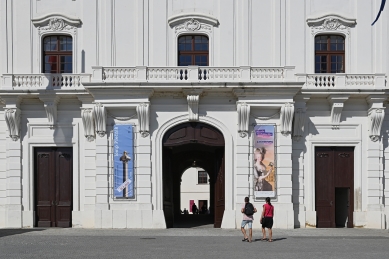
Josip Plečnik : Stredoeurópsky architekt - výstava na Bratislavském hradě
Slovenian architect Josip Plečnik (1872 – 1957) is one of the most significant figures in European architecture of the 20th century. As a student of Otto Wagner in Vienna, he quickly developed his own unmistakable style. From 1920 to 1934, he reconstructed Prague Castle at the personal request of President Tomáš Garrigue Masaryk – his interventions are still considered a symbol of democracy of the First Czechoslovak Republic.
In Ljubljana, he designed numerous buildings – churches, a library, bridges, and the Žale cemetery – which is why Plečnik's works are now listed as UNESCO World Heritage Sites. Although he was a visionary, he always returned to tradition and folk culture. This is why Slovakia appealed to him – in 1920, he undertook a study trip with his students through Slovak regions, where he sought inspiration in folk architecture and symbolism.
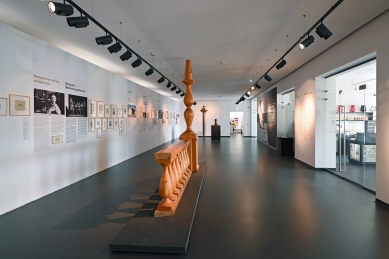
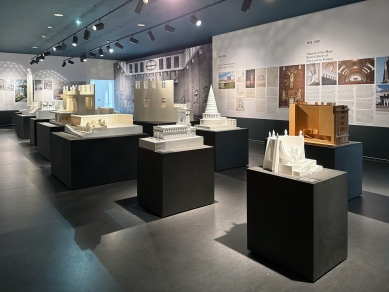
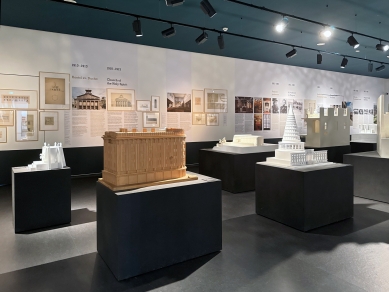
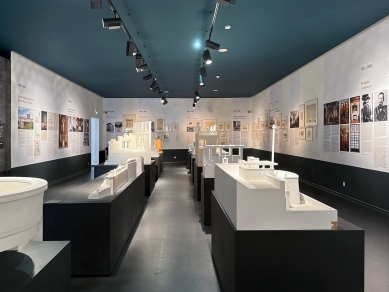
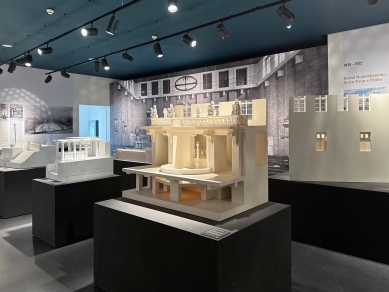
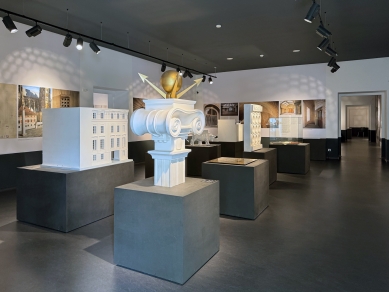
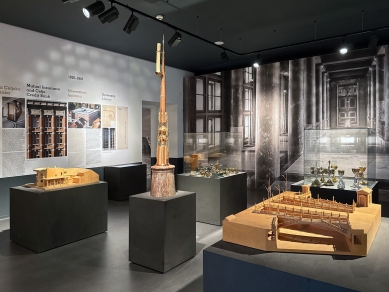
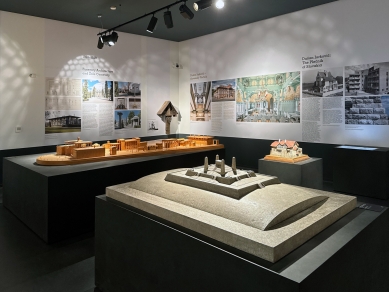
A significant part of the exhibition focuses on Josip Plečnik's relationship with Slovakia – showcasing the inspiration from folk art, the works of his students, and the works of Dušan Jurkovič, with whom Plečnik shared an admiration for tradition. Among the exhibits, you will find models of the Mohyla on Bradlo, Jurkovič's villa, as well as furniture from a student dormitory and a cross from military cemeteries in Galicia.
The exhibition was ceremoniously opened on October 1, 2025, by the President of the Slovak Republic Peter Pellegrini, the President of the Republic of Slovenia Nataša Pirc Musar, the President of the Republic of Austria Alexander Van der Bellen, the President of the Czech Republic Petr Pavel, and the Chairman of the National Council of the Slovak Republic Richard Raši.
The National Museum of Slovakia
More than a century has passed since Josip Plečnik left his position as a professor at the Prague University of Applied Arts, and more than a quarter of a century since the grand exhibition of his works at Prague Castle. His influence in Prague also resonated in Slovakia. He himself collected artifacts of Slovak folk art, and his students, especially Jindřich Merganc, significantly contributed to the development of Slovak architecture. Because his work has lost none of its relevance, we want to commemorate him today with a unique exhibition at Bratislava Castle.
The exhibition will present all three phases of his life and artistic journey. The early period in Vienna 1892-1911, where he advanced from a carpenter’s apprentice to a student at the prestigious master school of Prof. Otto Wagner at the Academy of Fine Arts, became his leading associate and eventually an independent architect, gaining respect for the buildings of Zacherl’s Palace and the Church of the Holy Spirit. When the heir to the throne Ferdinand d'Este prevented his appointment by Wagner's successor, his second creative period began: his friend from student years, Jan Kotěra, recommended him for the position of professor at the University of Applied Arts, and thus Plečnik moved to Prague in 1911, where over ten years he mentored fifty prominent Czech architects. In 1921, the final stage of his life began. He accepted a professorship in his native Ljubljana, but at the same time served as the castle architect at Prague Castle during the time of the first Czechoslovak President Tomáš Garrigue Masaryk, for whom he shaped today's dignified representation of the presidential office with outstanding modifications. He also began reshaping the face of the Slovenian capital, enriching it with numerous urban complexes and architectural solitaires until his death. Forgotten in the age of late modernism, Jože Plečnik was rediscovered at the end of the twentieth century with an exhibition at the Centre Pompidou in Paris in 1986 and finally with an exhibition at Prague Castle in the summer of 1996. In his work, he links the traditions of ancient and Renaissance architecture with a modern understanding of space and innovative technological methods in an original way. Therefore, his work is also an inspiration for contemporary Central European architecture.
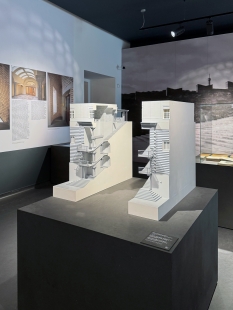
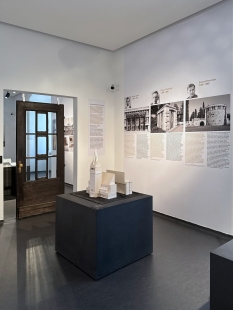
The exhibition will present the stages of his life and work in Ljubljana, Vienna, and Prague, as well as Plečnik's influence on the Slovak scene. The exhibition will be enriched with unique documents from state and private collections, complemented by a large number of models and artifacts from museum and gallery collections from Slovenia, Austria, the Czech Republic, and Slovakia. The main curators of the exhibition are Zdeněk Lukeš, Damjan Prelovšek, Boris Podrecca, and Vladimír Šlapeta.
Architecture Week
More information >
The English translation is powered by AI tool. Switch to Czech to view the original text source.




0 comments
add comment
Related articles
0
31.03.2022 | The exhibition about Plečnik's work will open the tourist season on Friday at the Castle
0
20.01.2022 | The exhibition at the Castle will commemorate the 150th anniversary of the birth of architect Plečnik
0
22.05.2015 | Invitation to the Colloquium on Plečnik's Work
0
20.06.2012 | Invitation to the exhibition Josip Plečnik | Churches