
Cottage in Vysočina

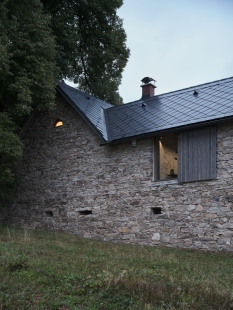
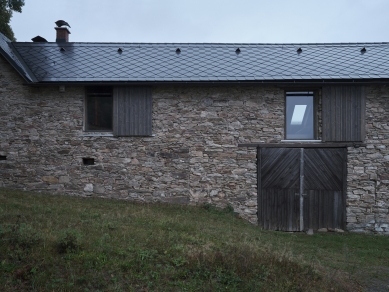
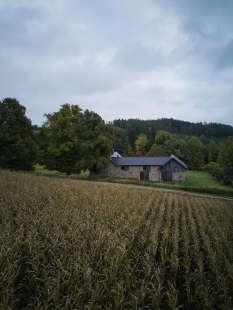
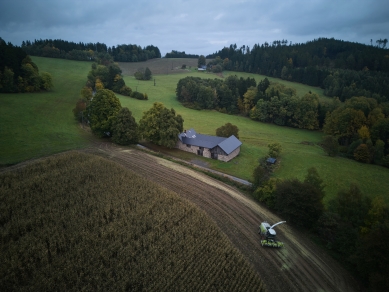
The farmhouse is located in the gently rolling landscape of the Vysočina region. Its construction began around 1820 and was completed towards the end of the 19th century. The cottage faces the access road with a stone wall and wooden barn gates. Behind it stands the house, positioned at the edge of the plot with views of the adjacent forest. The investor's family purchased the property in 1993 and gradually began restoring the exterior themselves. In 2020, the interior of the ground floor was renovated. The owners subsequently commissioned Plus One Architects to undertake the conversion of the upper floor, which offers a generous usable area.
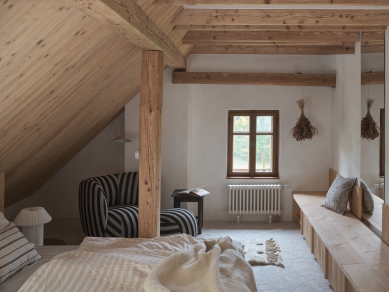
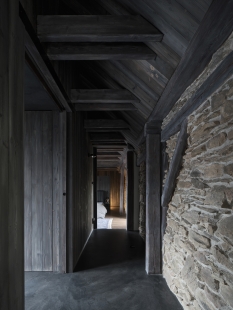
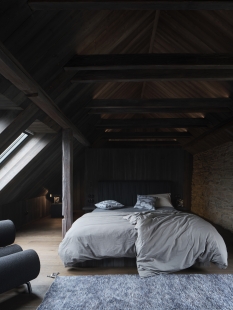
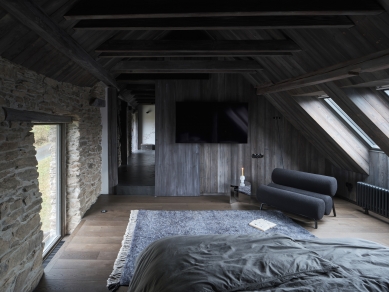
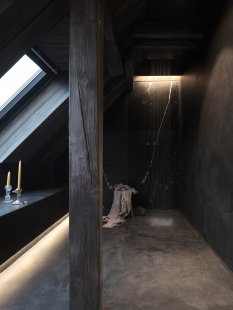
The brief was to create a cosy and relaxing setting for extended family and guests, with sufficient privacy both internally and in relation to the surrounding landscape. The design references the lower floor only through selected materials-solid spruce wood and the exposed original stone wall-while establishing a distinct character upstairs. Dark shades and raw materials in the private part of the attic are atypical for a traditional Czech cottage interior; however, they were instrumental in achieving the intended atmosphere. Combined with carefully designed lighting, the space reduces visual distractions and supports both focus and rest. Here, darkness is not an effect but a tool for calm.
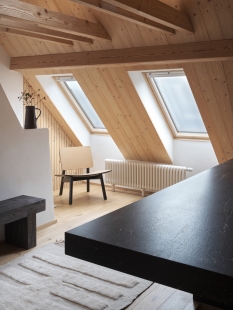
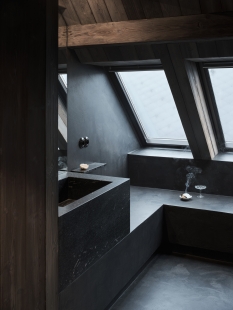
Spatial modifications included interventions in the floor structure, expanding the usable floor area. The floor level was raised with a timber build-up to unify the heights across the plan, necessitating a new staircase from the lower level. "The attic alterations allowed us to insert new windows into the original openings in the stone wall and bring daylight deep into the layout. Light enters the space more indirectly, reinforcing the calm atmosphere," explains architect Kateřina Průchová. As a result of the raised floor, the windows are partially recessed in relation to the interior floor level, revealing only their upper frames from inside. Added shutters allow for gentle regulation of privacy, security, and the degree of connection to the surrounding landscape.
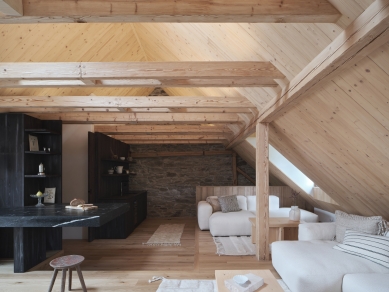
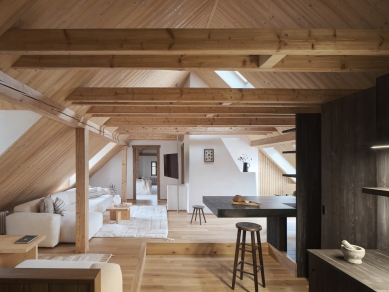
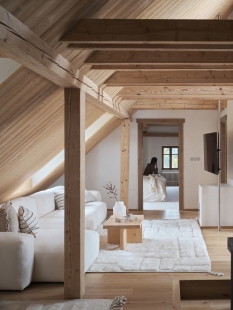
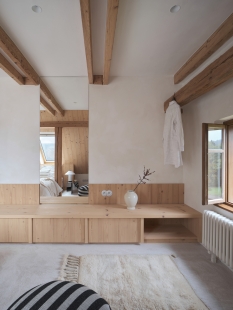
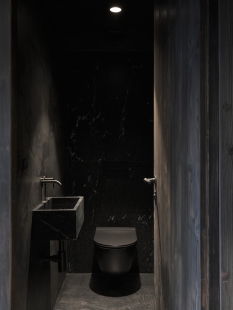
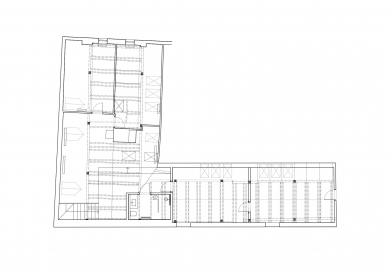
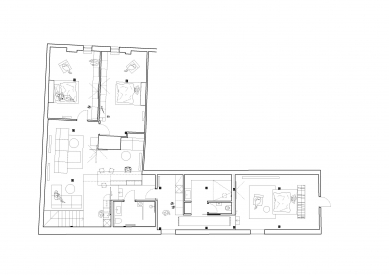
The interior is divided both spatially and atmospherically into two zones. The private area comprises a bedroom and dressing space in dark tones. The guest rooms, conceived in a hotel-like format, are lighter and more restrained. The zones are connected by a central social space with a bar, seating area, and workspace. Near the staircase are a shared bathroom and toilet. Summer comfort is ensured by air-conditioning units, while in winter, heat retention is supported by radiators, upgraded door and window seals, and a sliding partition at the staircase separating the two floors.
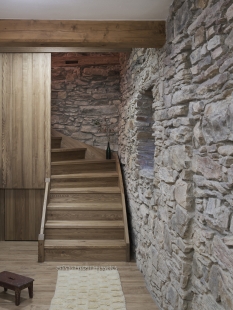
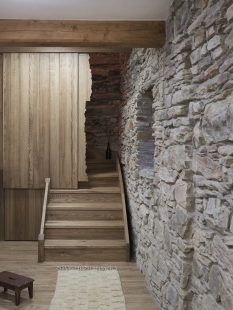
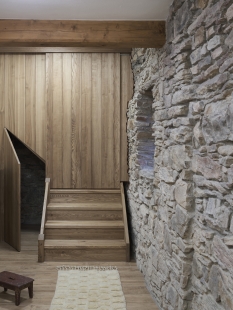
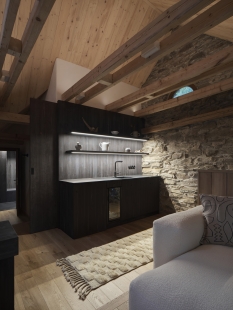
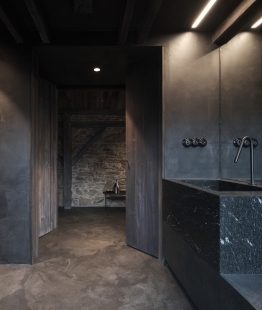
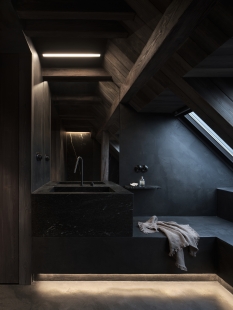
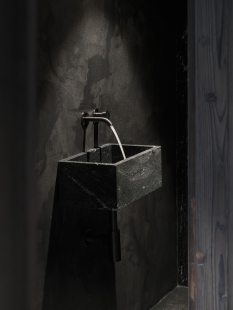
The dominant material is black solid granite, used in the bathroom and as a bar table that transitions seamlessly into the worktop beneath the sloped roof. The original stone wall remains an exposed feature of the interior. Craftsmanship is evident, for example, in the sliding door at the staircase, whose edge follows the uneven surface of the stone wall. A steel pole placed in the centre of the social space allows a rotating television to be suspended on a custom hook, as requested by the investor. The attic atmosphere is further shaped by indirect lighting-a combination of lamps, reflected light, and integrated LED strips enabling adjustments in both intensity and character.
A key advantage of the project was the family's deep knowledge of the house, which helped refine both the scope of interventions and their execution. "From the beginning, the owners knew they did not want to rush the renovation. It was important for them to approach it thoughtfully and with quality, even if it took longer," says the project's author, architect Petra Ciencialová. Construction and craft work were carried out by local artisans, whose skill and accessibility proved essential to the gradual transformation.
The renovation did not result in a radical change, but rather became another layer in the house's ongoing evolution. Today, the attic offers space for gathering as well as solitude-a calm retreat that works with darkness, materiality, and light as instruments of concentration and relaxation.
The brief was to create a cosy and relaxing setting for extended family and guests, with sufficient privacy both internally and in relation to the surrounding landscape. The design references the lower floor only through selected materials-solid spruce wood and the exposed original stone wall-while establishing a distinct character upstairs. Dark shades and raw materials in the private part of the attic are atypical for a traditional Czech cottage interior; however, they were instrumental in achieving the intended atmosphere. Combined with carefully designed lighting, the space reduces visual distractions and supports both focus and rest. Here, darkness is not an effect but a tool for calm.
Spatial modifications included interventions in the floor structure, expanding the usable floor area. The floor level was raised with a timber build-up to unify the heights across the plan, necessitating a new staircase from the lower level. "The attic alterations allowed us to insert new windows into the original openings in the stone wall and bring daylight deep into the layout. Light enters the space more indirectly, reinforcing the calm atmosphere," explains architect Kateřina Průchová. As a result of the raised floor, the windows are partially recessed in relation to the interior floor level, revealing only their upper frames from inside. Added shutters allow for gentle regulation of privacy, security, and the degree of connection to the surrounding landscape.
The interior is divided both spatially and atmospherically into two zones. The private area comprises a bedroom and dressing space in dark tones. The guest rooms, conceived in a hotel-like format, are lighter and more restrained. The zones are connected by a central social space with a bar, seating area, and workspace. Near the staircase are a shared bathroom and toilet. Summer comfort is ensured by air-conditioning units, while in winter, heat retention is supported by radiators, upgraded door and window seals, and a sliding partition at the staircase separating the two floors.
The dominant material is black solid granite, used in the bathroom and as a bar table that transitions seamlessly into the worktop beneath the sloped roof. The original stone wall remains an exposed feature of the interior. Craftsmanship is evident, for example, in the sliding door at the staircase, whose edge follows the uneven surface of the stone wall. A steel pole placed in the centre of the social space allows a rotating television to be suspended on a custom hook, as requested by the investor. The attic atmosphere is further shaped by indirect lighting-a combination of lamps, reflected light, and integrated LED strips enabling adjustments in both intensity and character.
A key advantage of the project was the family's deep knowledge of the house, which helped refine both the scope of interventions and their execution. "From the beginning, the owners knew they did not want to rush the renovation. It was important for them to approach it thoughtfully and with quality, even if it took longer," says the project's author, architect Petra Ciencialová. Construction and craft work were carried out by local artisans, whose skill and accessibility proved essential to the gradual transformation.
The renovation did not result in a radical change, but rather became another layer in the house's ongoing evolution. Today, the attic offers space for gathering as well as solitude-a calm retreat that works with darkness, materiality, and light as instruments of concentration and relaxation.



0 comments
add comment