
Kosmalt

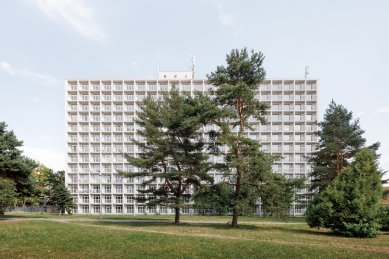
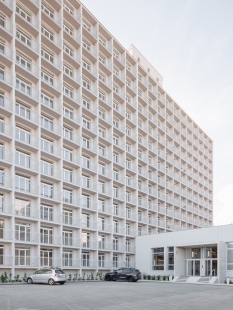
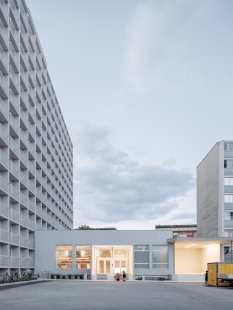
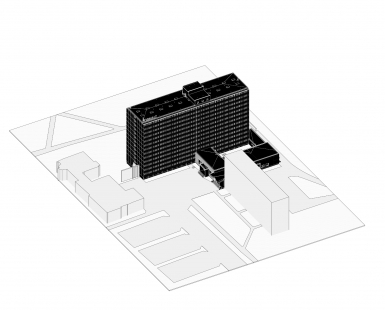
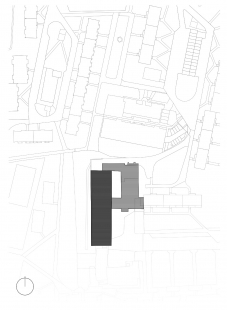
KOSMALT was originally the largest workers' hostel of the Košice steelworks VSŽ, built in the 1960s according to the design of architects Ladislav Greč and Róbert Kandrík. The name of the building refers to a type of enamelled steel, the production of which was specific to the local steelworks. The building is located in the Košice district of Terasa and, thanks to its distinctive silhouette and characteristic façade, forms a dominant feature of the urban structure.
The goal of the comprehensive restoration of both the exterior and interior of the building was to preserve the identity of the structure, rehabilitate its original qualities, and adapt it to contemporary housing requirements. The architects' approach is based on the belief that even buildings of this type can offer full-fledged and attractive urban living after sensitive transformation.
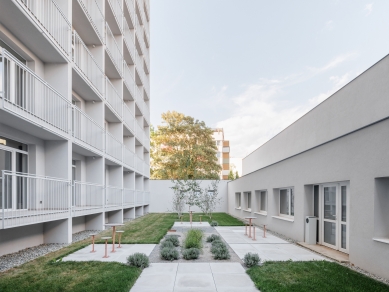
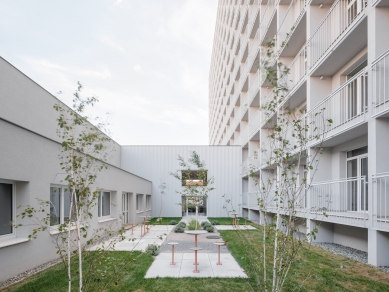
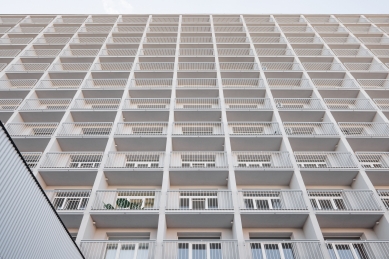
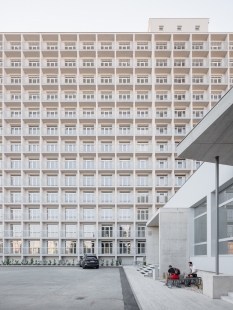
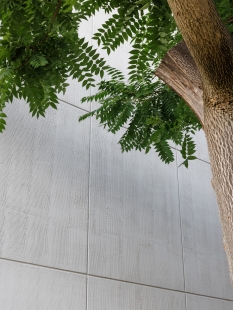
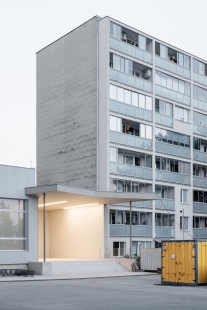
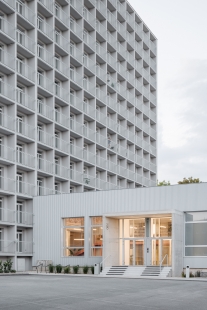
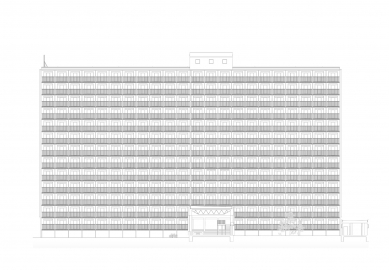
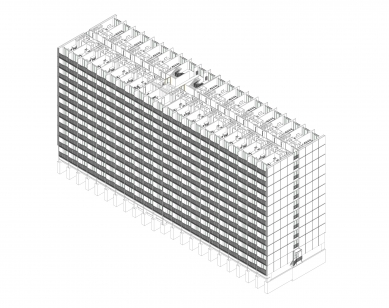
The thirteen-story building is characterized by a striking façade - a geometric grid created from prefabricated concrete modules. The construction strictly respects the original rigorous grid, further developing this fascinating principle into a prominent architectural motif. The strictly modular eastern and western façades – a grid of 22 × 13 identical panels – appear particularly captivating in their monumentality. The monochromatic gray color of the façade enhances its purity and expression.
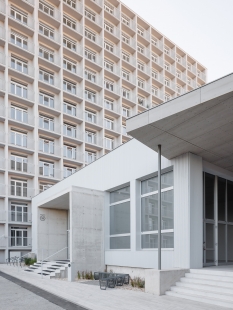
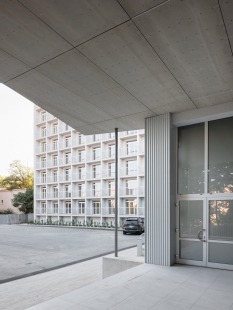
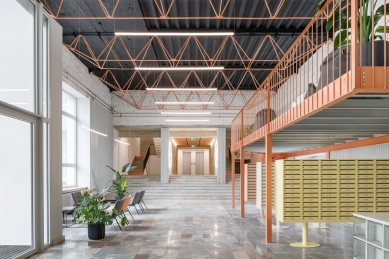
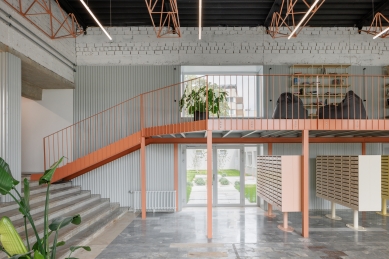
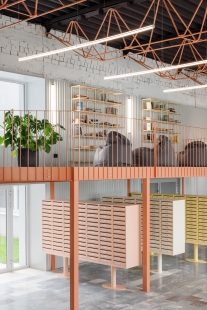
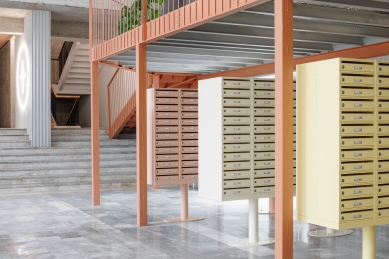
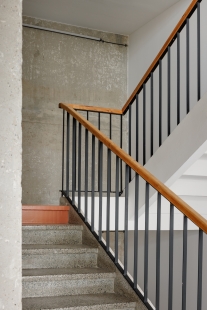
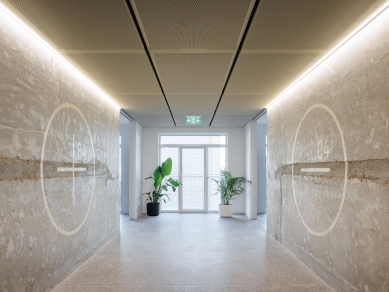
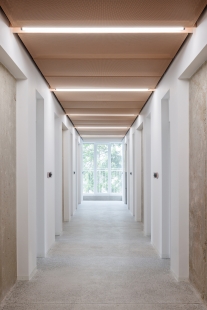
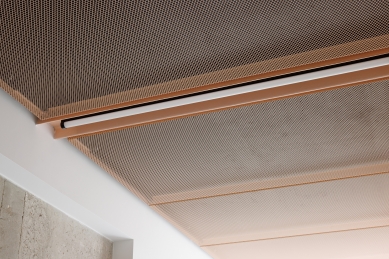
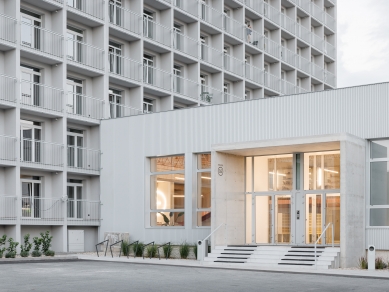
An important aspect of the design was to uncover and restore valuable original materials and elements lost under the layers of time. The original cast terrazzo in common corridors and staircases, marble cladding in the vestibule, travertine base of the façade, original steel beams in communal spaces, as well as the steel balcony and staircase in the entrance hall were preserved and refurbished. New interventions enter the building with a contemporary language through expanded metal, corrugated sheets, custom-designed new fixtures, and bold color accents. The old and new remain clearly distinguished from floor to ceiling, yet are architecturally balanced.
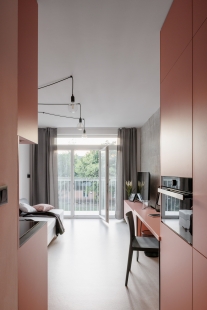
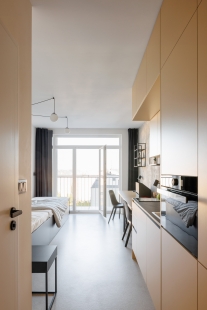
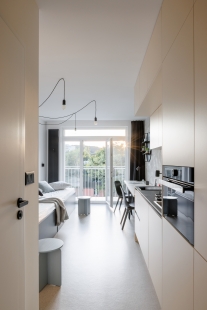
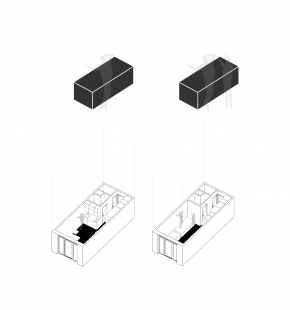
The hostel has retained its original function – housing. The layout respects the logic of the building and fully realizes its potential. The main challenge was to transform the original, identical residential cells into quality private housing. Analyses during the design phase confirmed that the proposed XS layouts work well for both variants – for an individual as well as for a couple. Within an area of 21 m², everything is provided in line with today’s standards. The feeling of confinement is alleviated by generous glazing, balconies, and attractive views, especially from the upper floors. Overall, the building offers 507 residential units.
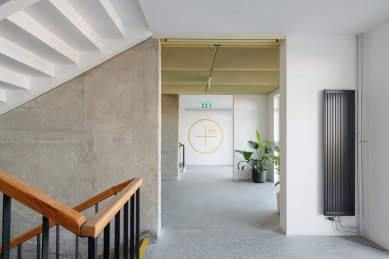
In contrast to the scale of the apartments themselves, the entrance and vertical communication appear generous and representative. Thanks to ample natural light, the views, and generous dimensions, they take on the character of social spaces on each of the thirteen floors. Two identical, symmetrically placed staircases clearly divide the building into two parts – originally male and female.
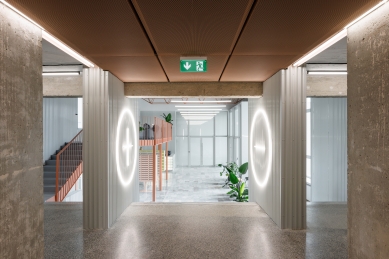
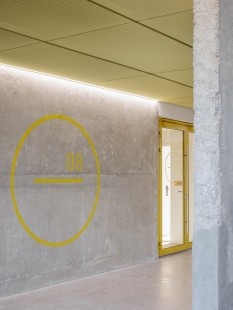
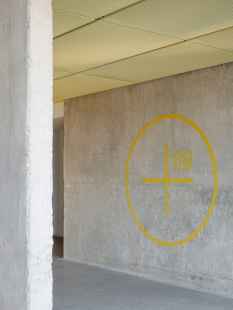
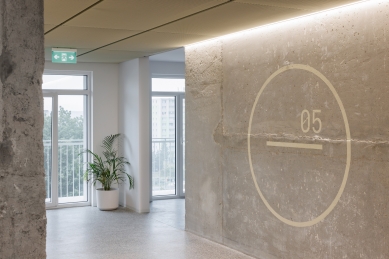
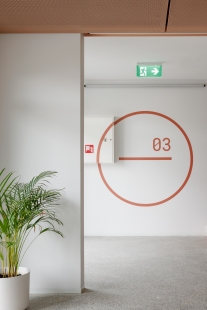
A new orientation system based on color and symbol is also part of the design. Salmon, ivory, and yellow colors along with the plus and minus signs distinguish the individual corridor wings and help visitors intuitively read the layout of the house.
KOSMALT was not originally designed as an adaptable building, but its recent restoration has enabled the architects to incorporate this characteristic into the structure. They have thus brought a perspective that is still not common in our conditions – a sensitive transformation of the existing building, and therefore a "renovation of the panel building" as a valid architectural strategy.
Originally, the building served as a socialist workers' hostel – a type of accommodation designated for single male and female workers, aimed at providing basic amenities as well as social oversight. Today, the same building enters a wholly different social context and offers individual, dignified, and contemporary forms of housing. The transformation of KOSMALT confirms that architecture can flexibly adapt to diverse needs and reflect the life cycles of those who inhabit it.
The goal of the comprehensive restoration of both the exterior and interior of the building was to preserve the identity of the structure, rehabilitate its original qualities, and adapt it to contemporary housing requirements. The architects' approach is based on the belief that even buildings of this type can offer full-fledged and attractive urban living after sensitive transformation.
The thirteen-story building is characterized by a striking façade - a geometric grid created from prefabricated concrete modules. The construction strictly respects the original rigorous grid, further developing this fascinating principle into a prominent architectural motif. The strictly modular eastern and western façades – a grid of 22 × 13 identical panels – appear particularly captivating in their monumentality. The monochromatic gray color of the façade enhances its purity and expression.
An important aspect of the design was to uncover and restore valuable original materials and elements lost under the layers of time. The original cast terrazzo in common corridors and staircases, marble cladding in the vestibule, travertine base of the façade, original steel beams in communal spaces, as well as the steel balcony and staircase in the entrance hall were preserved and refurbished. New interventions enter the building with a contemporary language through expanded metal, corrugated sheets, custom-designed new fixtures, and bold color accents. The old and new remain clearly distinguished from floor to ceiling, yet are architecturally balanced.
The hostel has retained its original function – housing. The layout respects the logic of the building and fully realizes its potential. The main challenge was to transform the original, identical residential cells into quality private housing. Analyses during the design phase confirmed that the proposed XS layouts work well for both variants – for an individual as well as for a couple. Within an area of 21 m², everything is provided in line with today’s standards. The feeling of confinement is alleviated by generous glazing, balconies, and attractive views, especially from the upper floors. Overall, the building offers 507 residential units.
In contrast to the scale of the apartments themselves, the entrance and vertical communication appear generous and representative. Thanks to ample natural light, the views, and generous dimensions, they take on the character of social spaces on each of the thirteen floors. Two identical, symmetrically placed staircases clearly divide the building into two parts – originally male and female.
A new orientation system based on color and symbol is also part of the design. Salmon, ivory, and yellow colors along with the plus and minus signs distinguish the individual corridor wings and help visitors intuitively read the layout of the house.
KOSMALT was not originally designed as an adaptable building, but its recent restoration has enabled the architects to incorporate this characteristic into the structure. They have thus brought a perspective that is still not common in our conditions – a sensitive transformation of the existing building, and therefore a "renovation of the panel building" as a valid architectural strategy.
Originally, the building served as a socialist workers' hostel – a type of accommodation designated for single male and female workers, aimed at providing basic amenities as well as social oversight. Today, the same building enters a wholly different social context and offers individual, dignified, and contemporary forms of housing. The transformation of KOSMALT confirms that architecture can flexibly adapt to diverse needs and reflect the life cycles of those who inhabit it.
The English translation is powered by AI tool. Switch to Czech to view the original text source.








0 comments
add comment