
Lebenski

The Revived Beauty of Mountain Architecture
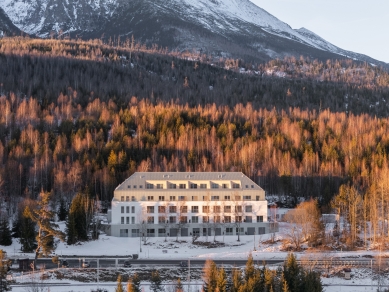
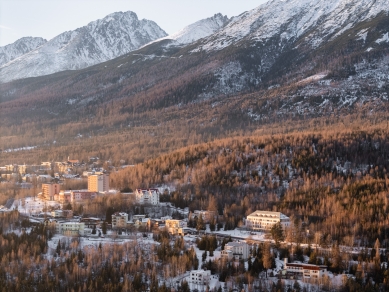
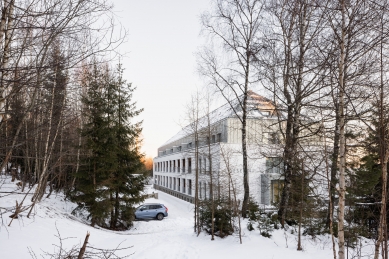
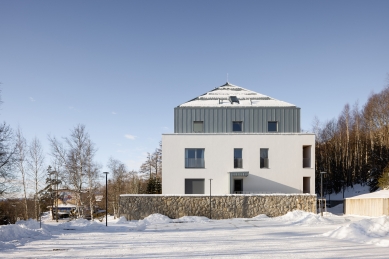
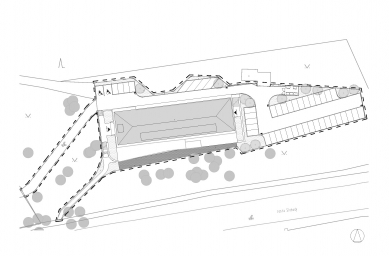
The Lebenski apartment building stands isolated on the edge of the mountain forest zone, behind which the majestic peaks of the High Tatras rise. Its exclusive position in the area of Horný Smokovec, aptly named Pekná vyhliadka, makes it a landmark visible from Poprad. This was why the architects aimed for a tranquil presence in the environment, drawing attention with its formal simplicity and purity.The name Lebenski refers to the original sanatorium Nový život built in the early 1960s. The facility, which had deteriorated since the 1990s and lost its architectural and functional qualities, was purchased by the company Bukna & Laurinčík, which began its complete transformation into an apartment building in 2023, entrusted to the studio atrium architekti. This project continued their previous successful project in Dolný Kubín, which was nominated for the CEZAAR award.
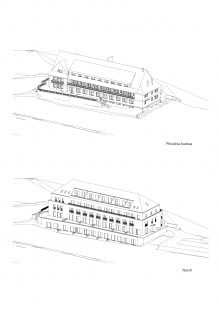
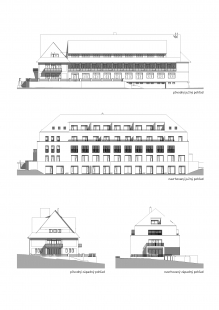
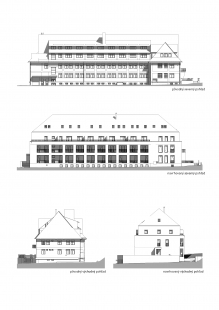
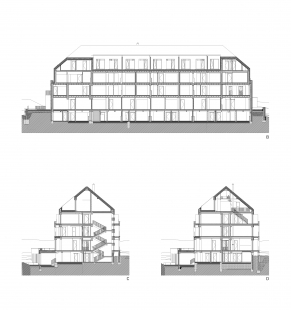
The framework for the reconstruction was determined by the strict regulations of the TANAP National Park and the town of Vysoké Tatry, as well as the investor's requirement for maximum utilization of all spaces. The architects' intention was to restore the building's purposeful elegance inspired by the architecture of the Tatra mountain hotel. They increased the accommodation capacity of the new apartment building by utilizing the attic and basement while preserving the original height, footprint, and silhouette of the house.
"The opportunity to work in the architecture of the High Tatras is not a typology we encounter every day. Local Tatra architecture is a historical layer that has been developing since the times of Austria-Hungary. It features influences from Switzerland, Italy, and Budapest, while simultaneously rooted in the local environment and folklore. It represents an important architectural trace of Slovakia, and working in this context was an interesting challenge for us, for which we are grateful."
From Dilapidated Hotel to Apartment Building
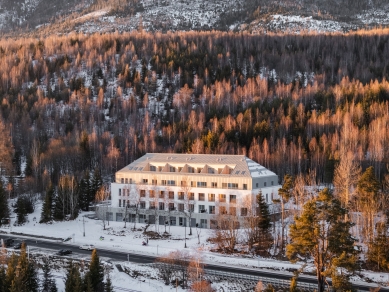
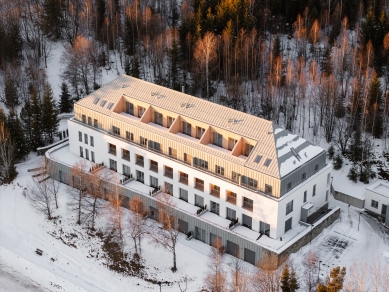
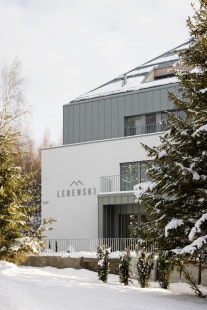
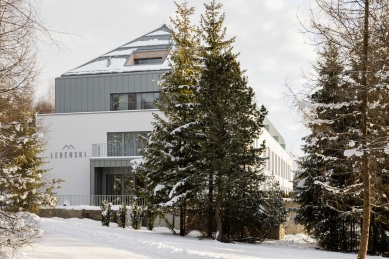
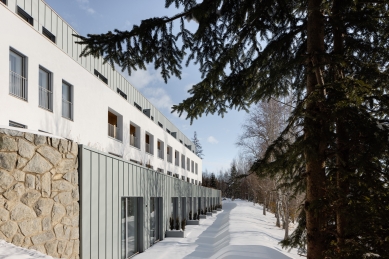
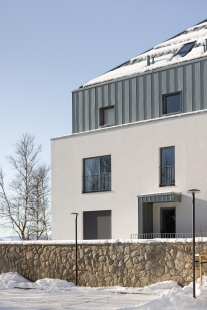
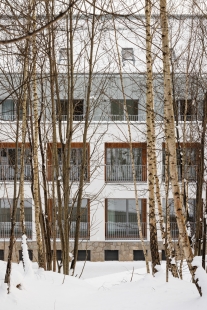
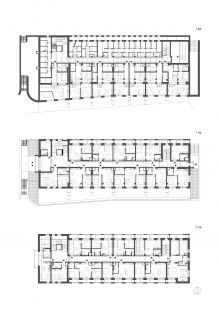
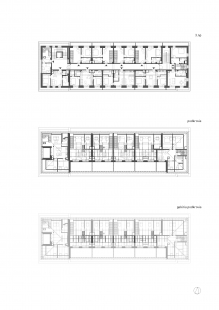
The original reinforced concrete structure of the three-story building was uncovered to its load-bearing skeleton during reconstruction and statically restructured, particularly in the attic and basement. The project's greatest challenge was the transformation of the basement into living space, even under the newly designed terrace. The terrace was originally placed directly on the ground, so it had to be expanded on the sides and supplemented with a system of new foundations. The apartments are designed as two-level units to ensure optimal ceiling heights.A sensitive transformation of the architectural expression was achieved by replacing the original gable roof with an addition featuring a hipped roof, which remains a dominant element typical of traditional mountain architecture. The new roof accommodates duplex apartments with living galleries and recessed terraces oriented to the south. Balconies and loggias were created around the perimeter of the building, and the enlarged windows further opened views of the surrounding landscape of the High Tatras.
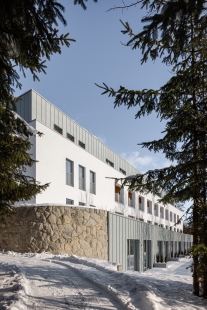
The building's appearance is also respected by the material solutions. The third floor and the attic feature a titanium-zinc cladding, while the first and second floors have a plastered facade. Despite the significant financial demands, the investor opted for the restoration of the plinth made of massive granite blocks approximately 40 cm deep, the dismantling and reinstallation of which represented an extraordinarily complicated stonemasonry task.
Living with a Mountain Character
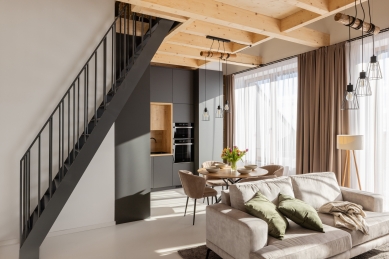
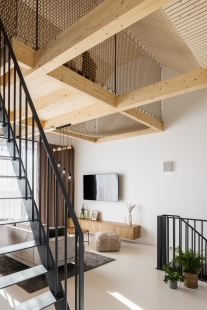
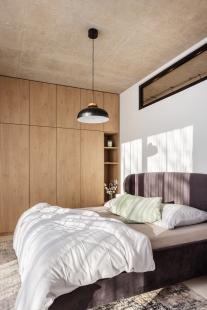
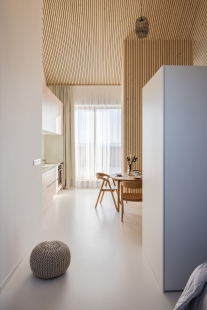
The apartments are designed in various sizes, from smaller units to duplex apartments with gallery spaces. The architects defined the basic layout solutions, room heights, and key elements in the interior, such as a material palette of neutral colors, light floors combined with wood. The actual furnishings and final appearance of the interiors of the individual apartments are left to the individual preferences of the owners.Parking is newly addressed with grass paving blocks, but an advantage is alternative transportation. The Tatra Electric Railway is less than 100 meters away, providing easy connections to other mountain resorts and direct trains to Poprad. There is also a pedestrian path running right beneath the building along the Path of Freedom, stretching from Tatranská Lomnica to Tatranská Polianka.
The English translation is powered by AI tool. Switch to Czech to view the original text source.









0 comments
add comment