
Family House Tlmače

Character
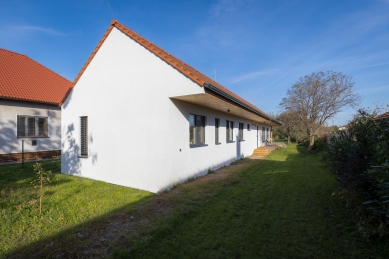
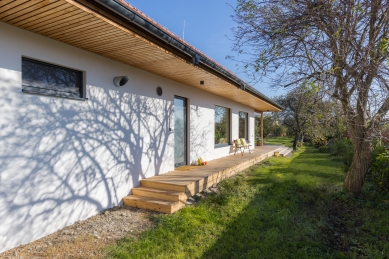
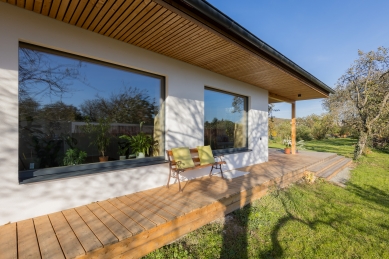
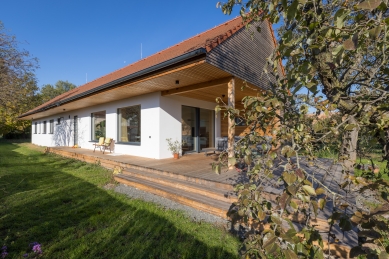
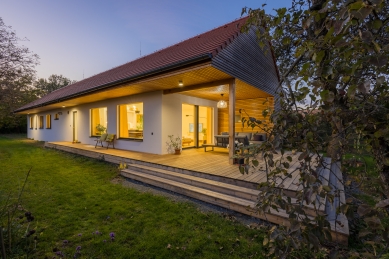
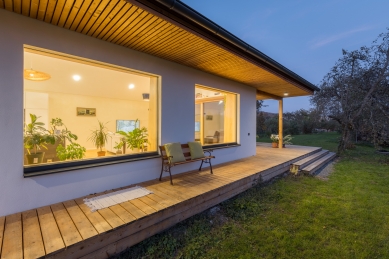
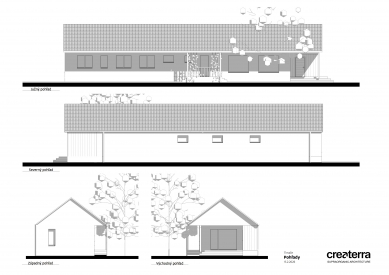
The house is designed in accordance with the character of the original street development, characterized by narrow, longitudinal houses with gables facing the street. Its mass resonates with traditional rural architecture, but the material solutions, details, and interior reinterpret these foundations in a contemporary, modern language. The long southern facade, oriented towards the garden, is divided by window openings of the living rooms and shaded by a prominent eave.
Structure and Material
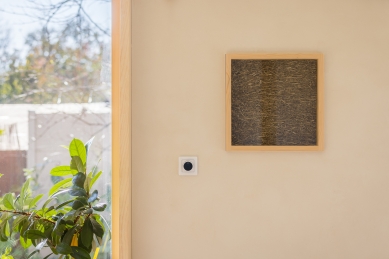
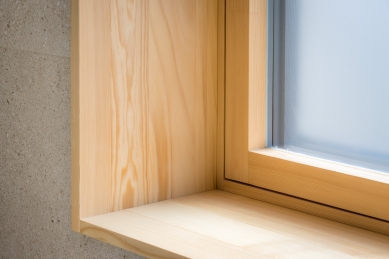
The load-bearing structure consists of EcoCocon timber-straw panels, which are also thermal insulation, thus combining the structural function with high energy efficiency of the envelope. The interior walls are finished with a fine vanilla-colored clay plaster from the manufacturer Arterre.sk, which contributes to a healthy microclimate and natural moisture regulation. The building is complemented by elegant, high-quality wood-aluminum windows from Smartwin-Hoblina sk.
Layout
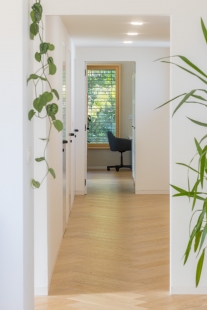
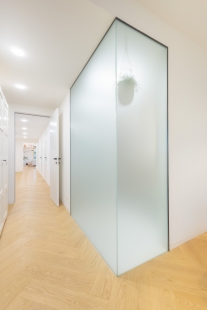
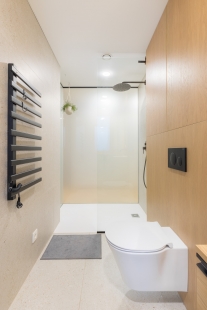
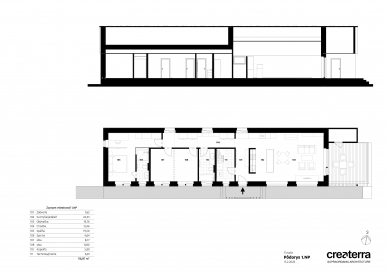
The house layout consists of three rooms with the possibility of flexible adjustment to a four-room variant by dividing the large children's room. The parents' bedroom functionally connects the wardrobe, workspace, and bathroom with a frosted glass view into the shower corner.
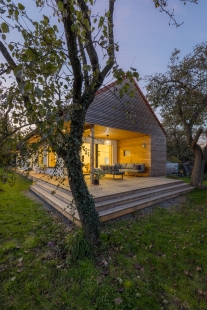
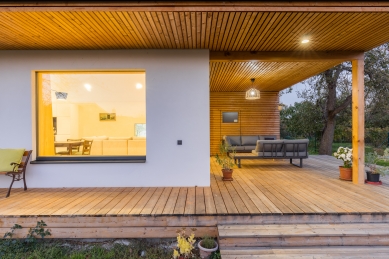
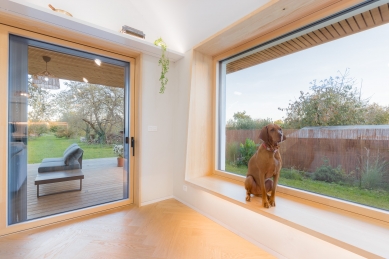
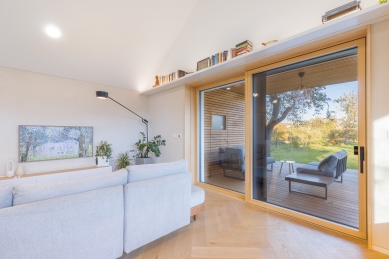
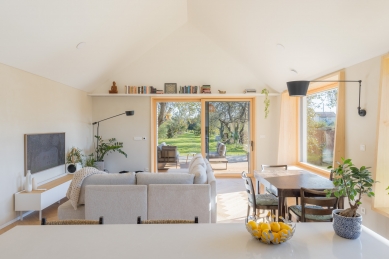
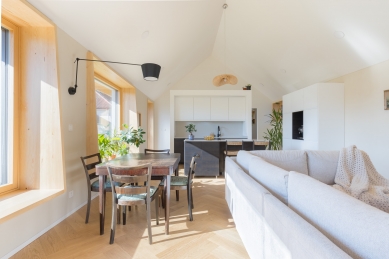
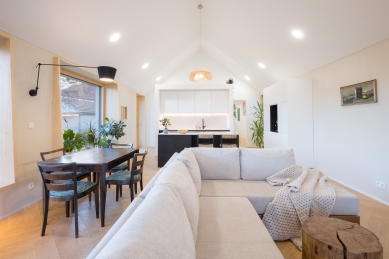
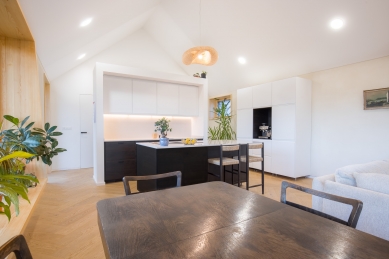
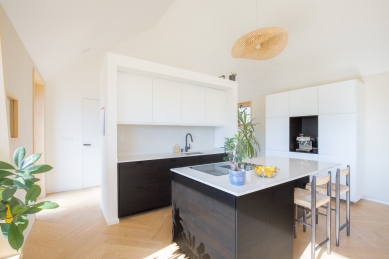
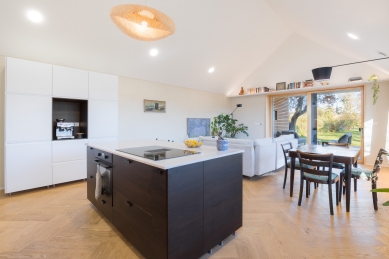
The kitchen is connected to the living room, creating a compact day space oriented to the south and east with large glazing that links the living room to the covered exterior terrace. Most of the glazing is protected from summer overheating thanks to the eave, which also allows the use of solar gains in the winter.
Other Particularities
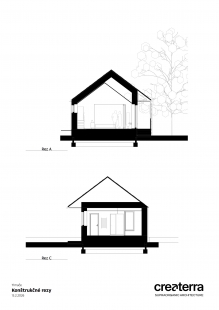
The living room is designed as an open space without a ceiling; its volume is directly shaped by the slopes of the gable roof, giving the interior an airy feel and a strong vertical dynamic. The roof structure is formed by truss beams instead of rafters, supported by a central strut at the ridge. The truss construction allows for the blowing in of a sufficient layer of cellulose thermal insulation while maintaining a subtle structural solution. The visual symmetry of the interior is created by a treatment on one side with a drywall ceiling, behind which hidden air conditioning ducts run.
Other parts of the house have a flat ceiling; above them are "A"-shaped truss beams with loosely blown cellulose, arranged in a horizontal plane.
Facade and Roof
The facade of the house is plastered, which supports its modest, archetypal expression. The supplementary storage building for garden furniture on the terrace, on the other hand, is clad in wood, creating a subtle material contrast and a natural connection with the exterior.
The gable roof with ceramic tiles respects the regional building tradition and contributes to the harmonious integration of the house into the rural environment.
Conclusion
Thanks to elements of passive standards, the ability of the building to dampen temperature fluctuations, and the use of natural materials with stored carbon, the house has a timeless character and exceptional resilience to the impacts of climate change. It is a sustainable solution that combines living comfort, environmental responsibility, and long-term quality and value of the building.
The house is designed in accordance with the character of the original street development, characterized by narrow, longitudinal houses with gables facing the street. Its mass resonates with traditional rural architecture, but the material solutions, details, and interior reinterpret these foundations in a contemporary, modern language. The long southern facade, oriented towards the garden, is divided by window openings of the living rooms and shaded by a prominent eave.
Structure and Material
The load-bearing structure consists of EcoCocon timber-straw panels, which are also thermal insulation, thus combining the structural function with high energy efficiency of the envelope. The interior walls are finished with a fine vanilla-colored clay plaster from the manufacturer Arterre.sk, which contributes to a healthy microclimate and natural moisture regulation. The building is complemented by elegant, high-quality wood-aluminum windows from Smartwin-Hoblina sk.
Layout
The house layout consists of three rooms with the possibility of flexible adjustment to a four-room variant by dividing the large children's room. The parents' bedroom functionally connects the wardrobe, workspace, and bathroom with a frosted glass view into the shower corner.
The kitchen is connected to the living room, creating a compact day space oriented to the south and east with large glazing that links the living room to the covered exterior terrace. Most of the glazing is protected from summer overheating thanks to the eave, which also allows the use of solar gains in the winter.
Other Particularities
The living room is designed as an open space without a ceiling; its volume is directly shaped by the slopes of the gable roof, giving the interior an airy feel and a strong vertical dynamic. The roof structure is formed by truss beams instead of rafters, supported by a central strut at the ridge. The truss construction allows for the blowing in of a sufficient layer of cellulose thermal insulation while maintaining a subtle structural solution. The visual symmetry of the interior is created by a treatment on one side with a drywall ceiling, behind which hidden air conditioning ducts run.
Other parts of the house have a flat ceiling; above them are "A"-shaped truss beams with loosely blown cellulose, arranged in a horizontal plane.
Facade and Roof
The facade of the house is plastered, which supports its modest, archetypal expression. The supplementary storage building for garden furniture on the terrace, on the other hand, is clad in wood, creating a subtle material contrast and a natural connection with the exterior.
The gable roof with ceramic tiles respects the regional building tradition and contributes to the harmonious integration of the house into the rural environment.
Conclusion
Thanks to elements of passive standards, the ability of the building to dampen temperature fluctuations, and the use of natural materials with stored carbon, the house has a timeless character and exceptional resilience to the impacts of climate change. It is a sustainable solution that combines living comfort, environmental responsibility, and long-term quality and value of the building.
Createrra s.r.o.
The English translation is powered by AI tool. Switch to Czech to view the original text source.




0 comments
add comment