<Villa>VICUS</Villa>

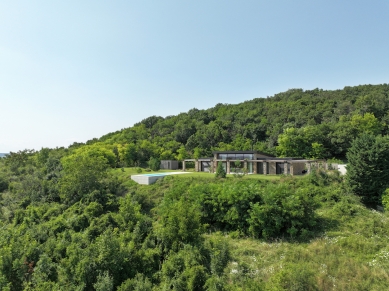
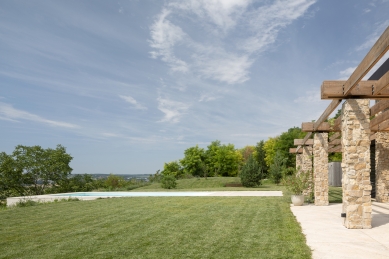
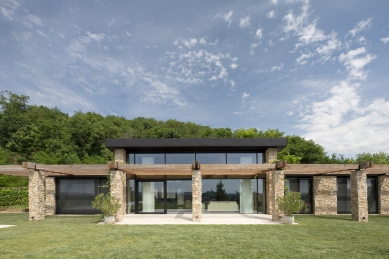
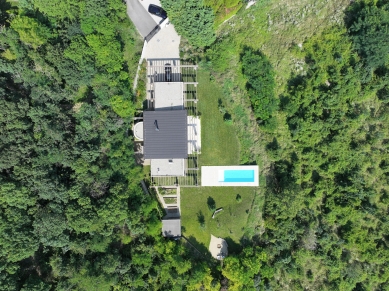
The family house VICUS is a single-story building located on a sloping plot beneath Zobor in Nitra, at the end of a street with a forest above the property and a free southern view of the city, Calvary, and Nitra Castle. The design stems from a simple requirement of the investor – to open a view of the city’s landmark from every living space while creating a home that naturally functions in everyday family life.
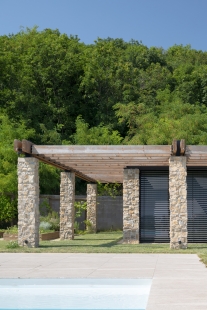
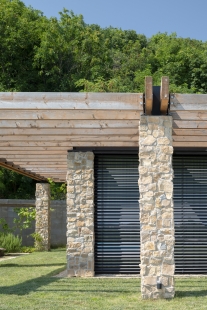
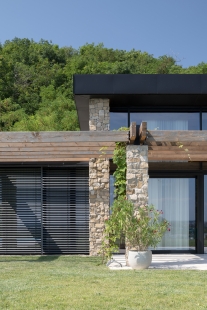
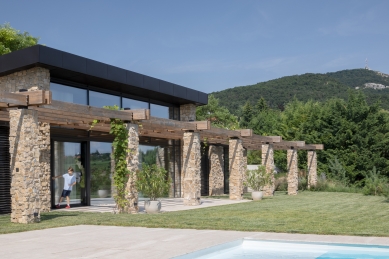
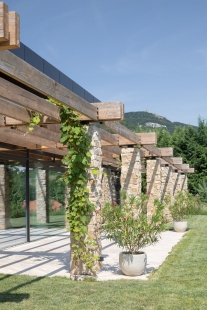
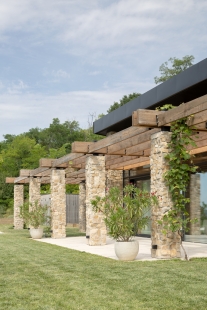
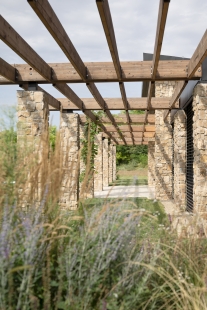
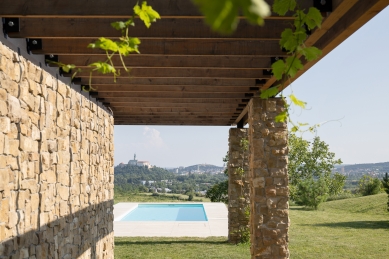
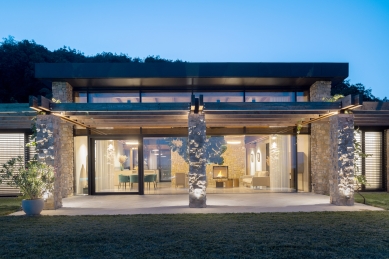
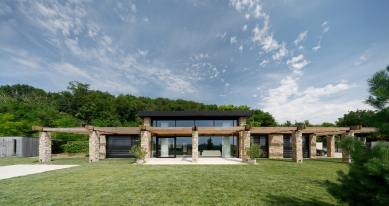
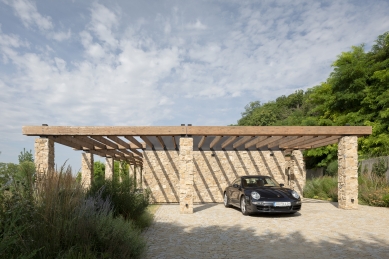
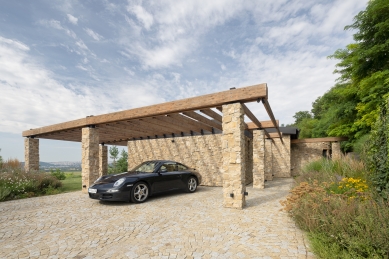
The architectural concept is based on developing a single-story layout along the southern facade and uniting the elementary volumes of the house with a continuous wooden pergola. This pergola is not an accessory element but a fundamental compositional and climatic principle of the building. It defines terraces, creates protected semi-public and outdoor spaces, naturally shades the glazing of the main facade, and visually connects the interior with the exterior.
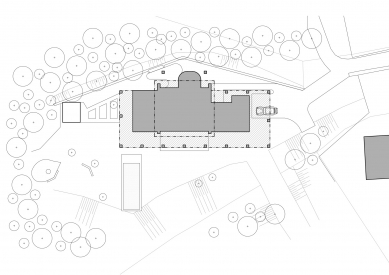
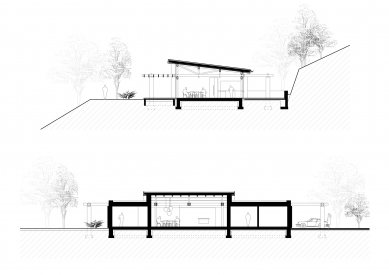
The layout with a usable area of 158 m² includes an elevated living space with a kitchen and dining area, a main bedroom, two children's rooms, two bathrooms, and technical facilities. The necessary service functions are concentrated in the northern part of the floor plan, while the living spaces open linearly to the southern orientation. An important part of the concept is also a summer kitchen on the northern side and sightlines across the layout that reinforce the spatial continuity of the house and its relationship to the surrounding landscape.
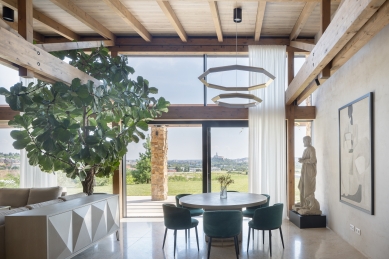
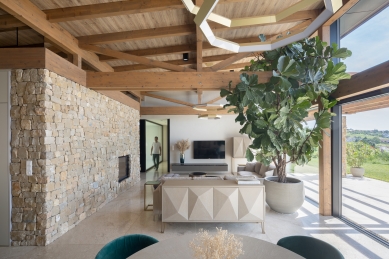
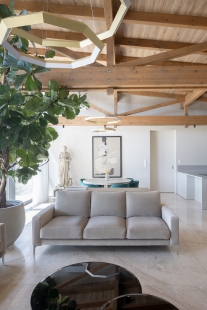
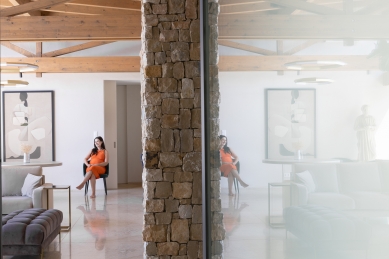
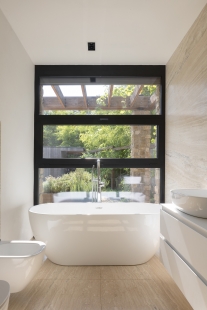
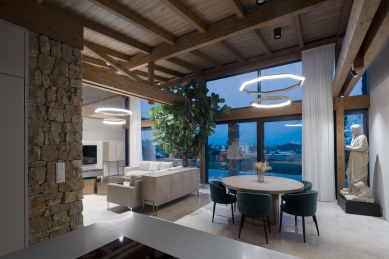
The design works with a passive climatic principle: in winter, the house utilizes solar gains through the southern glazing, while in summer, the pergola effectively limits them with shading. This principle is complemented by material continuity, which supports the readability of the architecture and the atmosphere of living. Travertine paving freely transitions from the interior to the terrace, while clay plasters and exposed wooden beams are employed inside. The material solution is intentionally understated, based on naturalness, durability, and the ability to age gracefully.
VICUS is a house built on precise spatial logic, appropriate scale, and a restrained architectural language. It does not strive for an ostentatious gesture but for cultivated and long-term sustainable living, where the view, layout, shading, and material come together as a cohesive whole.
The architectural concept is based on developing a single-story layout along the southern facade and uniting the elementary volumes of the house with a continuous wooden pergola. This pergola is not an accessory element but a fundamental compositional and climatic principle of the building. It defines terraces, creates protected semi-public and outdoor spaces, naturally shades the glazing of the main facade, and visually connects the interior with the exterior.
The layout with a usable area of 158 m² includes an elevated living space with a kitchen and dining area, a main bedroom, two children's rooms, two bathrooms, and technical facilities. The necessary service functions are concentrated in the northern part of the floor plan, while the living spaces open linearly to the southern orientation. An important part of the concept is also a summer kitchen on the northern side and sightlines across the layout that reinforce the spatial continuity of the house and its relationship to the surrounding landscape.
The design works with a passive climatic principle: in winter, the house utilizes solar gains through the southern glazing, while in summer, the pergola effectively limits them with shading. This principle is complemented by material continuity, which supports the readability of the architecture and the atmosphere of living. Travertine paving freely transitions from the interior to the terrace, while clay plasters and exposed wooden beams are employed inside. The material solution is intentionally understated, based on naturalness, durability, and the ability to age gracefully.
VICUS is a house built on precise spatial logic, appropriate scale, and a restrained architectural language. It does not strive for an ostentatious gesture but for cultivated and long-term sustainable living, where the view, layout, shading, and material come together as a cohesive whole.
sebastian nagy | architects
The English translation is powered by AI tool. Switch to Czech to view the original text source.






1 comment
add comment
Subject
Author
Date
Krása
Luboš
05.06.26 01:50
show all comments