
Dream City - Exhibition at the Thomas Bata Memorial

The Exhibition Dream City Colors the Memorial of Tomáš Baťa and Approaches the Collaboration of Tomáš Baťa with Architect Gahura
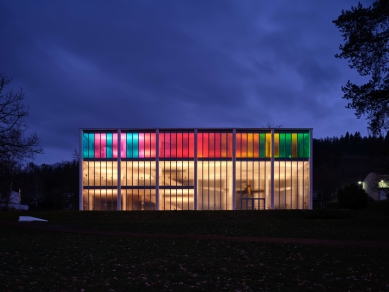
On the occasion of the 150th anniversary of Tomáš Baťa's birth and the 135th anniversary of architect František Lýdie Gahura's birth, a new exhibition titled Dream City has brought color to the Memorial of Tomáš Baťa. It recalls their shared vision of building a modern Zlín in the 1920s and 1930s. The interactive exhibition by the authors' team builds on the qualities of the building, enhances them with color accents, and allows visitors to become co-creators of the city's character through movable models of Zlín's buildings.
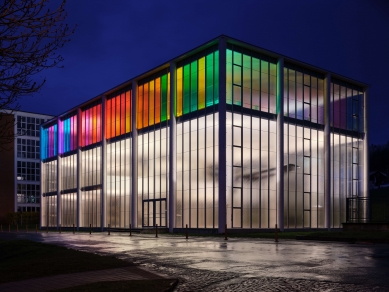
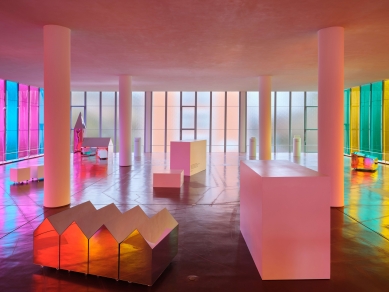
The exhibition is located on the top floor of the memorial completed according to the design of František Lýdie Gahura in 1933. The generous and clean space is dominated by light entering the interior through patterned cathedral glass. It is these qualities that have become an active element of the installation, which develops the idea of Zlín as a modernist city shared between Baťa and Gahura in a dreamlike atmosphere. The exhibition was created based on the concept of an authors' team consisting of Jan K. Rolník (Capacity Expo), Kateřina Průchová (Plus One Architects), and Filip Hauser.
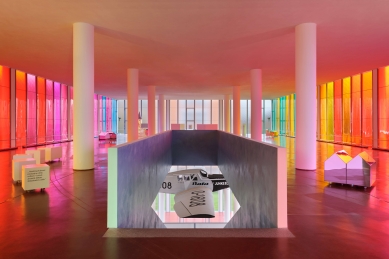
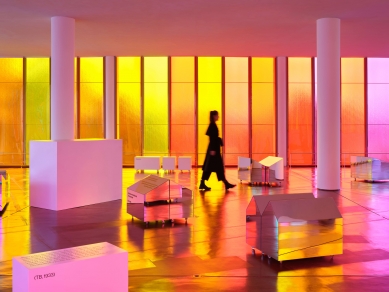
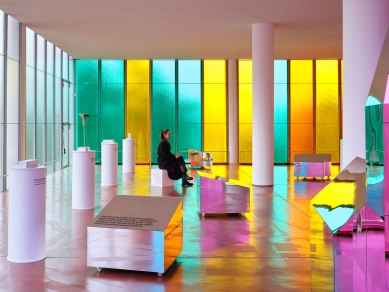
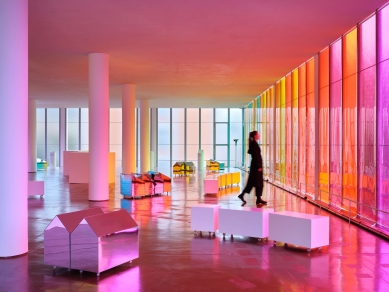
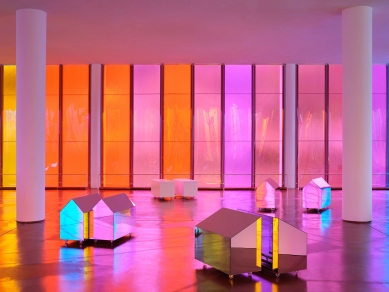
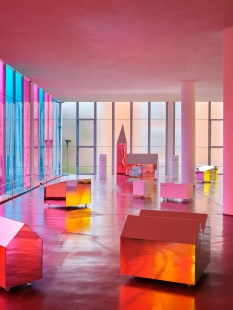
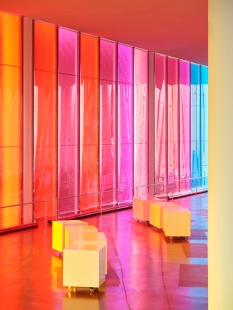
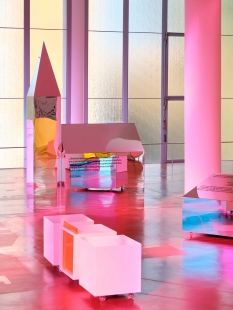
Light has become the main medium of the installation, penetrating the interior in a soft form through colored films applied to the glass shell of the building. This has created a delicately layered light scenery that changes throughout the day. “We reference the artistic work of personalities such as Olafur Eliasson, James Turrell, Dan Flavin, or Camilla Richter,” says one of the authors, Jan K. Rolník from Capacity Expo.
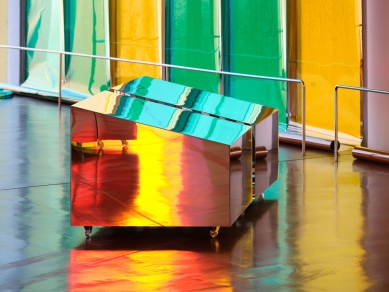
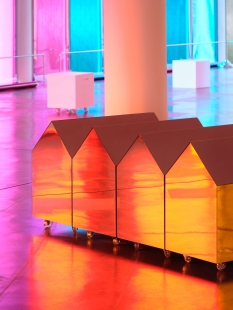
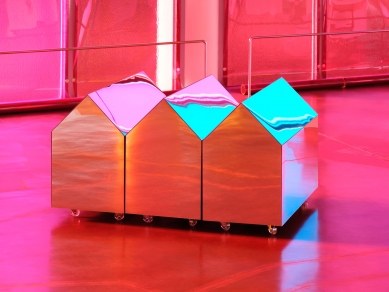
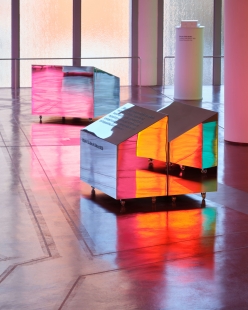
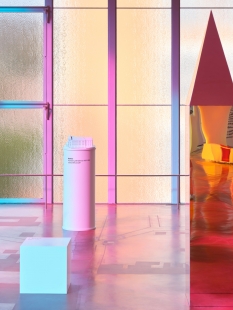
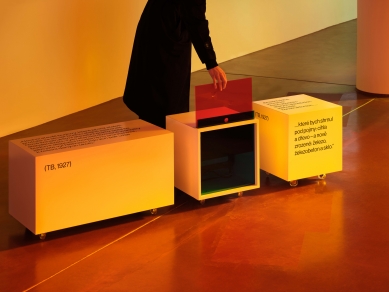
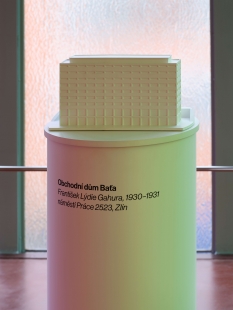
Movable objects inspired by Zlín's architecture are inserted into the space. “We simplified the modernist buildings in the form of factories, housing blocks, or Baťa's houses into geometric shapes and complemented them with typical rural architecture covered in a mirrored layer. The models reflect both colorful beams and realized architectural visions. Thanks to wheels, visitors have the opportunity to freely create their own spatial situations,” says exhibition architect Kateřina Průchová from Plus One Architects.
“It was important for us not to fight against Gahura's thinking about space but to lead a creative dialogue with it. Each member of our team – art historian, aesthetician, architect, sculptor, and graphic designer – had a say in this dialogue,” says graphic artist and co-author of the exhibition Filip Hauser. Art historian Ondřej Horák also collaborated on the project. Together, they sought a form that would bring closer not only the final appearance of Zlín but primarily the process of its creation and the dialogue between Baťa and Gahura.
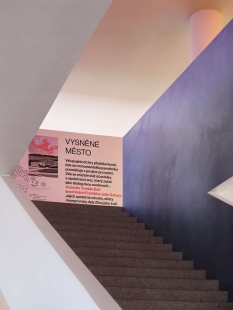
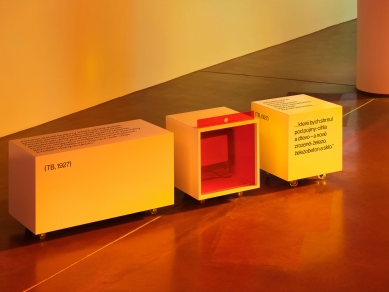
A large-format panel at the entrance to the floor introduces visitors to the context and depth of the collaboration between Baťa and Gahura. Fragments of authentic dialogues that illustrate their thinking and alignment appear throughout the installation. The textual layer is purposely concise; the exhibition primarily focuses on spatial and visual experiences. The exhibition designed specifically for the memorial utilizes its specific qualities and offers a concentrated view of the period of Zlín's greatest flourishing and its transformation into a modern city.
On the occasion of the 150th anniversary of Tomáš Baťa's birth and the 135th anniversary of architect František Lýdie Gahura's birth, a new exhibition titled Dream City has brought color to the Memorial of Tomáš Baťa. It recalls their shared vision of building a modern Zlín in the 1920s and 1930s. The interactive exhibition by the authors' team builds on the qualities of the building, enhances them with color accents, and allows visitors to become co-creators of the city's character through movable models of Zlín's buildings.
The exhibition is located on the top floor of the memorial completed according to the design of František Lýdie Gahura in 1933. The generous and clean space is dominated by light entering the interior through patterned cathedral glass. It is these qualities that have become an active element of the installation, which develops the idea of Zlín as a modernist city shared between Baťa and Gahura in a dreamlike atmosphere. The exhibition was created based on the concept of an authors' team consisting of Jan K. Rolník (Capacity Expo), Kateřina Průchová (Plus One Architects), and Filip Hauser.
Light has become the main medium of the installation, penetrating the interior in a soft form through colored films applied to the glass shell of the building. This has created a delicately layered light scenery that changes throughout the day. “We reference the artistic work of personalities such as Olafur Eliasson, James Turrell, Dan Flavin, or Camilla Richter,” says one of the authors, Jan K. Rolník from Capacity Expo.
Movable objects inspired by Zlín's architecture are inserted into the space. “We simplified the modernist buildings in the form of factories, housing blocks, or Baťa's houses into geometric shapes and complemented them with typical rural architecture covered in a mirrored layer. The models reflect both colorful beams and realized architectural visions. Thanks to wheels, visitors have the opportunity to freely create their own spatial situations,” says exhibition architect Kateřina Průchová from Plus One Architects.
“It was important for us not to fight against Gahura's thinking about space but to lead a creative dialogue with it. Each member of our team – art historian, aesthetician, architect, sculptor, and graphic designer – had a say in this dialogue,” says graphic artist and co-author of the exhibition Filip Hauser. Art historian Ondřej Horák also collaborated on the project. Together, they sought a form that would bring closer not only the final appearance of Zlín but primarily the process of its creation and the dialogue between Baťa and Gahura.
A large-format panel at the entrance to the floor introduces visitors to the context and depth of the collaboration between Baťa and Gahura. Fragments of authentic dialogues that illustrate their thinking and alignment appear throughout the installation. The textual layer is purposely concise; the exhibition primarily focuses on spatial and visual experiences. The exhibition designed specifically for the memorial utilizes its specific qualities and offers a concentrated view of the period of Zlín's greatest flourishing and its transformation into a modern city.
The English translation is powered by AI tool. Switch to Czech to view the original text source.
0 comments
add comment