
The metropolitan plan no longer corresponds to the original proposal, says its author Koucký
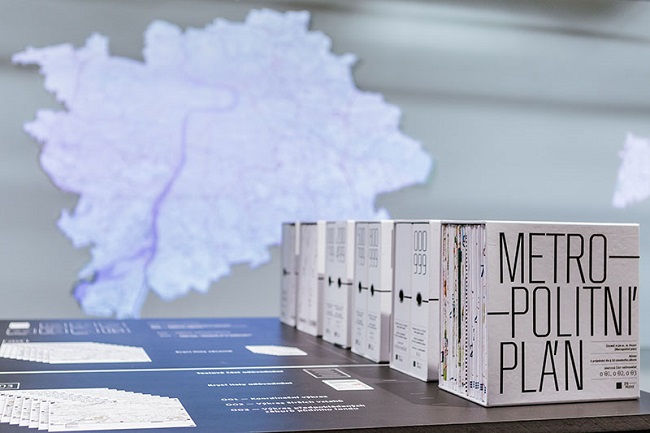 |
Prague - The Prague Metropolitan Plan, prepared for more than a decade, has lost its original concept due to years of discussions and includes unnecessary restrictions, such as significant limitations on the height of newly constructed buildings. This was stated by the author of the original proposal for the new Prague zoning plan, Roman Koucký, during today's panel discussion organized by the think tank Strategeo Institute. According to the Deputy Mayor of Prague, Petr Hlaváček (STAN), the outcome is the maximum possible.
The current Prague zoning plan has been in effect since 1999 and can last until the end of 2028 at most without a change in the law. The preparation of the Metropolitan Plan was approved by the council in 2013, and five years later, the city's Institute of Planning and Development (IPR) published its proposal, which was prepared by a team led by Koucký. According to information from ČTK, city councilors should approve it in May after years of discussion.
However, Koucký is not satisfied with the form in which years of discussions and the resolution of comments, particularly from state institutions and ministries, have left the document. "We started making the plan to be flexible so that hundreds, thousands of changes wouldn't have to be made," he said. According to him, flexibility has largely disappeared from the document.
He is also unhappy with the greater degree of restriction. "Height regulation in many places is set by the Metropolitan Plan lower than existing buildings," he stated. An example is the Pankrác plain, where there are currently hundred-meter buildings, but according to the new plan, height regulation will be set at 60 meters. Building upwards is crucial for the Czech metropolis, according to the architect. "If Prague can change its composition, it can do so precisely in terms of vertical arrangement," he believes.
According to Deputy Mayor Petr Hlaváček (STAN), the current form of the plan is the maximum possible. "The plan has been realistically discussed within the framework of the laws that apply, within the ministries that are functioning, and we simply cannot do more," he said during the debate.
IPR Director Ondřej Boháč added that height levels are not everything, and the document aims for a higher density of the city, which he considers desirable, in other ways. According to him, the plan will enable the construction of 350,000 apartments. He added that it also allows for the construction of hundred-meter buildings and that the discussion about this needs to be opened.
All participants in the debate, including politicians from the current city coalition and opposition, agreed at today's event that the document needs to be approved.
From the perspective of public funding and maintaining the local economy, IPR believes that the ideal population density in the city is 100 people per hectare or more. In the Czech metropolis, it is only about a quarter of that, which, according to urban planners, brings problems. According to a survey on a representative sample of 500 Prague residents conducted by the STEM/MARK agency for the Strategeo Institute, however, the residents of the metropolis do not perceive this problem as clearly.
The survey indicated that nearly one-fifth of Prague residents prefer increasing the density of development in the metropolis, while almost one-third prefers development outwards. Almost half then favors a balanced solution. However, if people from this group had to choose, they would lean towards increasing density.
People who prefer increasing density also usually support high-rise buildings and a more modern skyline for Prague. According to the survey, 48 percent of Prague residents have heard of the Metropolitan Plan, 38 percent have no idea what it is, and 14 percent of respondents indicated that they have a specific and more detailed understanding of it.
The English translation is powered by AI tool. Switch to Czech to view the original text source.
0 comments
add comment
Related articles
0
12.02.2026 | The metropolitan plan of Prague should be approved by the representatives in May
0
20.10.2025 | Praha has published an updated draft of the new zoning plan
0
25.06.2025 | The Prague Metropolitan Plan should be completed in June next year
0
27.06.2023 | Prague wants to approve the delayed new zoning plan in this electoral term
0
09.05.2022 | People can familiarize themselves with the Metropolitan Plan proposal at Jungmann Square
0
07.02.2022 | Prague residents will be able to get acquainted with the proposal of the Metropolitan Plan starting in April
0
15.01.2021 | Prague will present a proposal for the Metropolitan Plan to the public in autumn
5
16.04.2018 | Prague has published a new zoning plan, comments can be submitted from June
2
13.10.2016 | IPR started looking for the head of the metropolitan plan group
0
13.06.2016 | IPR is looking for a new director for the department responsible for urban planning
0
07.06.2016 | IPR submitted the metropolitan plan to Prague, which will now be reviewed by officials
0
01.12.2015 | The Institute of Planning and Development submitted a draft of the metropolitan plan