
NPÚ announced a tender for the renovation of the Prague Invalidovna for 2.15 billion crowns
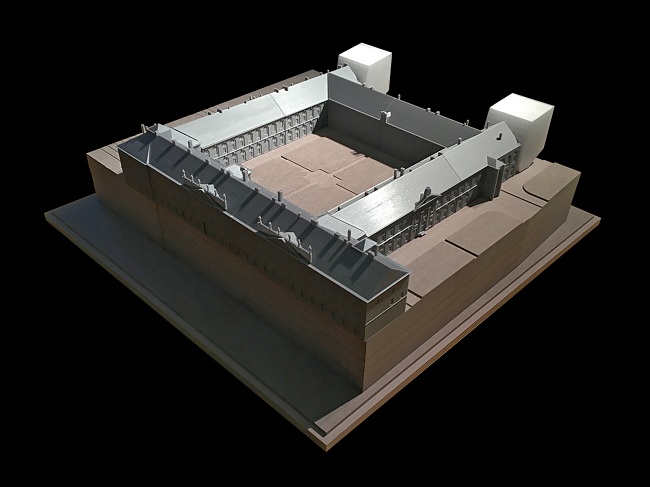 |
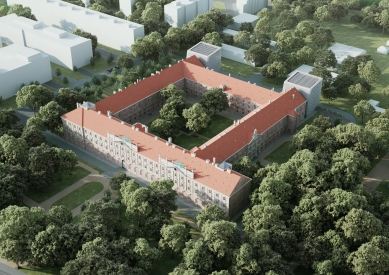
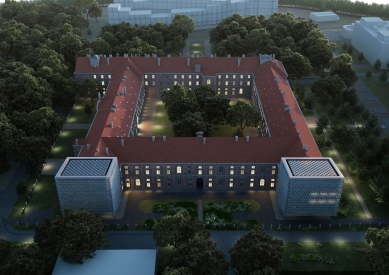
Prague - The National Heritage Institute (NPÚ) has begun searching for contractors for the restoration of the Baroque Invalidovna in Prague. The planned budget for the project is 2.15 billion crowns, including VAT, representing the largest investment in the history of the NPÚ, spokesperson Blanka Černá told ČTK. The contract encompasses the reconstruction of the historic part from the 1730s and the revitalization of the gardens, as well as the construction of two new wings. The construction is expected to last three years, with the Invalidovna potentially reopening at the turn of 2029 and 2030.
According to NPÚ General Director Naděždy Goryczková, the restoration of the Invalidovna is an extraordinary event. For the new constructions on the southern side, according to the project by architect Petr Hájek, the NPÚ previously decided due to the necessity of not intervening with new technologies in the historic building. The Invalidovna is a national cultural monument.
After the restoration, the NPÚ envisions the Invalidovna as a new cultural and social center that will connect the historical value with the everyday life of locals and tourists in the Karlín district of Prague.
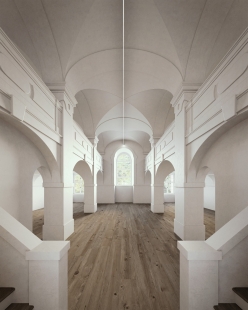
In the historic part of the Invalidovna, there will be two permanent exhibitions, a new multifunctional hall with a capacity of up to 170 people, a gallery for temporary exhibitions, two visitor centers, a café, two children's groups, and additional spaces. There are plans for a technological laboratory, a workplace for NPÚ’s documentation funds, and regional heritage management. Before the reconstruction begins, the NPÚ will make the Invalidovna accessible so the public can assess its condition.
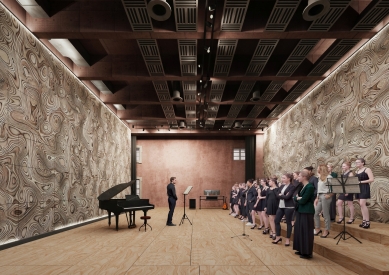
The modern new building will provide facilities for the Prague Philharmonic Choir, including rehearsal rooms. "The building will be equipped with the most modern technologies that no comparable facility in our country possesses," Černá stated in a press release. The courtyard of the Invalidovna and the gardens will be freely accessible to the public during visiting hours as part of the surrounding parks.
The Invalidovna was created based on a Parisian model for the needs of war veterans, according to a plan by leading architect Kilián Ignác Dienzenhofer. The foundation stone was laid in 1732 in the presence of Emperor Charles VI. The original plan envisioned accommodation for up to 4,000 invalids with their families, but only one-ninth of the project was realized.
"The implementation of the modern new building allows for the concentration of technical and operational facilities outside the historic building, which will protect its authenticity, while also offering spaces for education and cultural activities," Goryczková said.
Among the largest comprehensive restorations managed by the NPÚ is the reconstruction of the Kuks hospital in the Trutnov region. Major construction work took place from 2013 to 2015, costing hundreds of millions of crowns. The contract amounted to over 322 million crowns, with the majority funded by the European Union. However, the NPÚ had to return the subsidy in 2023 due to contract manipulation, for which three men were sentenced to prison. According to the NPÚ, this was an individual failure, one of whom was an employee.
A similar scope with a budget of 422 million crowns is the comprehensive restoration of the State Castle Litomyšl in the Svitavy region, a UNESCO heritage site, which is expected to be completed by the end of 2027. Other projects, according to Černá, are being carried out gradually, with phases often exceeding different budget periods.
Last year, NPÚ investments reached 800 million crowns, sourced from European, national, and its own NPÚ funds. This year, the NPÚ planned to invest 733 million crowns, but excluding the Invalidovna, for which the state had previously promised assistance with financing. The NPÚ is a contributory organization of the Ministry of Culture, managing over 1.9 billion crowns according to its annual report for 2024.
The Invalidovna served for the accommodation of war invalids until 1935, and the local life was captured by photographer Josef Sudek. Later, the Military Central Archive operated in the building, which suffered significant damage from floods in 2002 and was then transferred to the Office for Representation of the State in Property Matters. The office initially wanted to sell the monument at auction, but the NPÚ, as a contributory organization of the Ministry of Culture, acquired it in 2018 by means of a gratuitous transfer.
The English translation is powered by AI tool. Switch to Czech to view the original text source.
0 comments
add comment
Related articles
0
19.09.2025 | The reconstruction of the Prague Invalidovna is prepared and may be completed in 2029
2
19.11.2020 | The Club for Old Prague welcomes the renovation of the Invalidovna with a modern extension
0
26.05.2020 | The visitors will once again have access to the Prague Invalidovna
0
18.05.2018 | Heritage protectors will take over the management of the Prague Invalidovna today
0
14.05.2018 | In the Invalidovna, the photographer Sudek created, and Amadeus was filmed here as well
0
14.05.2018 | The monument preservers will take over the Invalidovna, they want to invest a billion in it
0
13.06.2017 | Conservationists still want the Invalidovna, they published the budget for its renovation
0
06.02.2017 | Negotiations for the transfer of the Invalidovna have not progressed much in six months
0
19.08.2016 | Heritage preservationists submitted a request for the Prague Invalidovna
0
12.08.2016 | Heritage protectors will begin negotiations about Invalidovna at the Ministry of Culture next week
1
08.08.2016 | Invalidovna could remain in the hands of the state, the NPÚ is interested in it
0
05.08.2016 | State institutions could have already taken over Invalidovna, but they did not do so
0
28.07.2016 | Academics oppose the sale of Invalidovna, writing to the Prime Minister
0
13.06.2016 | The Property Office is selling the Invalidovna
0
02.08.2007 | The Invalidovna, still damaged by the floods, will probably be up for sale