
Future Talks 10 : Masaharu Takasaki

Publisher
Zdena Němcová Zedníčková
15.12.2025 09:00
Japan

Kagoshima

Masaharu Takasaki
monobito architecture

Zdenka Nemcova Zednickova (ZZ) & Haruka Kajiura (HK)

FUTURE TALKS presents a series of 12 interviews with distinct personalities in Japanese architecture, which took place from February to April 2024. As a set, it provides interesting individual viewpoints as well as perspectives which resonate throughout the Japanese architectural profession in general.
Japanese architecture has been a major influence on European architecture since Le Corbusier. Architects look for inspiration and admire the close relationship of Japanese architecture to nature. The scrap and build culture allows Japanese architecture to respond to the current situation more visibly than the historical and stable cityscapes of European cities. We could observe a big change in mindset after the end of the "lost decade" which followed the burst of the economic bubble (1991-2000), and again after the Tohoku earthquake and tsunami - the Fukushima event (2011). Now that the SDGs (The 2030 Agenda for Sustainable Development UN 2015) campaign is strongly introduced to Japanese society, we could expect another shift in architectural thinking. For better understanding of the current discourse and the future direction of Japanese architecture, and to compare it, I have prepared a set of questions based on the main topics of European architectural discourse from the last decade. Although they create a core for all interviews, each one is unique and leads in a very different direction.
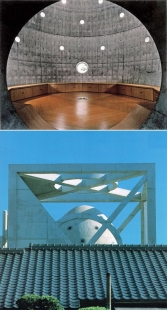
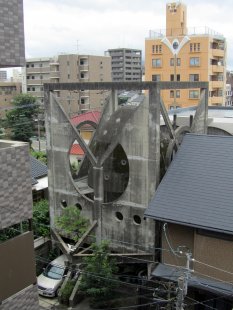
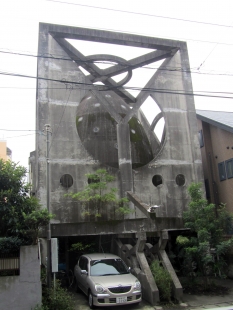
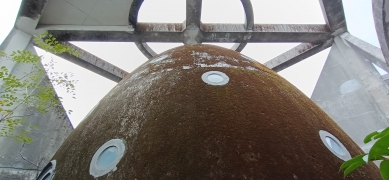
ZZ: Thank you very much for your time meeting us online and for showing us around your studio in Zero Cosmology House in Kagoshima the other day. To start, could you briefly introduce your studio and describe the main principles and values of your work?

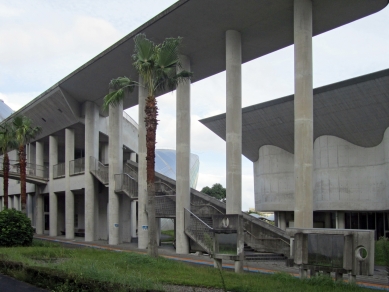
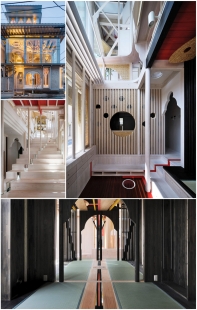
MT: Since the founding of my studio called Monobito in 1975, I have devoted myself to design and social activism, focusing on architectural design, environmental art, and greening as the pillars of product creation and design, and also to education and solo exhibitions as the pillars of human development. Since my young age, until now, I feel that the objects of mass production have been materialistic, objects of production for consumption, devoid of human emotion. I am critical of this trend and believe that objects should be given spirituality. Architecture with emotion and philosophy has humidity, — I call it "wet"—and I think it is more valuable than "dry" — conventional architecture and products for consumption. That is why I have been working since 1975 with the concept "Imbue the spirit within the object". I pursue architecture based on the vital activity of the human spirit and conformity to nature, and strive to create architecture that resonates with the heavens and the earth, bringing joy to the heart.
ZZ: Does "wet" or "dry" have any specific meaning in Japan?

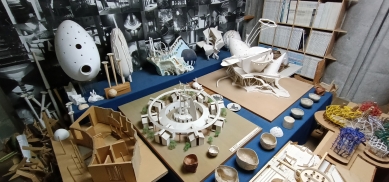
MT: For example, I would describe the ready-made products that are widely available as "dry". Many architects look at catalogues and choose materials and then adapt them to their architecture. In my case, I only use ready-made materials for the toilet, kitchen, and equipment fittings, and I design and produce most of the architecture and interior elements myself. Another example could be a stone in a garden. We can see it either as the stone is just a material, or the other way—for example, in Ryoan-ji Zen garden, the way it is used by the garden maker makes it more than just a stone—it is an element of meaning.

ZZ: I understand. How do you perceive the role of an architect in current and future society?

MT: I think of architecture in terms of "architecture as social art". As a "second body of nature", architecture is closely related to the local environment, not only for the benefit of the specific people involved, but also as a local cultural asset and social capital that contributes silently to culture, education, and the working environment, and it has a role as a place of regeneration. Architects have a role to play in creating this awareness. The current situation is that the work of architects around me is increasingly focused on buildings that are not works of art, but rather products or buildings that are merely functional.

HK: What do you mean by "second body of nature"?

MT: The first kind of nature is the product of God, such as mountains, oceans, soil, trees, flowers, etc. The second body of nature is the built environment, — cities, etc. The second natural form is the new environment created by humans, the product of architecture, such as buildings and cities. Unfortunately, many buildings exist only for the sake of their clients or for economic efficiency, not for the sake of nature, the environment, or society. Architects should be aware of this.

ZZ: How do you perceive the importance of the architect's influence on the lives of ordinary city dwellers, and where does it lead you in your own work?

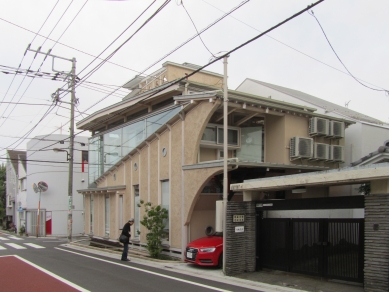
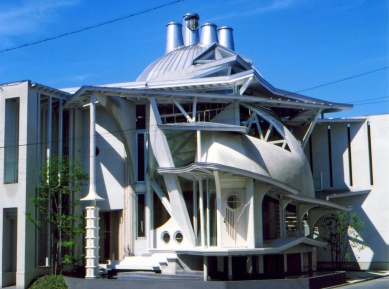
MT: By providing an artistic space that respects and resonates with the community, I believe I can foster an awareness of coexistence with others. Take Earth Architecture (1994) for example — the ground floor is open and easily accessible to the surrounding neighbourhood. There are no curtains. In other words, this architecture is open to the city. In contemporary Japanese society, buildings tend to be closed. By providing a space where community can naturally occur, we nurture a sense of symbiosis, and I believe that architecture that learns from nature, coexists with nature, and condenses a small universe of diversity and individuality will be open to the local community. It creates a vibrant living landscape, when common areas and street-facing spaces in urban housing, apartment complexes, buildings, and commercial facilities are opened up to the local environment, planted with flowers and greenery, and turned into parks.

ZZ: Which social aspects do you find most important for architects to think about?

MT: In Kagoshima, where I live, there are many social issues that are more visible than in big cities like Tokyo, Osaka, or Nagoya. Also, in the countryside you can see that the population is shrinking and aging—young people are moving to live in cities, they go away from the countryside to study and then they stay for work. When their parents die, their homes are abandoned. You can see so many abandoned houses. Additionally, large residential buildings are also becoming increasingly vacant. Those houses would not be considered living architecture. It is a view reminiscent of post-war Europe. Unfortunately, as the old village people pass away, fallow agricultural land is also increasing and, due to issues with China, the fishing industry is declining. Some recent studies say that this way, maybe in ten years, Japanese agriculture could collapse. These social problems are believed to be caused by the declining birth rate. As an architect, I believe it is important to always speak openly about our design philosophy, principles, and arguments through our design activities. I am convinced that if we continue to challenge ourselves with such a strong will, we will be able to realize a "living architecture" for the 21st century.

ZZ: How does climate change influence your work?

MT: In recent years, the four seasons, which have influenced and shaped Japanese culture through history, seem to be altered and changed due to extreme weather events, like torrential rains, extreme heat, and other phenomena accompanying climate changes. Until the 1960s, architecture in Japan was designed in relation to the four seasons. However, the development of air conditioning has increased the number of houses that are isolated from nature or the outside world. In other words, rather than architectural solutions, there has been an increase in the use of facility solutions such as thicker insulation and more air conditioning. In recent years, due to climate change, even more houses have fewer windows than in the past. Houses are isolated not only from the weather conditions but also from the public, and the city as a whole does not have a good atmosphere, and we architects are not very happy with this change. I believe that clues to solutions lie in traditional architecture, which has existed since ancient times and which is in harmony with nature and the four seasons, and that is what I am designing in my projects.

ZZ: How do you perceive the influence of the SDGs (Goals of the 2030 Agenda for Sustainable Development, UN 2015) on Japanese architecture, and how do you reflect them in your work?

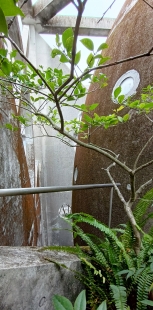
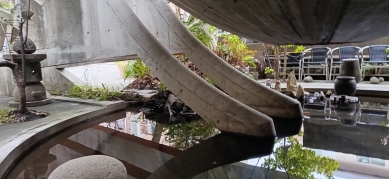
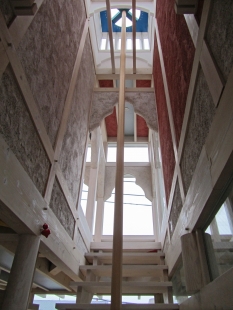
MT: The development goals of the UN are a reflection of the needs of the times, and I believe they will have a significant impact on everything from individual housing and architecture to urban form and energy. I hope to reflect the principles of the SDGs in my designs, not only through technical expressions, but also through design thinking. In my recent designs, I often use wood and soil. Wood can last for a long time if you take care of it, and you can reuse it or replace parts of it. It is difficult to do that with industrial products. In my latest house project Shin-Gon no Ie, no nails are used and the insulation consists of wool and charcoal. Also, my office in Kagoshima is environmentally friendly, as the design actively incorporates natural ventilation and natural light instead of air conditioning and lighting. I also collect rainwater in a water pond to keep ornamental fish and use it for plants.

ZZ: Do you see the Japanese public debate on the sustainability and adaptability of cities as sufficient and fruitful?

MT: The Japanese public debate is not sufficient, and it would be good if it were widely recognized. I believe public debates will be specifically incorporated into architecture and urban policy in the future. In Japan, people tend to receive instructions from the government, and this knowledge is passed on to the public. It is a problem that there are not enough opportunities for citizens to meet and discuss face to face. I believe that this should be solved by citizens themselves and come from bottom-up activities. Also, professionals who possess the knowledge should initiate such debates with the public. I'm getting involved in such bottom-up activities. Sometimes I run an architectural school as a seminar open to the public and university students. Also, I have a monthly educational activity for about 30 high school students. I think that activity is important as a place to generate discussion for young people.

ZZ: What are the possibilities and limits of Japanese architects in creating ecological/sustainable architecture?

MT: When designing original architecture based on our own unique thinking and philosophy, we should re-evaluate Westernized contemporary architecture in the light of Japanese lifestyle, customs, and climate, rediscover and understand the characteristics and advantages of Japanese culture, and reaffirm its potential and importance in the modern world of our time.

ZZ: Do you think you should return to more traditional Japanese architecture techniques?

MT: I don't mean that we should return to the past, but rather to study it and adopt good traditional manners, ways of living, and ways of perceiving nature as a reference for our time. I was impressed by the monks in Kyoto. They leave the windows open no matter how cold it is. There is a spirit of acceptance of nature, no matter how cold or hot it is.

HK: Is that part of your practice?

MT: I think it is a practice and a custom. The beauty of Japanese architecture is the openings. If you close the windows, you cut off the relationship with nature. In the example of Kyoto monks, I saw how to live in harmony with nature. I believe it gives us a hint for future architecture. Not everything has to always be convenient. Recently, more and more young people are experimenting with such a way of life. There has also been an increase in the number of people who don't want to use or depend on energy as much as possible after seeing the nuclear accident in Fukushima caused by the Tohoku earthquake and tsunami.

ZZ: Interesting idea—instead of making architecture always comfortable, you would suggest working with the human spirit to make it stronger, so it could enjoy nature purely as it is, no matter if it's cold or too hot. In the eyes of Europeans, Japanese architecture has a very close relationship with nature. Where, in your opinion, do these roots lie?

MT: I recognize that these six roots surrounding the Japanese people are important. (1) Ancient Shinto and Jomon culture of Japan, (2) Persian culture of the Middle East, (3) Indian culture through Buddhism, (4) Chinese culture through Confucianism and Taoism, (5) Anglo-Saxon culture during the Meiji period, and (6) American culture after the war. They have gradually mixed and blended. My own theory is that it is difficult to understand Japanese culture without understanding these cultures. To explain how this has shaped our relation to nature, — in the past, Japanese houses were zoned with Tatami space and Doma space. Doma is an interior space but without artificial floorboards, — it's an open ground space where one can walk with dirty feet. It was often used for kitchens, fireplaces, etc., and it was said that the gods of fire and water lived there. However, after Japan was defeated in World War II, wood flooring came into use because Doma was considered barbaric. This was the beginning of the separation between man and nature. These historical and cultural changes have also changed our relationship with nature.

ZZ: How do you perceive the problems of urban heat island (UHI) in Japanese cities? How do you see the use of nature-based solutions (NBS) in this context, and how do you use them in your work?

MT: I believe that urban heat islands will increasingly change the way cities are structured and built, as well as the nature of individual buildings. Basically, there is a growing interest in materials that absorb water, pavement materials that are not directly exposed to sun heat, rooftop greenery, and so on. At my office in Kagoshima, thanks to Sakurajima volcano, we have volcanic ash on the rooftop, and it allows us to grow moss there. Also, houses with eaves creating shadows are beneficial. Even one more such building would be the first step in solving the urban heat island in the city.

ZZ: How do you perceive the role of public space in contemporary Japanese cities? How do you include it into your design process?

MT: I believe that the lack of public and shared space in Japanese cities is not good for the healthy development of community society. Ground floor spaces, rooftops, and balconies facing the street are especially important because they are points of contact with society. In the past, Japanese cities provided more space and opportunities for people to socially interact.

HK: Do you feel that common spaces are also decreasing in apartments and commercial buildings?

MT: I think they are decreasing. Apartments are often designed for profit and so to be very functional. By eliminating unprofitable spaces to reduce the cost, they come up with only an entrance, elevator, and mailbox on the ground floor. They lack the space where everyone can gather and talk. In apartments with higher rents, there is a lobby like a hotel, but it is not common. I feel the disparity between the rich and the poor and also between academic idealism and capitalist reality. To be honest, the architectural situation in Japan is not so good, and Ms. Zdenka's question is heart-breaking (laugh).

HK: How should we go about improving the situation in Japan?

MT: Proposing ideas, persuading others, and communicating effectively will be crucial. The construction industry is overly profit-driven, so to change this situation, we must persistently continue persuading others. Ultimately, this will also generate profits.

ZZ: Do you use methods of participation/communication with the public or the local community in your work?

MT: I have been working with people who want to live their own lives, people who need help, people who want to improve their community's interactive vitality, who want to improve places and environments. And through my projects, I have devoted myself to realizing shared dreams, seeking an ideal form for societal interaction and the human spirit.

ZZ: How do you perceive this method in the context of Japanese society?

MT: Many public projects are designed through a bidding process. In the past, they were decided by competition... There is no discussion, there is no communication with the public, so even if someone wanted to be involved in the project, they would not be able to participate—it all depends only on the budget. In addition, architects from Tokyo are often hired for large projects even in other cities across the country, even in Kagoshima. I am well known through the media, but unknown local architects from Kagoshima are rarely hired, and young architects—they have no chance to participate in larger public building projects.

HK: Is the bidding conducted before the design phase?

MT: Yes. Architectural firms and companies submit bids stating, "We will design at this price". Consequently, clients naturally gravitate towards the cheaper option. Thus, the proliferation of box-like structures in public buildings stems from this tendency towards cheaper options and the bidding system itself. Fixed match outcomes frequently occur. Decisions are often made based solely on figures, and those who speak up frequently or possess strong ideological convictions tend to be disqualified. While this may appear democratic at first glance, regrettably, its essence is undemocratic.

HK: So, decisions are made solely based on figures, without communication with local residents?

MT: Yes. In the 1980s, the competition system was used, and incorporating the voices of local residents was common, but that rarely happens now.

ZZ: What would you recommend to the upcoming generation of architects—students of architecture—what topics should they focus their attention on?

MT: In relation to what I talked about at the beginning of this interview, what changes and what doesn't is important. In other words, learn about "things that change" and "things that must not change or must continue to be protected", like nature. In a changing society, human beings have not changed that much. I believe that adding a modern sense of beauty to the flowing changes will lead to a good society. You will learn that only when these two forces come together and clash, a "quiet" balance can be achieved.

ZZ: That is a very deep thought. We should surely protect nature. But if we see how human activities have influenced and changed the natural environment, we could say that nature is changeable as well, isn't it?

MT: As you said, nature is constantly changing. It changes under the influence of human activities, and it would likely continue to change even without human presence. What I mean by something "unchanging" is the human spirit toward nature in this case. While Christianity is predominant in Europe, Japanese people are strongly influenced by Buddhism, Confucianism, and Shinto. In particular, our view of nature is deeply rooted in our inner spirit—almost like a kind of cultural DNA.
Europeans and Japanese have fundamentally different ways of life. Japan is isolated, surrounded by the sea, so there is less competition and less national pride. In my opinion, I feel there is less pride in architecture and cities as well. So, it is easily changeable by European or American influence. The world and society are changing faster and faster since the time when I was a kid. The technology, fashion, and cities have changed dramatically—the political situation as well. Now more people are preparing for a war between China and Taiwan, and more buildings in Kagoshima have shelters. I think it was also after the war between Russia and Ukraine started. The world situation changes Japan, but I believe that the unique Japanese love of nature will never change.

HK: Thank you very much. Can I have one last question — in an age where everything tends to be swept along by larger forces, can the profession of the architect truly survive?

MT: Well… first of all, although there are many designers, I am concerned that very few people actually call themselves "architects." I feel that the notion of the architect has not yet taken root in Japan in the way it has in Europe. This situation is similar to how Western-born forms of art—such as oil painting, sculpture, opera, and dance—have never fully become embedded in Japanese everyday life or society.
At least in Kyushu, having "architect" written on your business card actually makes it harder to get work (laugh). Perhaps clients feel that architects are too formal or that the design fees will be too expensive…
An architect's work is a flower! In other words, it is a microcosm that soothes people's hearts. We architects must design good architecture and transcend the times. That is the destiny of architects.

ZZ: Beautiful. Thank you so much!

FUTURE TALKS made with support from Associate Professor Nobutake Sato, Meijo University Nagoya.

The FUTURE TALKS were realized under the research project "Creative software/digital neural network Virtual futurologist A°D°A" which is co-financed with the state support of the Technology Agency of the Czech Republic as part of the SIGMA project.
0 comments
add comment

Related articles