
Future Talks 12 : Hidetoshi Sawa

Publisher
Zdena Němcová Zedníčková
01.03.2026 08:00
Japan

Takayama

Hidetoshi Sawa
sawa design environment SAWADEE

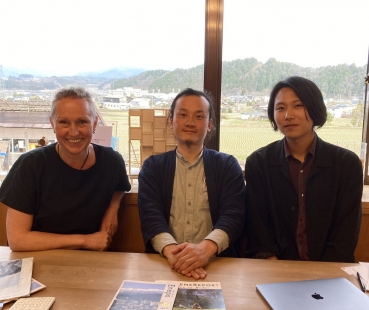
Zdenka Nemcova Zednickova (ZZ) & Haruka Kajiura (HK)

Future Talks presents a series of 12 interviews with distinct personalities in Japanese architecture, which took place from February to April 2024. As a set, it provides interesting individual viewpoints as well as perspectives which resonate throughout the Japanese architectural profession in general.
Japanese architecture has been a major influence on European architecture since Le Corbusier. Architects look for inspiration and admire the close relationship of Japanese architecture to nature. The scrap and build culture allows Japanese architecture to respond to the current situation more visibly than the historical and stable cityscapes of European cities. We could observe a big change in mindset after the end of the "lost decade" which followed the burst of the economic bubble (1991-2000), and again after the Tohoku earthquake and tsunami - the Fukushima event (2011). Now that the SDGs (The 2030 Agenda for Sustainable Development UN 2015) campaign is strongly introduced to Japanese society, we could expect another shift in architectural thinking. For better understanding of the current discourse and the future direction of Japanese architecture, and to compare it, I have prepared a set of questions based on the main topics of European architectural discourse from the last decade. Although they create a core for all interviews, each one is unique and leads in a very different direction.
Interview No. 12
2.4.2024 // Takayama, Japan

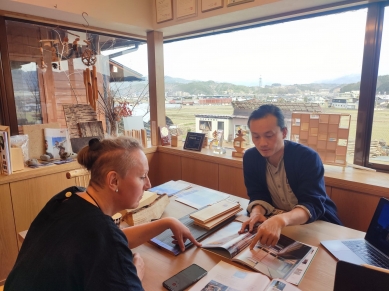
ZZ: Thank you for inviting us to your studio in Takayama and showing us around your various activities in the location. To start, could you briefly introduce your studio and describe the main principles and values of your work?
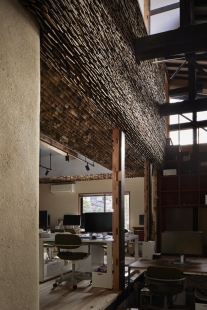
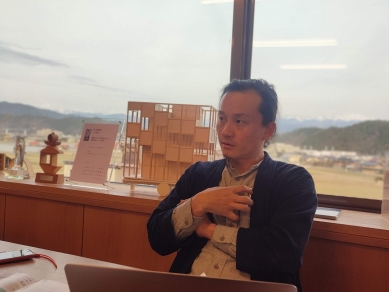
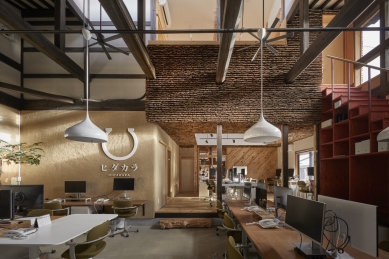
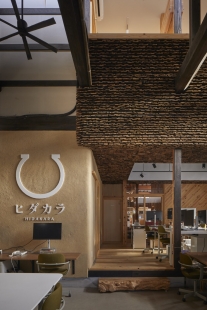
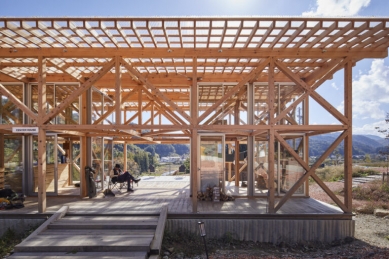
HS: I was born here in Takayama City, Gifu Prefecture, and graduated from Nagoya Institute of Technology and Tokyo Institute of Technology. I also studied abroad at the Technical University of Munich and worked in Berlin and Paris. Later, I was invited by Vietnamese studio Vo Trong Nghia Architects to practice as partner architect in his Ho Chi Minh City headquarters. Then I returned to Takayama, set up a family, and opened an architecture studio. Because of good timing, we founded an NPO—related to natural energy—with my neighbours ten years ago.
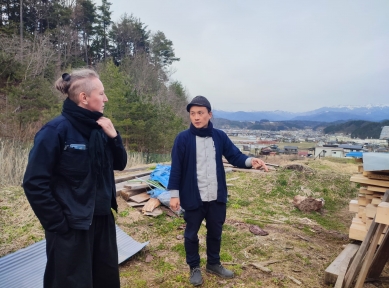
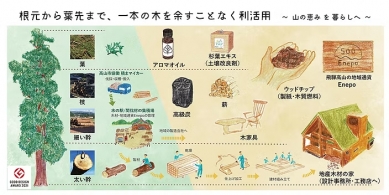
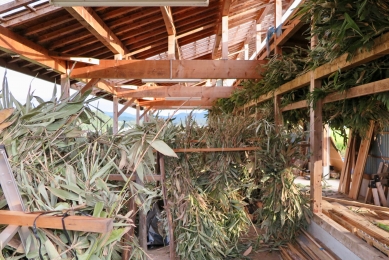
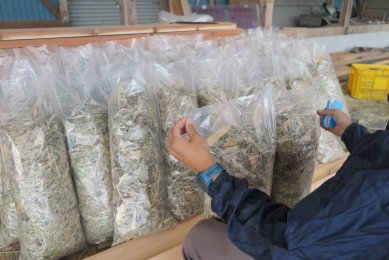
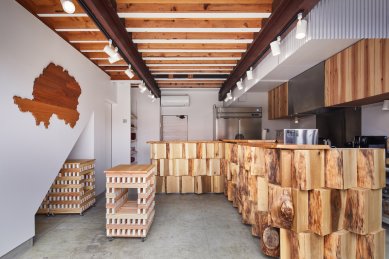
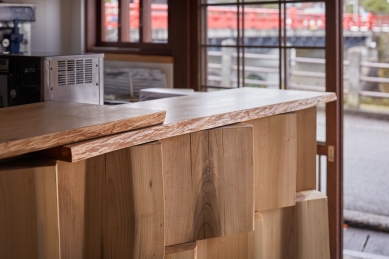
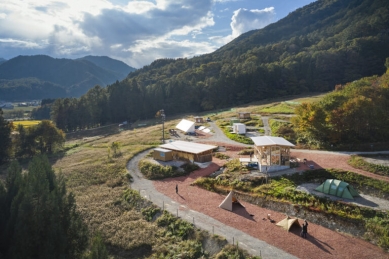
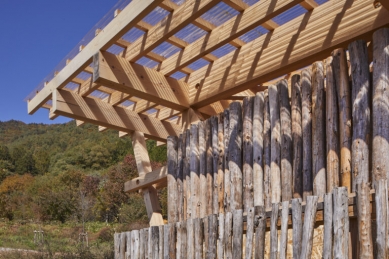
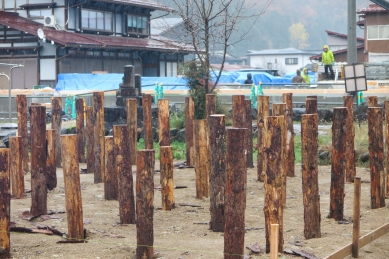
You know that about 70 years ago, Japan planted many trees, especially Japanese cedars, as a national policy. However, inexpensive foreign timber started to be used more and more with globalization, and the forests planted before have been neglected and have became dark and dense. This has many bad consequences not only for the health of the forest, but also for the people in surrounding small cities. One of our activities is voluntary human intervention in the forests, cutting down the trees properly, to revitalize the forest, to process it—cutting the boards, planks, and beams to sell and to use the wood in our architecture projects as well. Besides the wood itself, we also produce charcoal, soil fertilizers, and aroma oil to make use of all parts of the trees we cut here. To the people involved, we provide the local currency in return. Do you know the advantages of local currency?

ZZ: Well, is it that you don't have to pay taxes?

HS: No, actually the advantage is that you cannot find stores that would take this currency in other cities, so people spend it in local shops. That means it encourages the economic cycle here, and local people can naturally participate in it. To make it easier for everyone to participate, we have created a network of timber producers within 5 km. It is a kind of self-sufficient network. We are also trying to expand our network and connect more local people, and to create an open market for this local wood. Of course, I do design architectural projects, but I also produce materials ourselves, work with forests and energy, farm, make communities, practice self-sufficiency, and so on. I'm thinking about how to make value from abandoned forests and looking for other sleeping local resources which could become useful. My work is like Hyakusho in the old days. Hyakusho means Japanese farmers in the past who made almost everything by themselves, such as tools, houses, vegetables, rice, and rope works. Through these activities, I am trying to figure out what is the most important skill or technique for human beings? Such a person is a very strong person, right?

ZZ: I think so too. In Europe, there is maybe a kind of trend, among young architects to move locally too, to become active in communities. That relates nicely to my next question as to the role of architects. How do you perceive the role of an architect in current and future society?

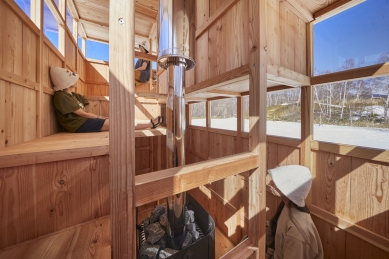
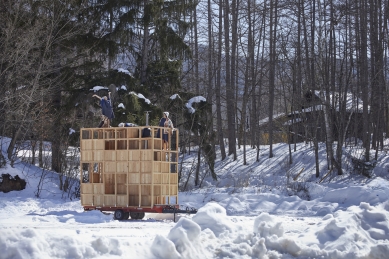
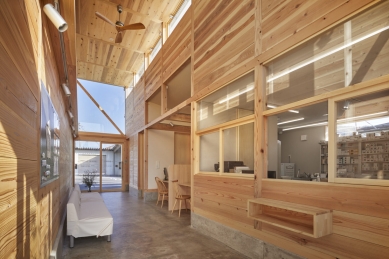
HS: Until now, typical architects have been sitting at their desks and making drawings. It is an important job and expert profession, but I want to expand this role. As I showed you, my work is like being a material maker, contractor, and farmer who makes use of local resources. It is also a creative job to make a good arrangement around ourselves. Talking with local people about the community needs and then using a design brain to come up with new value. It is a common thing to make a master-plan or consider city, urban planning, or landscape, and we can extend it to community planning and connect people and resources from materials until final products.

ZZ: Because this is a system thinking issue, —as architects practise complex system thinking through the building process, —once you understand how the system works, you can apply it to other professions too.

HS: Yes, and communication is quite important for making architecture. There are not only clients, but also carpenters, suppliers, and local people. Sometimes we argue with them, so that we need a good relationship. To make a new building, we need a lot of good communication. In community work, it is the same. We get everyone involved for the goal, and our job is to lead them in a good way to cultivate the local area. That is the new role of architects for me, and it will be important for the future.
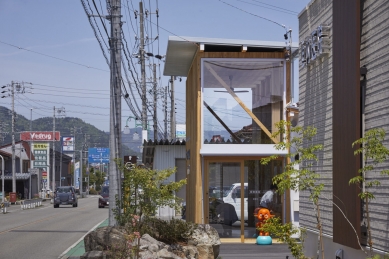
ZZ: It seems interesting and challenging to find opportunities in the local areas. As you have ten years of experience with expanding the role of architect this way, do you have any suggestions or recommendations for someone who would like to follow such an example? I mean, how could architects start or develop this local community style of networking?

HS: I recommend that the younger generation should go to urban areas and abroad to study, get experiences, and develop their skills. After that, it is better to go to a local area. Access to natural resources will be quite important in the future, because every material actually comes from nature. Once we focus on the details of each material, we need wide and deep knowledge. However, there are many experts of each profession and material. Connecting and gathering them for a common goal is very similar to the design way when creating architecture. Many people say that there are no jobs in local areas, but in reality there is an abundance of work in forestry and agriculture. What local regions lack is not work but people, as cities have continuously absorbed talent from the countryside. But that does not mean to return to old ways of life—we have new technologies to use, and this can make a new hybrid way of life.
And I would say urban areas are very fragile. When I was in Tokyo, I experienced the Great East Japan Earthquake. I was shocked, because of the system, people in the city are very weak and could not do anything. I went to north Japan to volunteer many times, and then I realized that to live in the big city was enough for me in my twenties and that the city life is very interesting and comfortable, as long as there is no disaster. But Japan is a disaster country—every year we experience earthquakes, typhoons, and floods. I changed my mind after the Tohoku earthquake experience and moved from Tokyo to a local area. I started to seek out how we should live our new lifestyle.

ZZ: People always need some disasters to realize and wake up. City fragility and dependency usually get well visible after a disaster, especially when you cut off the supply chain.

HS: Exactly, nature teaches us.

ZZ: How do you perceive the importance of the architect's influence on the lives of ordinary city dwellers, and where does it lead you in your own work?

HS: I always try to make an influence by creating new relations through the design project, thinking about where things (products, materials, food, etc.) come from, who and how made them, to know the resource. That is traceability. During the Covid-19 pandemic, the cost of most materials increased because Japan depends on imports from foreign nations. For example, the cost of sanitaries, steel and wood increased, and we could not even purchase them in markets.

HK: In addition to the pandemic, the war in Ukraine is also affecting Japan. Japan's direct imports from Ukraine do not account for a large percentage of its total imports, but it did import a large amount of feed for live animals from Ukraine. Since the war started, the prices of beef, pork, milk, and cheese have indirectly jumped.

HS: Exactly, that is the issue of capitalism and globalism. Do you know Japan's food self-sufficiency ratio?

ZZ: I would say around 60%?

HS: No, no—it is around 10 – 20%. Of course, that number will vary depending on the method of calculation, such as on a calorie or production value basis. If we exclude local animals raised on imported foreign feed, and plants grown thanks to the imported fertilizers and seeds, the self-sufficiency rate drops to about 10%. In any case, it is very low. Another reason is that much of the energy needed to raise grains and livestock is also imported. In other words, globalization and capitalism have increased the distance of distribution. In the case of architecture, we are unable to complete even a single building if the distribution of materials from overseas would be stopped. I agree with the globalization of information, as we can easily share good ideas and learn from best practices in other countries, but I do not agree with the globalization of materials. In this respect, the work of architects has a direct impact on the ordinary city dwellers.

HK: I see. Under certain circumstances, we realize that globalization and capitalism are fragile systems. In the past, architectural materials were ingeniously used with what was around us to create vernacular architecture. No one knows if architects or society came first, but I feel that the state of society and the architectural movement have a tremendous influence.

ZZ: Which social aspects do you find the most important for architects to think about?

HS: An aging population is quite a serious issue in Japan. The most important thing is staying in a positive mindset even in such a local area. There are not so many young people in this area to work, but seniors can do it. If we complain about this situation, nothing will change. Here we have many neglected forests which nobody touches, but if we think of it in a positive way, they are full of treasure. We actually have many resources.
ZZ: So, seniors are actually a good resource, right?

HS: Yes, of course. In our NPO, more than 80% are over 60 years old. Takayama City is famous for tourism and attracts many domestic as well as foreign tourists. During the Covid-19 pandemic, the government told us to "stay home", and the tourism industry was paralysed. At the same time, however, our members went to the mountains to cut down trees, and the amount of logging increased. However, I want to make a system that attracts the younger generation to move back from cities to local areas. Their independence, like self-sufficiency, will be important.

ZZ: How does climate change influence your work?

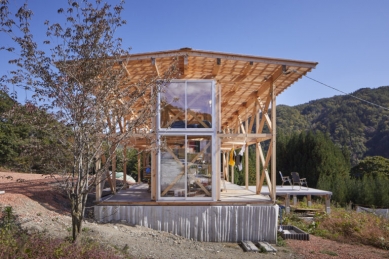
HS: Actually, not so much. As the most visible aspect of climate change, I see the urban heat island, which is often associated with an unnaturally rapid pace of urban development. Here in the rural area of Takayama, we have mountains with heavy snowfall, and a periodically hot summer—hotter than usual—appears, but it seems natural. I am constantly checking various information and different views on what might be the cause of climate change. But it makes me think about how to expand self-sufficiency, for example, by building an off-grid house, to learn more and be more creative for new challenges.

ZZ: How do you perceive the influence of the SDGs (Goals of the 2030 Agenda for Sustainable Development, UN 2015) on Japanese architecture, and how do you reflect them in your work?

HS: While I think each topic is very important, if you look at the background of the SDGs, I see that they are strongly based in globalism. People have different environments and different ways of living and thinking, so I don't really agree that everyone in the world should follow them. In fact, it seems that before globalism, it was an SDGs life in Japan everywhere (lol).

ZZ: Well.. it seems your personal feeling is that you don't want to get involved with the SDGs, but your work is actually following the SDGs core values.

HS: Yes, I have even received several awards on the SDGs, but that is just one of the results, not the goal. I agree with those topics, but I disagree with their background because they are controlled by globalism—we should not be controlled by anyone. It should be spontaneous and normal practice for everyone, not controlled by the government.

HK: He has a good point, as when the SDGs concept was imported to Japan, it turned into a top-down structure, mainly promoted by the government. Therefore, it has sometimes been misused for advertising or business purposes, which makes architects a bit allergic to the SDGs.

HS: I know a lot of people wearing SDGs badges (lol).

ZZ: I also saw the badges and promotional posters during my stay in Japan a lot. I have never seen it in Europe. My personal feelings are very ambiguous. But maybe it's just because our public debate about sustainability goes mainly through the European Green Deal negotiations, and it is very emotional. Architects maybe see the SDGs as just a follow-up to Agenda 21 and Local Agenda 21 of 1992. These sustainable discussions still go on more among academia and professionals, it is the same with the current New European Bauhaus initiative.

HS: Yes, the solution to the SDGs is to learn again how people lived sustainable lives in the past. Ancient Japanese people had the knowledge of how to survive—we have just lost it. Here in the Hida area, surrounded by mountains, with few resources, and a lot of snowfall, people in the past had to find out how to survive with nature. We need to change our minds and learn the wisdom of the past once again.

ZZ: But such a lifestyle provides very limited offers and not so much comfort we all got used to—I would see it as very difficult to introduce it to civilised people who have goods from all over the world available in their supermarkets (lol). How do you see the Japanese public debate on the sustainability and adaptability of cities—is it sufficient and fruitful? Could you give some specific examples of its outcome?

HS: I think people are getting more conscious about these topics, because Japanese people are getting poor, especially after the pandemic. We have to reconsider what it means to be rich. I give lectures at universities to share my activities and practice. There, not only students but also senior architects come to listen. Everyone is looking for answers. I was inspired by "Satoyama Capitalism"—it is a Japanese economic concept, that proposes a model where economic activity is centred around the sustainable use of natural resources in rural areas (satoyama) to create local prosperity. It combines traditional values and practices with modern capitalism to foster local self-sufficiency.

ZZ: What are the possibilities and limits of Japanese architects in creating ecological/sustainable architecture?

HS: As a limitation, I see the city life. Cities consume resources, energy, and generate only garbage. I think it is difficult to create fully circulative architecture in urban areas.

ZZ: In the eyes of Europeans, Japanese architecture has a very close relationship with nature. Where, in your opinion, do these roots lie? And is this relationship about ecology and sustainability?

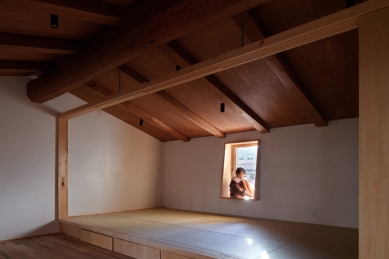
HS: Japan has many forests and an abundance of good trees and water. So, I guess basically we are very close to nature. When I was living in Europe, I realized that in the field of architecture, there is a difference between the “wall culture” in Europe and the “roof culture” in Japan. In Japan, the extension of the roof can create a space in between which is neither outside nor inside—we call it engawa. That ambiguous space is a buffer that connects the outside and the inside. When I was in Germany, I found a difference where the outside and the inside space are separated by a very thick wall. You can see it also in the language, —while the Germans are very strong and direct, and always say yes or no, the Japanese like to speak in a vague, ambiguous, and soft way (lol).

ZZ: How do you perceive the problems of urban heat island (UHI) in Japanese cities? How do you see the use of nature-based solutions (NBS) in this context, and how do you use them in your work?

HS: Skyscrapers in cities are growing and they are unstoppable. But Japan's population is declining, and there are many abandoned houses, so it would be a good idea to return the vacant space to greenery instead of building. What I can do is to find, practice, and share what the true richness and happiness are.

ZZ: How do you perceive the role of public space in contemporary Japanese cities? How do you include it into your design process?

HS: If given the opportunity, I would love to design a public space. There are actually very few good examples of public spaces, —in Japanese cities, everything is artificial and the nature is kicked off. In relation to Tokyo public space, I would recommend the work of Atelier Bow-Wow, because they are very active and conscious about how they can contribute to public space. I am a graduate of their university laboratory, and I have been influenced by them a lot.

ZZ: Do you use methods of participation/communication with the public or the local community in your work, and how do you perceive this method in the context of Japanese society?

HS: I often use a participatory approach in my work—I'm very conscious about it. Actually, this is the reason why our NPO exists, —to involve neighbours and the local community, to understand local needs. I make not only buildings, but also materials, so I meet all the people involved in the process, more than I would meet if I only designed architecture. Through my work, I have met and talked to many different professions and local people and have become a good member of the community.

ZZ: What would you recommend to the upcoming generation of architects—students of architecture—what topics should they focus their attention on?

HS: I encourage students to travel around the world as much as possible, with a careful and thorough understanding systems of society and the earth. Additionally, it is important to meet many people, eat local food, and find out what is authentic and true. I think it's good to gain their own experiences, have their own compass to judge for themselves, and not just rely on and believe easily the information from the media and internet.

ZZ: Thank you very much for giving us insight into your innovative hybrid practice.

FUTURE TALKS made with support from Associate Professor Nobutake Sato,
Meijo University Nagoya.

The FUTURE TALKS were realized under the research project "Creative software/digital neural network Virtual futurologist A°D°A" which is co-financed with the state support of the Technology Agency of the Czech Republic as part of the SIGMA project.
0 comments
add comment

Related articles