
Future Talks 11 : Hirokazu Suemitsu

Publisher
Zdena Němcová Zedníčková
05.02.2026 09:00
Japan

Fukuoka

Hirokazu Suemitsu
建築家 SUEP

Zdenka Nemcova Zednickova (ZZ) & Haruka Kajiura (HK)

FUTURE TALKS presents a series of 12 interviews with distinct personalities in Japanese architecture, which took place from February to April 2024. As a set, it provides interesting individual viewpoints as well as perspectives which resonate throughout the Japanese architectural profession in general.
Japanese architecture has been a major influence on European architecture since Le Corbusier. Architects look for inspiration and admire the close relationship of Japanese architecture to nature. The scrap and build culture allows Japanese architecture to respond to the current situation more visibly than the historical and stable cityscapes of European cities. We could observe a big change in mindset after the end of the "lost decade" which followed the burst of the economic bubble (1991-2000), and again after the Tohoku earthquake and tsunami - the Fukushima event (2011). Now that the SDGs (The 2030 Agenda for Sustainable Development UN 2015) campaign is strongly introduced to Japanese society, we could expect another shift in architectural thinking. For better understanding of the current discourse and the future direction of Japanese architecture, and to compare it, I have prepared a set of questions based on the main topics of European architectural discourse from the last decade. Although they create a core for all interviews, each one is unique and leads in a very different direction.
Interview No. 11
1.4.2024 // online from Fukuoka, Japan

ZZ: Thank you for your time meeting us online today. The first question is, if you could briefly introduce your architecture studio and the main principles and values of your work.

HS: Basically, our company named SUEP., is focusing on the environmental aspects of architecture design. We are focusing on how to combine both, design aspect and engineering aspect at the same time. For example, using computer simulation methods based on data analysis.

ZZ: When you talk about environmental aspects, you mean you are adjusting your design according to data gained from the analysis of the location, that you're modelling according to the sunlight and so on?

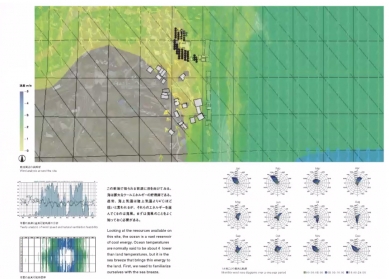
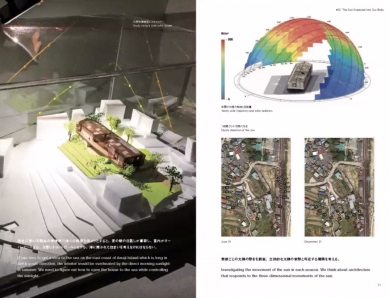
HS: Yes, mainly focusing for example on wind and heat as they are very invisible elements for designers. I like to combine the relation of invisible things with geometrical things for design. For example, in one of our site researches we are finding form according to the wind flow and ventilation. That is one aspect. Another thing, the example is combining the solar tracing over the season and connecting it with the window eaves. Automatically generating the forms following the natural condition. So, one thing is our concern how to combine invisible environmental elements with architectural geometries.

ZZ: So, you're interested in using a parametric design method?

HS: Yes, it is a kind of parametric design together with the optimization process. We are using this for the site research, then we run the environmental simulation which combines the design aspect and the environmental aspect and together integrates the design. We use CFD (Computational fluid dynamics) software analysis, for thermal analysis and so on. For example, we work with the optimization of wind flow, to achieve the chimney effect, to find the best form coming out from the environmental aspects. Or we use the calculation of the solar tracing for each season connected with the geometry of windows, then we can generate the eaves shadings both optimized for each season. Such a thing is our main target now. Currently, we are also facing the aspect of environmental issues, but we don't have certain methods at this moment. So that's why I'm thinking how to combine it, not only for just a specific situation, but more universally. And another example is a small house project in Awaji Island, close to Osaka. In such a site, we always look for what is the potential energy in this area. To find out, we are using analysis. In this case it is the wind flow from the seaside. We get the data of wind rose showing where wind comes from each year. What season is good for ventilation and what season is too humid or too hot.

ZZ: Which programs are you using?

HS: We use a combination of some programs. For example, Flow Designer, which is very suitable and very easy to use for architects. Also, we are using Rhinoceros with Grasshopper with plugin analysis engines like Ladybug, Honeybee Tools. Many digital tools we have now. But in our firm, we are not just using digital things, but thinking how to combine our traditional method of architect with digital things. So, for example, this analysis by environment estimation and calculation we transform into the physical models for further study. So, we can check the results in physical reality.

ZZ: These elements you're using to achieve a natural lighting, natural shading, natural ventilation without using energy-based technology to achieve energy saving?

HS: Yes. Our design philosophy is using more primitive things like architectural form to control the environment.

ZZ: You're actually using high technology in the design process to achieve low technology in reality.

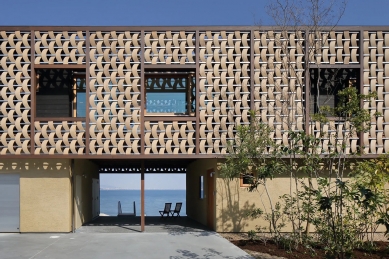
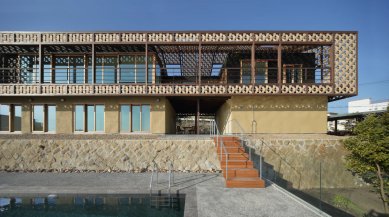
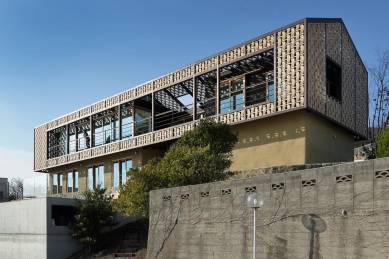
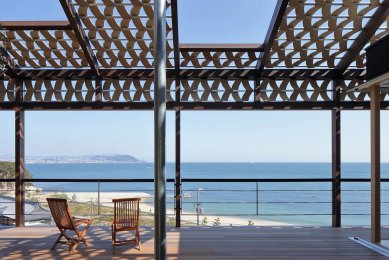
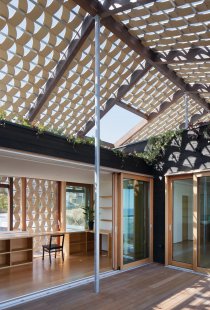
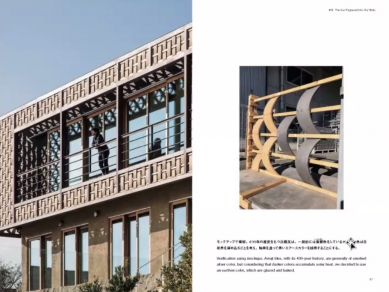
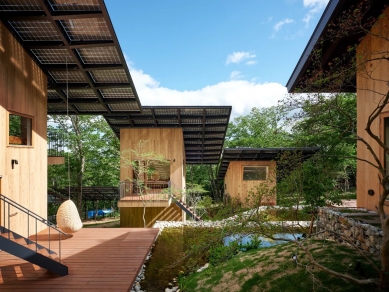
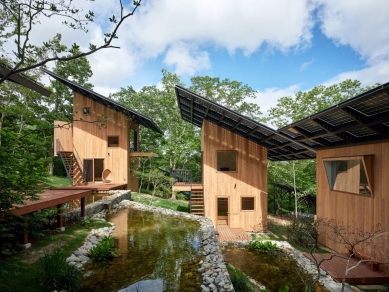
HS: Yes, for example, the House in Awaji Island is using shading layer, double skin system, made of a roof tiling, which shape is generated from calculating of solar trace on the site. Our concept of the shape of a roof tile comes first from finding out the necessary shading shapes from solar tracing - summer and autumn, the morning and afternoon shade. Then it works in the summer time for shading, but in the winter time the daylight comes in. It's an optimized shape. We collaborated with the local craftsman for the tile production. The moulding was made using the 3D vector-based forms. Combining high and low technology to find out the optimized shape following the natural theory by traditional method. Such things we are working on now.

ZZ: How do you perceive the importance of architect's influence on the lives of ordinary citizens? And where does it lead you in your work?

HS: In Japan, the situation for architects is changing. Architects used to have very big projects like city planning or the iconic masterpiece projects in the city. The current situation is changing because the economic condition of Japan is going down. And also, the population is decreasing and, in this situation, we don't have big chances like Kenzo Tange or Tadao Ando, or other big master architects. We are in a different condition now, I feel. This situation is not so easy for architects so they are often falling into the constraints of economic condition or existing values. But I think the role of architects is to show some new value by experimental projects. Even if it is a small project, it should propose a new value to change the world. That is what I'm recently thinking about. Many Japanese companies or Japanese government are very static, they don't want to change so much. But I think the architects should not be afraid to show a new value by experimental projects. That is most important, I'm thinking.

ZZ: I agree, it's important to bring the change from bottom up, as the governments cannot keep up with the changes, they are not flexible enough. It's difficult for them to change the way they work.

HS: In Japan, we had a very good economic condition 30, 40 years ago. Since then we have a good infrastructure in the cities. But now is the time to change or maintain such an old infrastructure. But the condition of the population or tax income is going down. To find the way how to balance it is very important. Japanese people are usually very conservative. So that's why our architect's task is how to show new values. It's very important in such a conservative society. I don't know if that is the same for European people or not. But in Japan, it's such a situation.

ZZ: I think we also can't rely on the top-down solution. Which social aspects do you find the most important for architects to think about? Do you relate it to your work?

HS: Yes, I do, because I'm focusing on environmental things. From my point, to show the solution to climate change is most important in the current situation. For example, 100 years ago, modern architects had some targets to achieve. But after that, we lost sight of our goal and focused on many cosmetic things that were required by the economics. But now, we are facing very big issues again. All of the world's architects have to think about it in the future, in the close future. We don't have many good solutions at this moment to go by, to design things. That's why I think my social aspect is focusing on sustainable things.

ZZ: I see, because environmental changes are actually affecting mostly the low-income people and the vulnerable parts of population. You have already partially answered my next question, how does climate change influence your work, do you want to add something more to this topic?

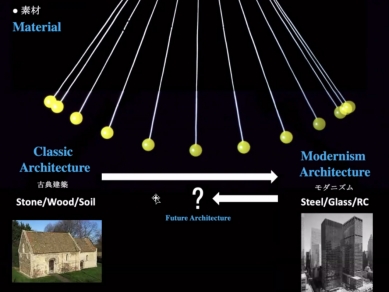
HS: If we look back into history, how the architecture design changed from the traditional architecture to the modernist architects. For example, about the opening ratio of window. Originally, the old classic buildings had a small window because they are just a stone-stacking system. But after that, the modernist architects could find out a good method to make a big window and make a comfortable value with this kind of design. But in the future, the architects will have to think about the lowering opening ratio compared to modernism, because they are losing energy. That is the same with the roof forms. For example, the traditional architecture is following the nature, so it has an inclined roof. But modern architecture has a flat roof to control the design with technology. But in the future, we have to think about the solar gain by solar panels or such things. So that way, maybe again, some inclination geometry will happen. Also thinking about materiality. The classic architecture used very organic materials as stone, wood, soil or something. But the modern architects use steel, glass, concrete and other artificial materials. But what if we think about the circular economy or the sustainability? How to think about the aesthetic point of the sustainability? Our role is to seek new aesthetics for architecture in the age of the global environment.

ZZ: When talking about sustainable development, sustainability and environmental things, how do you perceive the influence of the SDGs (Goals of the UN 2030 Agenda for Sustainable Development) on Japanese architecture and how do you reflect them in your work?

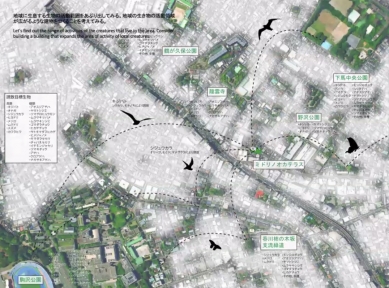
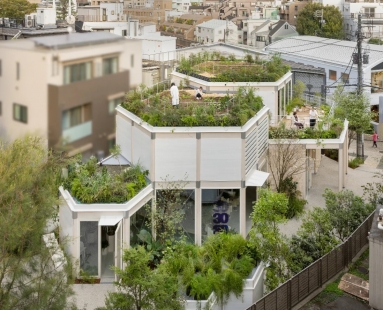
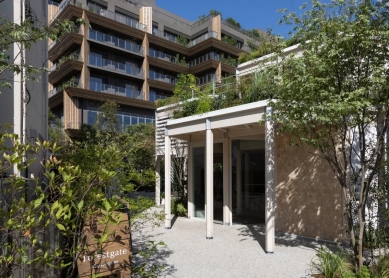
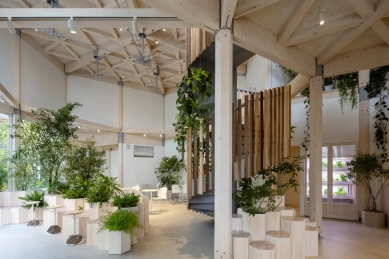
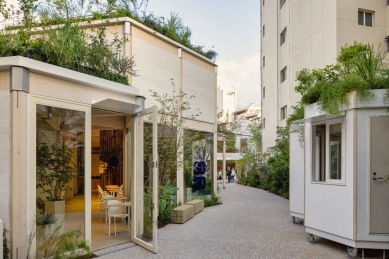
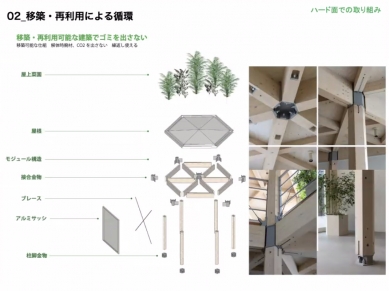
HS: Yeah, SDGs are maybe expanding the definition of architecture related with sustainability. Originally, I was more focusing on the energy aspects. For example, to build zero energy house using some renewable energies, concerning about environmental engineering aspects. But after SDGs, we expanded our focus more. We have a project focusing on biodiversity, how to connect the networks of nonhuman living things like birds or insect with architecture. To do that, we are researching their life conditions and how to connect their flowline into our site. Or for example, another project we recently built in the centre of Tokyo, is a building made by timber and we use kind of joints that could be easily disassembled when the life cycle of the building is over. That is thinking about architecture's circularity. So, the definition of architecture related with sustainability is expanding thanks to SDGs.

ZZ: So, for you, the influence of SDGs is more like a good influence that has widened your perspective. Does it help you in your practice that clients are more aware about environmental issues?

HS: Yes, originally when I saw the SDGs at the beginning, I had very ambiguous feelings. But when it spread more influence to the society, we architects think about sustainability in more categories. But I think that SDGs have stronger influence on the general client comparing to architects, architects still have some distance from the SDGs or sustainability. But many clients in current times, many private companies or governments have strong interest in such things how to contribute to the society.

ZZ: Do you see the Japanese public debate on sustainability and adaptability of the cities to climate change as sufficient and fruitful, would you have any examples from your practice, how does this debate maybe influence your workflow or some specific project?

HS: One example, from my practice which is maybe not directly related to SDGs. But this project is in the west side of Japan in Saga Prefecture, the Kyushu area. Ten years ago, they had a big flood there. In Japan, because of the global warming issue, more typhoons and strong rains are coming, which causes a flooding. So, in our firm we looked for the solution how to solve this kind of thing by architecture design. We decided to make raised floor network system for the school project which in the disaster time would work as an escaping route for the people in these public areas. Japan also has many earthquakes. That's why recently our society is always thinking about the disaster aspect of the city. That's a case where people all have some certain shared risk for their life. Then our discussion with local people is more productive. They are not just debating with their requests. They are more facing to the same direction. And then they can do more productive debate with us how to solve the risks. So that it can contribute to make a sustainable society.
ZZ: It means that when people actually experience the climate change's influences on their own life, they are more open to discuss it. When it comes to own risk, people respond better. What are the possibilities and limits of Japanese architects in creating ecological and sustainable architecture?

HS: If I talk about the limits, as I told you, the current economic condition of Japanese society is not growing but going down. Our chance to make a masterpiece architecture or to design the whole city, it's really rare for our generation. For our generation to contribute to the society we are focusing on this kind of social things. That is a new role for architects in Japan, I think.

ZZ: So, you see it as a limit. What would you see as a possibility?

HS: For example, recently in my laboratory (I'm teaching at Kyushu University) we proposed to the small city in Hokkaido, which is under 20,000 inhabitants. In Japan, we have 800 cities under 20,000 population. And from the predictions half of them will disappear in 20 years. Maybe architects have a chance to change the structure of the city to solve it, for example, how to shrink it. That is maybe potential for future architecture in Japan. In 20th century, I think our value for life was more related to economic condition, to maximize our desire was reflected into the building design. But in this era, we have to think more about multi-value culture. Our conclusions have to be in balance, it is very important. In case of how to think about shrinking city also. What have to be abandoned? What have to be kept? That is really important. I think in the new era, we have to think about such balancing values of life.

ZZ: We come from developed regions, from the countries which have quite high standards of living. We have already reached the point of richness and have seen its cost for nature and now we are going down. But what about the developing countries which didn't get there so far and they still desire the way of life which was shown to them by western countries. Isn't it a bit strange from us to tell them you cannot go there because this direction is not so good for the planet? That they shouldn't be desiring big houses and modern cities?

HS: That is serious. That is serious because the developed countries are already going down. There are India and China, Asian countries and Africans going up and they want to follow US or European culture. They want to be rich so, they will use more energy and exhaust more carbon. In that case, my philosophy is how to combine the sustainability, the ecology with economical aspect. I want to combine it to achieve certain value of richness but also achieve certain value of sustainability at the same time. That means sustainable balance I think. I'm not sure if that works or not, but my thinking is how to propose such a new value. Not only just concentrating on economical things.

ZZ: In the eyes of Europeans, Japanese architecture has a very close relationship with nature. Where, in your opinion, do these roots lie? And is this relationship about ecology and sustainability?

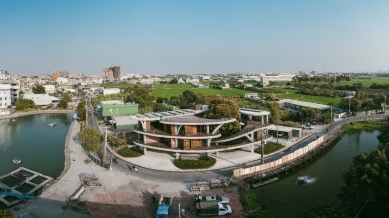
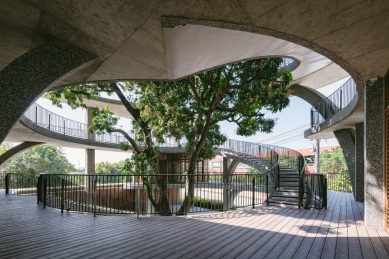
HS: Not only Japan, many Asian countries have strong roots of coexistence with nature. One is related with production of rice. The production of rice is always related with water and solar energy. Another thing is that we have different religions. Europe has a strong single god. But in our country or Asian countries we have animism or multiple gods. Everything has a god within, the mountain, the river or stone. Yaoyorozu no kami we call in Japan. We always had this history respectful co-existing with nature. For example, recently I finished a small office project in Taiwan. The triangular site has a big tree in the centre. We measured the accurate size of the tree and we measured its roots in the underground by certain machines. First we proposed box like building around the tree to the client. But in Chinese letters the symbol of tree with the box around, means trouble. It means that once we cover up the tree completely, the tree cannot exist. The client asked for some ventilation and solar energy to be open for the tree. After that I changed the design by using thermal simulation or wind simulation for tree. Normally we use this kind of computer simulation for human but we change the subject. From these kinds of experiments, I feel strong philosophy of coexisting with nature in Asian countries.

ZZ: On one hand you have this very close relation to nature and on the other hand the Japanese modern cities are very much without nature, they lack greenery. How does this happen when architects have such a strong feeling for nature but the cities don't actually have this relation reflected?

HS: For example, do you know in Tokyo there is a big forest in the centre of the city that we call Jingu? In that area recently, a private development company is cutting many trees for their new commercial business. But many Japanese people are against this kind of attitude of private company. So even in such a big city, I'm feeling recently the strong intention of Japanese society to keep the nature as much as possible.

ZZ: This missing nature in the cities, the streets without trees are very much related with the next question. How do you perceive the problems of UHI (urban heat island) in Japanese cities? How do you see the use of NBS (nature-based solutions) in this context and do you use them in your work?

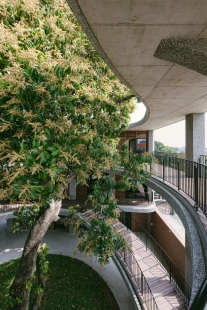
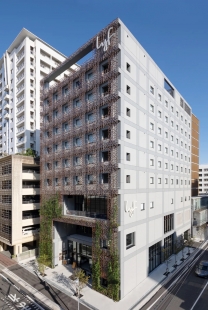
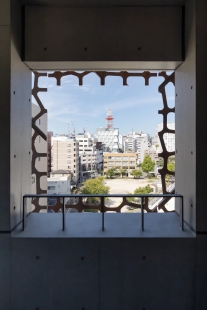
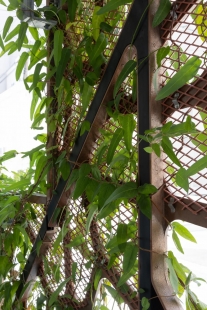
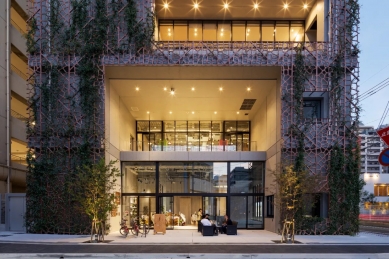
HS: In the hotel project we completed a few years ago, just in the centre of Fukuoka city. We made the green facade for this building using leaf-like aluminium structure, in which we incorporated the water circulation piping system to cool down the building itself and to supply the water to the greenery. So, this system is not only for this building itself, but this works also for the surrounding to cool down the urban situation. This kind of idea maybe has some potential to solve the heat island problems.

ZZ: This building is actually an example that you think about how your building affects the surrounding, the public space in front and around the building. How do you perceive the role of public space in contemporary Japanese cities? How do you include it into your design process?

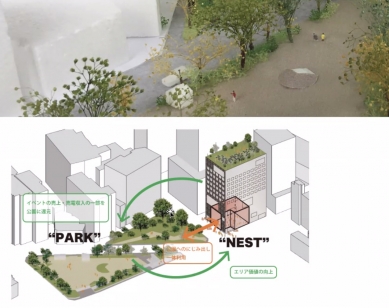
HS: For example, this building, as I said, is in front of the park. But this area is a little bit backside of the city originally, gambling area with the pachinko and some boutique couple hotels. That's why the buildings are not so open to this park. I wanted to change the site to make it more comfortable, so I decided to open this building to the park and create continuity of the greenery. Ideally if the hotel contributes to the park cleaning, then people would use this park more and then more guests come to the hotel. Such a good circulation of the building and public space would be beneficial. But unfortunately, I couldn't manage to bring this system to work.

ZZ: Do you use methods of participation or communication with the public or the local community in your work and how do you perceive this method in the context of Japanese society?

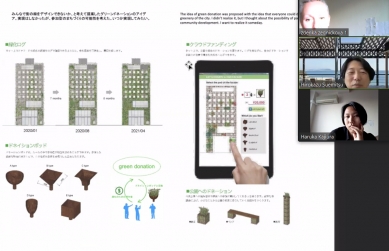
HS: Compared with European cultures, Japanese society is not so open minded and still doesn't want to discuss about public space in a positive way. Japanese people are shy. In that hotel project we just spoke about, we wanted to try to incorporate people's participation. But our participatory proposal also couldn't be realized. We were thinking about setting up some app into the platform to join local people with this greenery facade. Although this is just a private company hotel, but through this application you would be able to change the types of plants growing in the facade. It would be an interactive tool for people who want more participation in the public space but are shy. This kind of tool can assist the people in Japan to join in, then we could communicate more smoothly.

ZZ: So, you think Japanese people would feel more comfortable when communicating through some application, not directly?

HS: Yes, because they are very shy people, not so open-minded. Even in some public building projects, we call people to join the workshop to discuss the future of public space, but not so many people have joined us. But with these kinds of tools, we could have more possibilities I think.

ZZ: That's interesting innovative approach. What would you recommend to the upcoming generation of architects - students of architecture, what topics should they focus their attention on?

HS: This is related with your former question, how to contribute to the society or communicate. In my university lab we are currently developing a new material. It is using an oyster shell, because in the university area are famous for local oyster shell production. People are gathering at the site and eat the oyster, but after that the shell becomes just trash. In our lab, we are gathering this kind of trash to make some new material from it. This is also a kind of communication for the local area in the future. That is related with my recommendation for younger generation. I think the profession of architects should be changed or expanded. Not only design a masterpiece and just wait for some client to work. Because the condition of the society is going down, we have to find out a new role for new generation of architects. One aspect is discovering new business, like this example of finding new up-cycled material. I hope the new generation will expand our profession and contribute in many aspects to the society.

ZZ: Thank you very much for your inspiring answers and sharing the way you think about your projects with us.

FUTURE TALKS made with support from Associate Professor Nobutake Sato,
Meijo University Nagoya.

The FUTURE TALKS were realised under the research project "Creative software/digital neural network Virtual futurologist A°D°A" which is co-financed with the state support of the Technology Agency of the Czech Republic as part of the SIGMA project.
0 comments
add comment

Related articles