
Heat pumps are changing house design. What should architects take into account?
Interview with Jan Fučík, Head of Projection at Brilon Company

20.05.2026 13:20
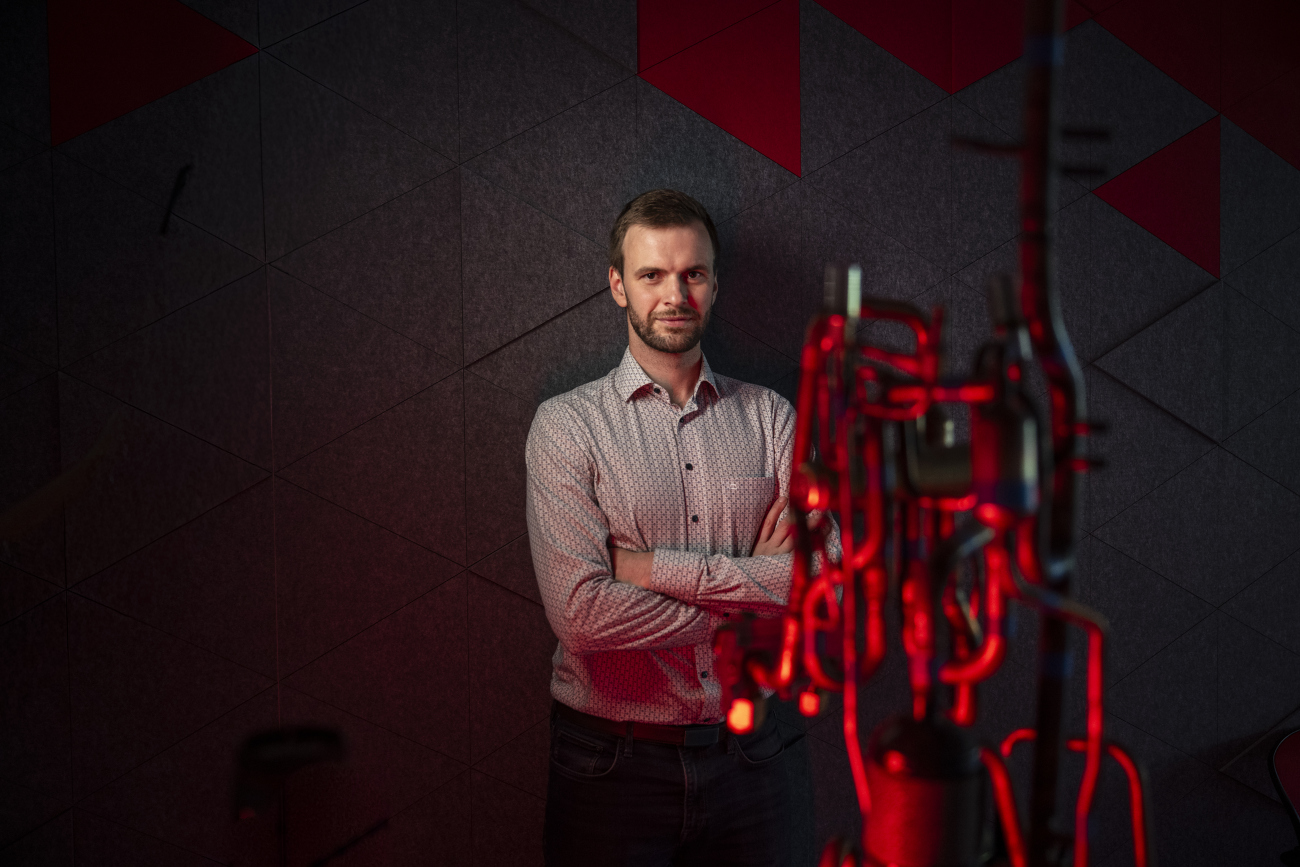 |
| Jan Fučík, Head of Design at Brilon. Photo by Michael Tomeš |
Brilon is a company with more than thirty years of history. Initially starting with the distribution of gas boilers, it gradually expanded into other heating and hot water technologies, and today the company can offer complete solutions in the field of building services engineering (TZB), including technical support, service, and consulting. What are the current trends in this industry and how is technology development reflected in architectural designs? Jan Fučík, the head of design at the company, shared his insights with us.
Brilon has been active in the field since 1992. How has the area of building services changed during this time?
It has changed technologically, legislatively, and philosophically. Previously, the main focus was on ensuring the basic functions of a building such as heating, ventilation, water supply, and sewage, whereas today there is more emphasis on user comfort and minimizing environmental impact.
How do you, as a company, respond to these changes?
For example, we already offer gas boilers that are H2 ready. This means they are prepared for up to a twenty percent hydrogen blend in natural gas without the need for modifications. Additionally, we have hybrid systems in our portfolio, which combine gas boilers with heat pumps, increasing heating efficiency and optimizing costs.
Regarding the heat pumps themselves, I perceive perhaps the greatest progress—and at the same time, the biggest challenge—in the eco-friendliness of refrigerants. We started with R410 refrigerants, which were replaced by R32 refrigerants due to their adverse impact on the climate. While R32 is somewhat more eco-friendly, it can be less effective when heating hot water or at very low outdoor temperatures. Our latest machines, such as the ADAPT MAX from Kronoterm, already use propane (R290, ed. note), which is stable as a refrigerant and has almost no ecological footprint.
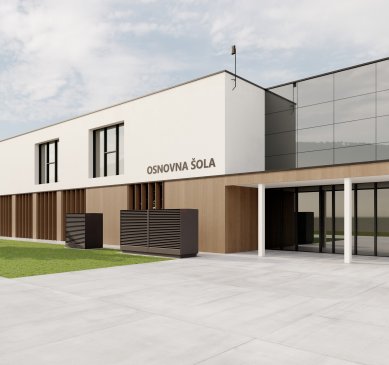
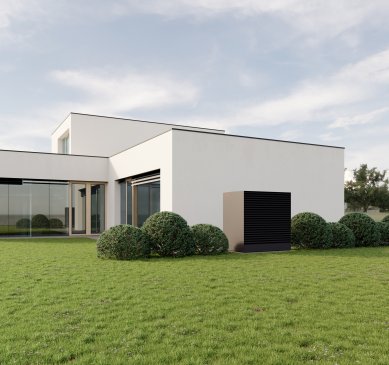
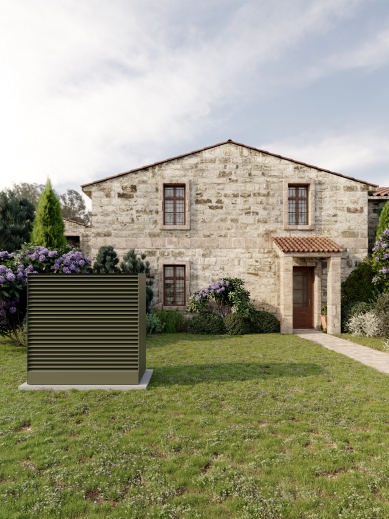
Alongside this, the parameters of the pumps are continuously improving - Kronoterm, in particular, offers the quietest machines on the market, which are also among the most powerful. Thanks to high output temperatures, they are suitable for older buildings as well. Moreover, they are well-designed aesthetically. We offer them in several color variations - for instance, corten, which is my personal favorite, fits excellently into revitalized brownfields. However, it must also be said that the more powerful the machine, the more challenging it is to place, although the ADAPT MAX has a bottom connection, allowing it to be positioned in a space.
Is the development of technology you mentioned also reflected in architectural designs?
Absolutely. Technology today significantly influences the design of a building - spatially, operationally, and energetically. As technology advances, the demands on the technical room are also increasing, which is unfortunately sometimes overlooked. I often encounter situations where the technical room is designed too small - that is, in the size that was sufficient when only boilers were placed there. Today, with the need to fit in internal heat pump units, hot water storage tanks, thermal storage tanks, air handling units, and others, those dimensions are no longer adequate - for us designers, it becomes difficult to fit all technologies in. Of course, I understand that every meter costs something, so architects try to keep the house as compact as possible. This is mainly a problem with family homes, where every meter is contested, while administrative buildings naturally have more space.
Regarding the outdoor unit, sometimes an architect places it in a location in the design where it cannot realistically be positioned. A typical example is a depressed courtyard, which then becomes an icy pond in winter. Propane pumps are also not allowed to be placed near windows... These are all issues we can advise architects or designers on.
At what stage of the project should they contact you if they need to design heating?
Ideally, before preparing the documentation for the building permit. This documentation is often processed just to get through the building authority, but it often doesn't make sense. However, many mistakes can be caught at this stage. Family homes and generally smaller buildings tend not to be as problematic as medium to larger projects where heat pumps with outputs over 120 kW are supplied. At that point, we need to accommodate the machines - meaning that all the technology requirements must be considered during the building design. This helps avoid technical complications and unnecessary adjustments in later stages of the project.
However, we do not only provide heating – we can essentially solve the entire technical room: from boilers to heat pumps, flue gas discharge, hot water storage tanks to hydraulic components, and so on. We know how our products behave, and we can design them to work as efficiently as possible. For demanding buildings heated by heat pumps, we can, for example, effectively resolve the hot water heating issue, which I believe is often underestimated today. We like to discuss specific parameters, installation principles, and operational behavior of the devices with our clients to ensure that the design meets the real demands of the technology. If an architect has their own concept, such as a block diagram or design requirements, we can refine it together. Otherwise, we can propose a suitable solution that they can integrate into the project.
 |
| photo: Michael Tomeš |
The hot water storage tank can no longer be designed solely based on the occupancy of the house, as it was done in the past, but needs to be tailored to the specific heat source. A common design mistake is using a heat pump that is too powerful in combination with a small hot water storage tank. The result is inefficient operation - the pump frequently cycles on and off, reducing its lifespan and increasing energy consumption. A solution can be a storage tank with an external heat pump, or a heat pump designed exclusively for heating hot water. This is a compact device where the pump is already directly part of the tank - it is structurally connected to it, so performance and volume are in mutual harmony.
Another option is heating using a so-called booster. This can be used if we have a primary water-water heat pump that heats water in a storage tank. From there, the water is directed to a secondary heat pump, which raises it to a higher temperature. The result is heating water suitable for applications with higher demands - for instance, for preparing hot water, heating a pool, and so on. This is an ideal solution for hotels and facilities with high hot water consumption, as it is a stable, reliable, and space-efficient system.

Let's return to innovations. You talked about H2 ready technology, hybrid systems, and the eco-friendliness of refrigerants in heat pumps. What do you plan for the future?
An interesting step forward is a system of heat pumps for apartment buildings that we plan to introduce to the market within a few months. This involves a method of heating using a central water-water pump that would heat the heating water to a lower temperature, around twenty degrees. A separate heat pump would then be connected to this circuit, installed in individual apartments, which would heat the water according to the needs of their users. This solution would not only prevent thermal losses that would occur in the risers if the entire building were heated by one central pump, but also contribute to reducing the energy demand of the building. Moreover, internal heat pump units can now be hidden in specially designed cabinets, making installation in apartments without a technical room no longer an aesthetic issue.
If I were to extend my previous answer, this is something that an architect should take into account in the design - meaning that they should consider the need to enlarge the risers, ensure sufficient load capacity of the roof to support the pump, and so on.
When it comes to heat pumps – the market offers an abundance of them from various manufacturers. What criteria do you use to select brands for your portfolio?
We strive to ensure that all products we offer are interesting and not available elsewhere on the market. At the same time, we collaborate exclusively with European manufacturers, so in our portfolio, you can find machines from France, Italy, Germany, Spain, or Slovenia. Currently, a huge flood of heat pumps from China is entering the Czech Republic, which can be purchased at much lower prices; however, their drawback is that they do not have such a long lifespan and spare parts are very difficult to procure. Common deficiencies also include missing or incomplete wiring diagrams, complicated communication via Modbus or another protocol, and issues with noise and visual aspects of the pumps are not often addressed.


In contrast, Slovenian Kronoterm, the manufacturer of the aforementioned ADAPT MAX, has all the necessary parameters available on their website, allowing users to find exactly the pump that meets their requirements with the help of a filter. Machines from this brand also have a very well-developed Modbus map, making it relatively easy to integrate them into intelligent building control systems. Additionally, all schematics are available in DWG format, enabling them to be easily inserted directly into the construction project - this saves a lot of work for me.
You have been working as a designer in the TZB field for four years. What do you enjoy most about designing heating systems?
I have always enjoyed solving problems. Although I sometimes feel pressure to stick to established routines, I enjoy exploring new paths. I am happy when I encounter something I haven't done before, something that requires finding a new technical solution and potentially reducing heating costs. Most of the time, I sit at the computer and draw, but it's not stale, and now and then I can also look at some interesting buildings...
Do you have any particular types of buildings you prefer?
Each is unique in its own way. But for example, I have not yet designed a zoo. Creating a pavilion would be nice.
Brilon
www.brilon.cz
More about Kronoterm heat pumps here
photo by Michael Tomeš; archive of Brilon company
The English translation is powered by AI tool. Switch to Czech to view the original text source.
0 comments
add comment