
Kumova sound-imaginary creation - exhibition at Casa da Arquitectura
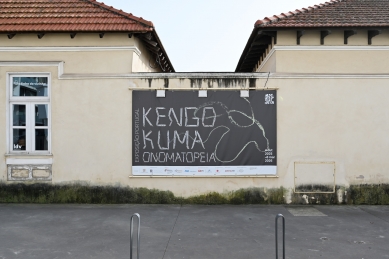
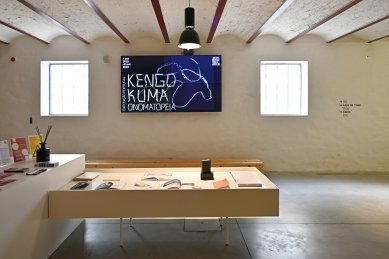
Kengo Kuma: Onomatopoeia - 10.4.2025 - 3.8.2026
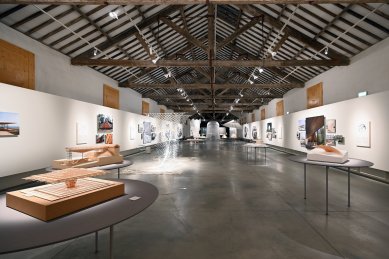
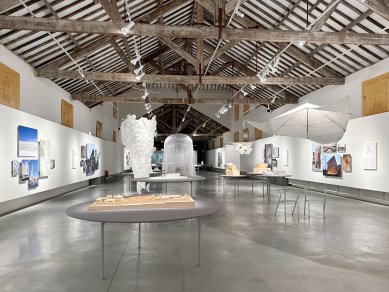
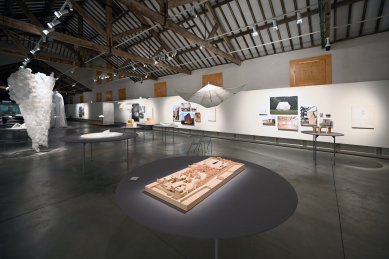
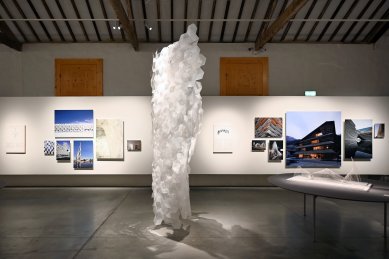
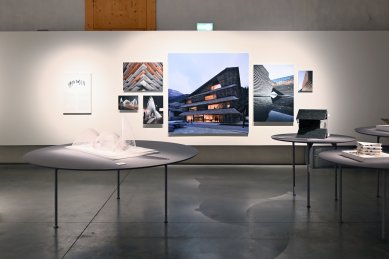
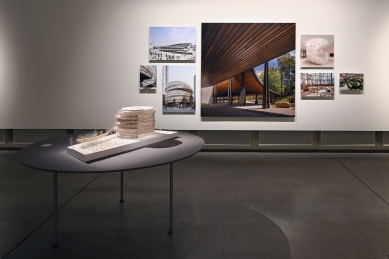
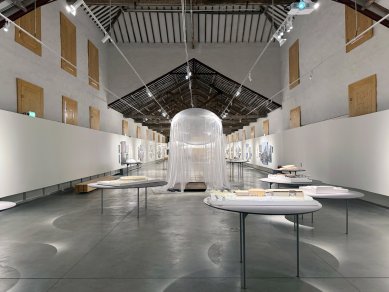
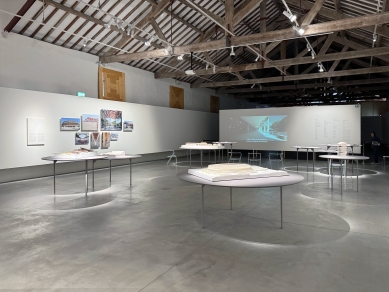
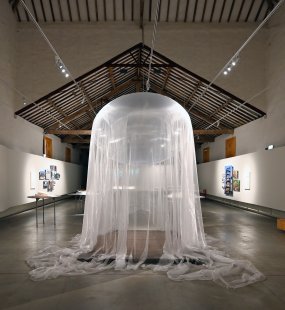
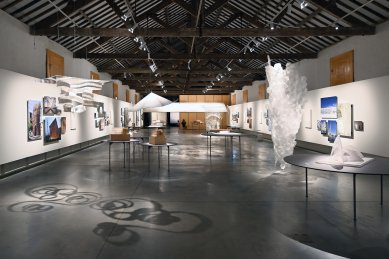
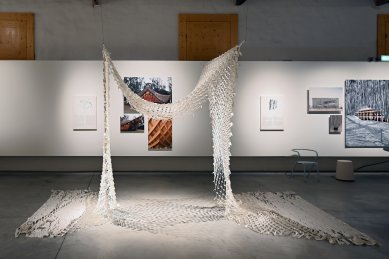
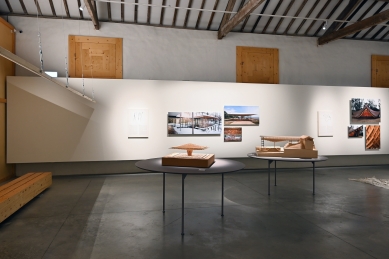
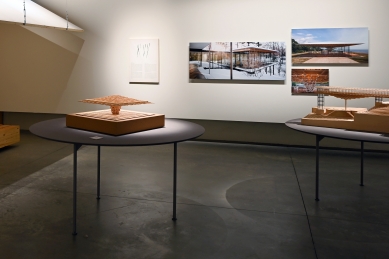
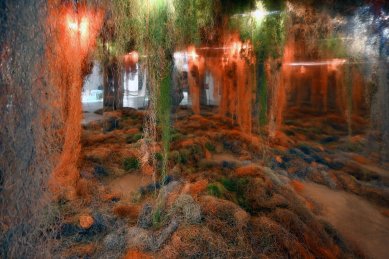
Under the convoluted title of the exhibition Onomatopoeia lies a retrospective of Japanese architect Kengo Kuma, which was first presented during the summer of 2023 at the Venetian Palazzo Cavalli-Franchetti on the occasion of the 18th International Architecture Biennale. Subsequently, the exhibition moved to Athens, Greece, at the beginning of 2025, and it was also showcased in Bonn and again displayed in all its glory at the Portuguese center Casa da Arquitectura, where it ran from last October until early March.
The word onomatopoeia can be translated as a phonosymbolic description of meaning, in which the word itself somewhat imitates the phenomenon. It most commonly involves interjections imitating real sounds. The phonetic imitation of an existing sound is often related across different languages and is thus understandable to more nations simultaneously. While in our culture we must remain with the Latin alphabet, Asian countries can also relate the meaning through calligraphic writing. Kuma attempted to capture selected concepts in graphic shortcuts. Simple sketches composed of just a few lines briefly characterize and help categorize Kuma's extensive work.
The exhibition is divided into thirteen categories describing the material, structural, or spatial essence of the project: Para Para (mass/void), Sara Sara (liquid/soft), Guru Guru (liquid swirling), Pera Pera (flat/gentle), Zure Zure (shift/flexibility), Tsun Tsun (pressure/explosion), Fuwa Fuwa (elastic/membrane), Zara Zara (roughness/perception), Giza Giza (hardness/folding), Pata Pata (lightness/folding), Suke Suke (horizontalness/flatness), Moja Moja (wave/line), and Funya Funya (relaxation/softness).
Kuma examines the dialogue between the observer, space, and material. The exhibition in Porto focuses more on Portuguese projects. Kuma's office has an extraordinarily fruitful relationship with Portugal. In the fall of 2024, they completed, together with OODA, the extension of one of the largest cultural institutions in the country, and last year they even designed the Portuguese national pavilion for the world exhibition Expo 2025 in Osaka, Japan. In Porto, Kuma managed to win a competition in 2018 for the renovation of the former slaughterhouse site into a cultural and commercial center Matadouro do Porto. This project, which Kuma's office is again collaborating on with the local studio OODA, is expected to be completed this year, providing yet another reason to visit Porto.
Architecture is born in the mind. Ideas are then transferred onto paper through the hand so that the idea can be further developed. Drawings, models, and visualizations are necessary for a better understanding of the project. A verbal description is always lacking. Despite the best accompanying text, everyone creates a unique image in their head. In this case, we must agree with the saying that "a picture is worth a thousand words." Nevertheless, Kengo Kuma chose to embark on a journey of short verbal descriptions through the use of phonosymbolic interjections. He offers a different perspective not only on his architecture but primarily fosters a dialogue between cultures and provides a way to not only understand but also perceive and share contemporary architecture.
If you missed the Portuguese exhibition, you can now travel to Denmark for Kuma's site-specific installation Earth | Tree taking place in the industrial space of Copenhagen's art center CC from March until the end of February next year, or you can wait until summer when a joint exhibition of Kuma's sketches and the photographs of Israeli photographer Erieta Attali will be held at the Berlin Museum of Architectural Drawing.
More information >
The word onomatopoeia can be translated as a phonosymbolic description of meaning, in which the word itself somewhat imitates the phenomenon. It most commonly involves interjections imitating real sounds. The phonetic imitation of an existing sound is often related across different languages and is thus understandable to more nations simultaneously. While in our culture we must remain with the Latin alphabet, Asian countries can also relate the meaning through calligraphic writing. Kuma attempted to capture selected concepts in graphic shortcuts. Simple sketches composed of just a few lines briefly characterize and help categorize Kuma's extensive work.
The exhibition is divided into thirteen categories describing the material, structural, or spatial essence of the project: Para Para (mass/void), Sara Sara (liquid/soft), Guru Guru (liquid swirling), Pera Pera (flat/gentle), Zure Zure (shift/flexibility), Tsun Tsun (pressure/explosion), Fuwa Fuwa (elastic/membrane), Zara Zara (roughness/perception), Giza Giza (hardness/folding), Pata Pata (lightness/folding), Suke Suke (horizontalness/flatness), Moja Moja (wave/line), and Funya Funya (relaxation/softness).
Kuma examines the dialogue between the observer, space, and material. The exhibition in Porto focuses more on Portuguese projects. Kuma's office has an extraordinarily fruitful relationship with Portugal. In the fall of 2024, they completed, together with OODA, the extension of one of the largest cultural institutions in the country, and last year they even designed the Portuguese national pavilion for the world exhibition Expo 2025 in Osaka, Japan. In Porto, Kuma managed to win a competition in 2018 for the renovation of the former slaughterhouse site into a cultural and commercial center Matadouro do Porto. This project, which Kuma's office is again collaborating on with the local studio OODA, is expected to be completed this year, providing yet another reason to visit Porto.
Architecture is born in the mind. Ideas are then transferred onto paper through the hand so that the idea can be further developed. Drawings, models, and visualizations are necessary for a better understanding of the project. A verbal description is always lacking. Despite the best accompanying text, everyone creates a unique image in their head. In this case, we must agree with the saying that "a picture is worth a thousand words." Nevertheless, Kengo Kuma chose to embark on a journey of short verbal descriptions through the use of phonosymbolic interjections. He offers a different perspective not only on his architecture but primarily fosters a dialogue between cultures and provides a way to not only understand but also perceive and share contemporary architecture.
If you missed the Portuguese exhibition, you can now travel to Denmark for Kuma's site-specific installation Earth | Tree taking place in the industrial space of Copenhagen's art center CC from March until the end of February next year, or you can wait until summer when a joint exhibition of Kuma's sketches and the photographs of Israeli photographer Erieta Attali will be held at the Berlin Museum of Architectural Drawing.
More information >
The English translation is powered by AI tool. Switch to Czech to view the original text source.


0 comments
add comment
Related articles
0
25.06.2026 | Kengo Kuma: The Magic of the Gaze by Erieta Attali - exhibition at Tchoban Foundation
0
29.01.2023 | Graçova retrospective - exhibition at Casa da Arquitectura
0
12.02.2020 | Memory of Mourov's Realizations - Exhibition at Casa da Arquitectura
0
02.01.2017 | Kengo Kuma / Woven - exhibition at GAB
1
05.10.2016 | Kengo Kuma / Woven