
Babiš is considering the transfer of Hrzánský Palace, it could become a museum, he stated
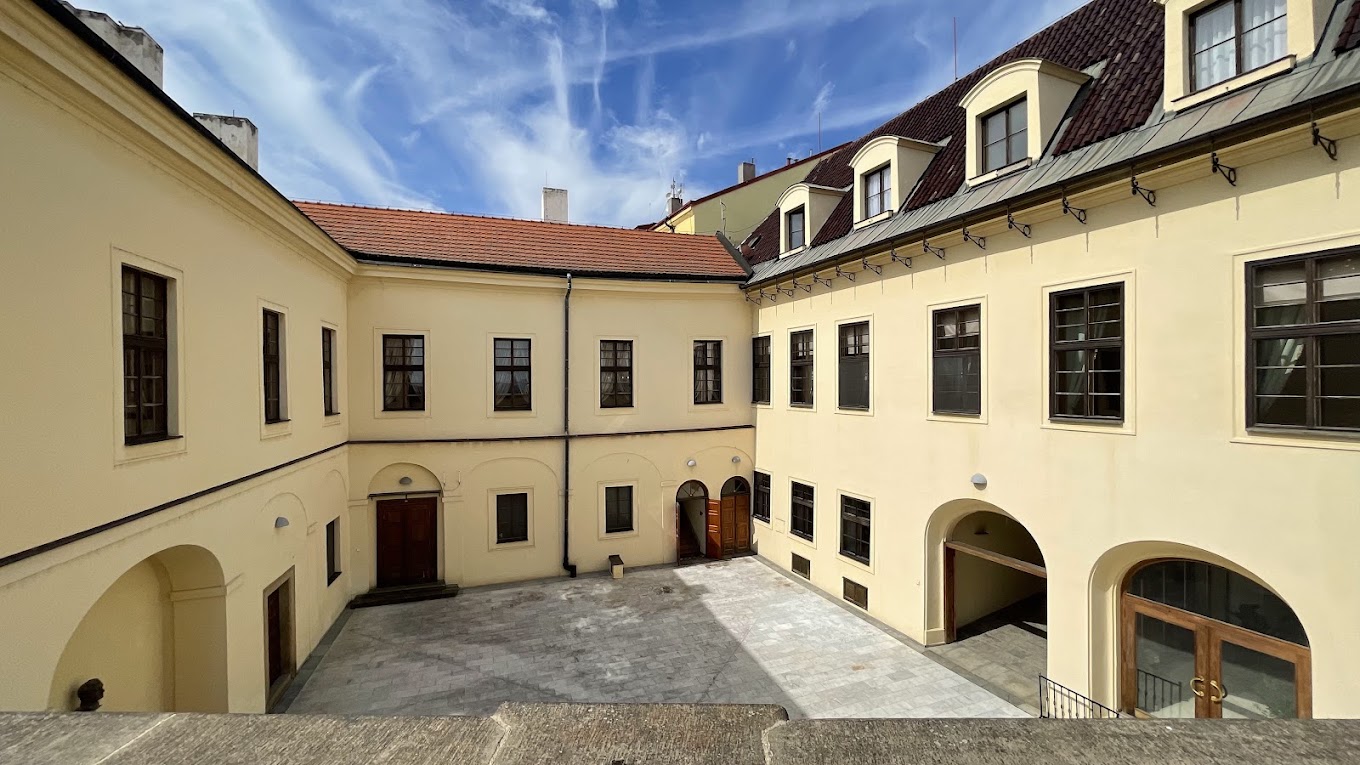 |
Prague – Prime Minister Andrej Babiš (ANO) is considering transferring the Hrzánský Palace in Hradčany, traditionally used for negotiations on the composition of a new government by candidates for prime minister after parliamentary elections, to the Office for the Representation of the State in Property Matters. He envisions that the building could serve, for example, as a museum in the future.
Together with the head of the Government Office, Tünde Bartha, the Prime Minister also announced his intention to renovate Kramář's Villa and the adjacent baroque fortifications. Bartha described the renovation of the fortifications as the biggest challenge. In addition to Hrzánský Palace and Kramář's Villa, the Government Office also manages the Liechtenstein Palace in Prague, which Babiš plans to preserve along with Kramář's Villa for representational purposes.
During his previous government, Babiš referred to the plan to build a new government district in Letňany, mentioning that public use after the construction of the district should include, for example, the Nostitz Palace, which is used by the Ministry of Culture, or two buildings of the Ministry of Regional Development at Old Town Square. Among the buildings Babiš considered selling in connection with the ultimately unrealized plan to relocate some offices to Letňany was also the headquarters of the Ministry of the Environment in Eden.
The Hrzánský Palace on Loretánská Street is used by the government for representational purposes and as an alternative seat. Babiš operated there during the reconstruction of the main government headquarters – Strakova Academy. After last year’s parliamentary elections, when it was offered to him for his tenure by outgoing Prime Minister Petr Fiala (ODS), he did not take the offer. The palace, with its unique view of Prague, is also used by the government for receiving foreign visitors. The otherwise generally inaccessible building opens a few times a year for public tours.
The Hrzánský Palace stands on the site of an originally Gothic house, which, according to the first mentions, belonged in the 14th century to the Chapter of St. Vitus and later to the imperial door keeper. In the second half of the 14th century, the building was owned by the builder Petr Parléř, who, among other things, constructed the Charles Bridge and participated in the building of St. Vitus Cathedral. The new house, which became the basis of the current Hrzánský Palace, was built in the 16th century and attained its current appearance in the 18th century. In the late 19th century, before he became the first Czechoslovak president, Tomáš Garrigue Masaryk briefly lived in the palace.
In the first half of the 20th century, a painting school and studio of the Czech painter and graphic artist Ferdinand Engelmüller were established in Hrzánský Palace. For the representational purposes of government representatives, the palace was radically reconstructed in the early 1950s.
The English translation is powered by AI tool. Switch to Czech to view the original text source.
0 comments
add comment
Related articles
0
05.07.2026 | Today, the Hrzán Palace in Prague, the alternative seat of the government, will be opened to the public
0
06.07.2020 | People can visit Hrzánský Palace in Hradčany today
0
05.07.2019 | The Government Office will today make the Hrzánský and Lichtenštejnský palaces accessible
0
05.10.2018 | The government will return from the Hrzán Palace to Strakova Academy