
Bartha: The Hrzán Palace wants to leave the government office in about a year
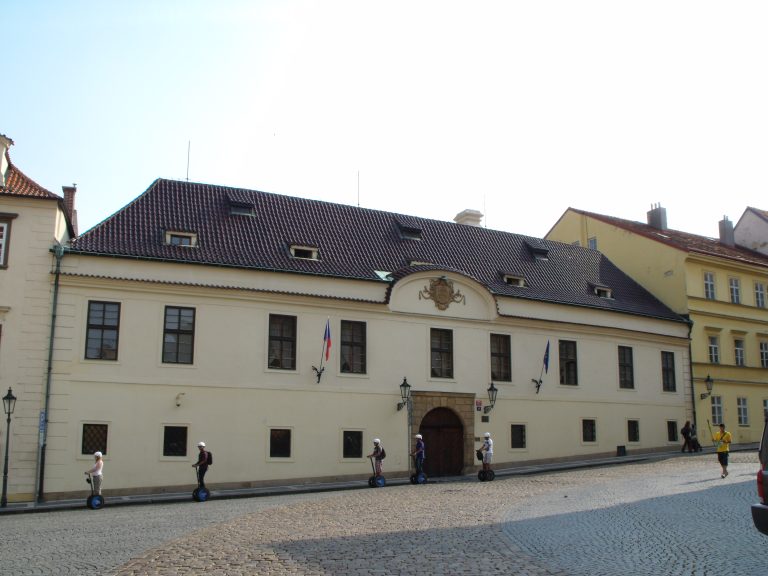 |
Prague – The Hrzánský Palace in Prague's Hradčany district is set to be transferred under the Office for Representation of the State in Property Matters by the government office within approximately one year. No decision has been made yet regarding the further use of the building. Tünde Bartha, the head of the government office, informed the ČTK. Prime Minister Andrej Babiš (ANO) spoke about the plan in early August. He envisions that the building could serve as a museum in the future.
The Hrzánský Palace on Loretánská Street is used by the government for representational purposes and as an alternate residence. Babiš worked there during the reconstruction of the main cabinet headquarters – Strakova Academy. After last year's parliamentary elections, he declined the offer to use it for office work from the outgoing Prime Minister Petr Fiala (ODS).
"This step is related to optimizing the utilization of the state’s real estate assets and ongoing or planned reconstructions of the Klárov Institute for the Blind and Kramář's Villa, which, when completed, will provide sufficient facilities for activities currently carried out, among others, at the Hrzánský Palace," Bartha stated. She also noted that the Hrzánský Palace is partly used based on a rental relationship with the Prague 1 district. The annual operational costs of the palace are approximately five million Czech crowns plus salary costs for two employees.
The Hrzánský Palace stands on the site of an originally Gothic house, which, according to the earliest mentions, belonged to the Vyšehrad Chapter in the 14th century and then to the imperial doorkeeper. In the second half of the 14th century, the building was owned by the builder Petr Parléř, who, among other things, constructed Charles Bridge and contributed to the construction of St. Vitus Cathedral. The new house, which became the basis for the current Hrzánský Palace, was created in the 16th century and took on its current form in the 18th century. At the end of the 19th century, before he became the first Czechoslovak president, Tomáš Garrigue Masaryk briefly lived in the palace.
In the first half of the 20th century, a painting school and studio of Czech painter and graphic artist Ferdinand Engelmüller were established in the Hrzánský Palace. For representational purposes of government officials, the palace was radically renovated in the early 1950s.
The English translation is powered by AI tool. Switch to Czech to view the original text source.
0 comments
add comment
Related articles
0
05.08.2026 | Babiš is considering the transfer of Hrzánský Palace, it could become a museum, he stated
0
05.07.2026 | Today, the Hrzán Palace in Prague, the alternative seat of the government, will be opened to the public
0
06.07.2020 | People can visit Hrzánský Palace in Hradčany today
0
05.07.2019 | The Government Office will today make the Hrzánský and Lichtenštejnský palaces accessible
0
05.10.2018 | The government will return from the Hrzán Palace to Strakova Academy