
The Portmoneum in Litomyšl will open an exhibition about the multifaceted Antonín Píča
 |
"The exhibition will mainly feature about twenty paintings. There will also be ex libris from his collection, not only his own but also from other creators, as well as printing plates," Klimešová stated. Among the well-known Czech authors in Píč's collection are ex libris from Váchal, artist and architect Alois Metelák, sculptor František Bílek, and artists František Kobliha and Václav Rytíř. Others come from abroad, the farthest being from Australia and South America. Píč's personal items will also be on display, such as letters and a notebook with words in Esperanto.
Antonín Píč's collection disappeared after his death in 1967 and was likely sold to a private collector. However, the family kept many duplicate artifacts.
Antonín Píč was a reviser and later a registrar at the municipal office in Litomyšl. However, work was not his hobby; his life was dominated by the muses. He was an excellent musician and composed himself. He operated a theater with amateurs, picked up a pencil and brushes, and sketched or painted in his free time. His friendship with Josef Portman likely led him to succumb to collecting ex libris, and he corresponded with colleagues from around the world. He also occasionally engraved a bookplate himself. Last but not least, he devoted himself to Esperanto, in which his son Karel particularly excelled.
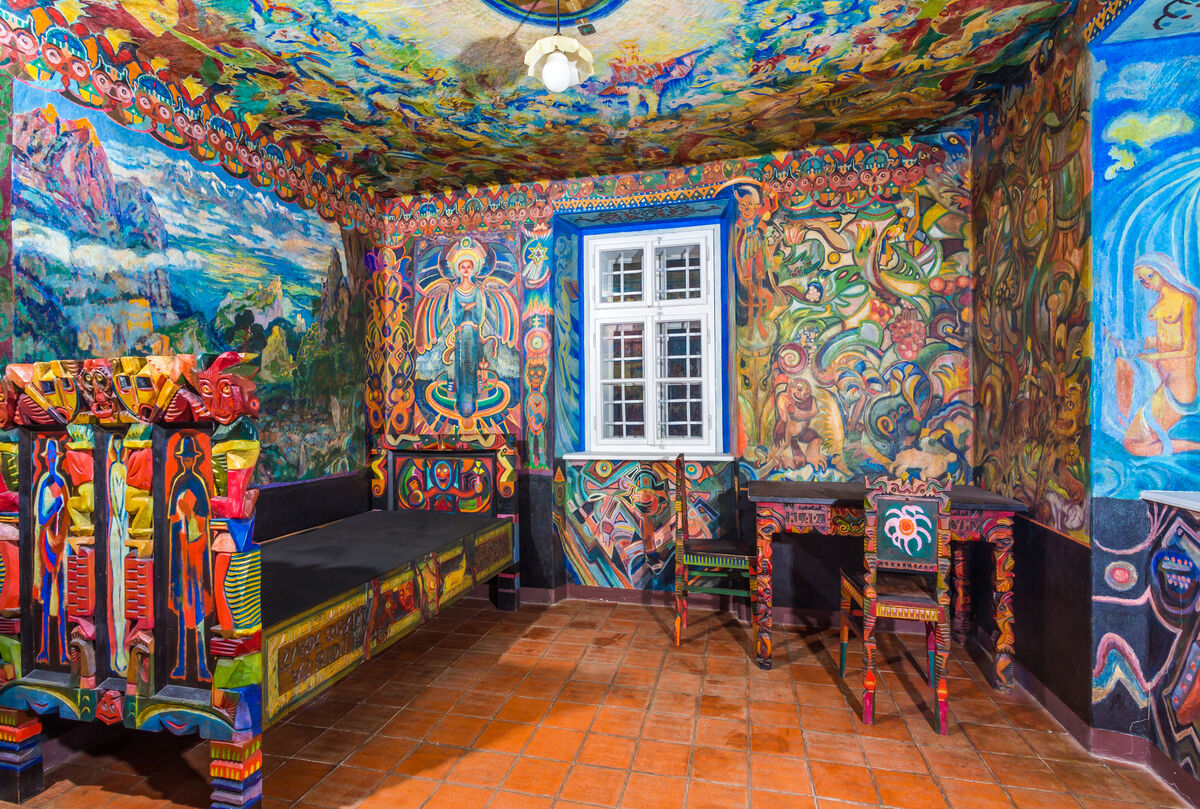
The Portmoneum Museum dedicated to the writer, mystic, carver, and philosopher Josef Váchal was opened in 1993. The building, which appears rather unremarkable from the outside, surprises visitors with its rich, almost demonic interior decoration and furniture. Váchal created it between 1920 and 1924 on commission for his admirer, the Litomyšl printer and art collector Josef Portman. On the walls of the house and furniture, he depicted many spiritual and religious themes. However, their friendship later dwindled; Váchal even created a character of a miserly Count Portmon in "The Bloody Novel," in which he pays tribute to the pulp genre, who resides in Portmoneum.
Píč met Josef Váchal while painting Portmoneum and cherished the coat rack painted by Váchal throughout his life. The artifact is presented to the public for the first time at the exhibition.
The English translation is powered by AI tool. Switch to Czech to view the original text source.
0 comments
add comment