
In Jemnice in the Třebíč region, the restoration of the interior of the noble mausoleum continues
Jemnice – Jemnice in the Třebíč region continues the restoration of the interior of the neoclassical tomb of the Pallavicini family. This year's work will cost about three million crowns. To fully complete the restoration of the unique mausoleum, the surroundings of the altar need to be finished and the marble sarcophagi need to be repaired, which is expected to cost around two million crowns. After the restoration, the tomb, located about 3.5 kilometers from the town, will be accessible to tourists, said the town's mayor Pavel Nevrkla (ODS) to ČTK.
"We could certainly include the tomb among our other monuments. It would be accessible perhaps not every day and not all day, but there would be two or three tours a day. The person who guides at the castle or in the church of St. Vitus could come here, and those interested could walk through it, because it's a shame not to show it," said Nevrkla.
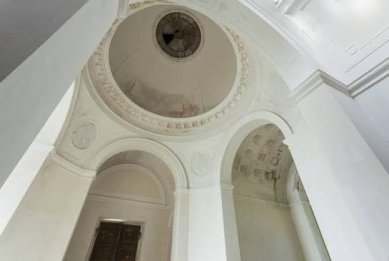
According to restorer Daniel Chadim, who is working on the restoration of the monument, the Jemnice tomb is unique and has no comparison in the Czech Republic. It involved construction experts who previously worked at the imperial court in Vienna. The building is interesting for its artistic concept, the use of enormous blocks of limestone in the exterior, and the dome's construction, which is not brick-built but consists of a riveted iron structure. The metal structure covered with plaster also replaces the commonly brick-built crowning cornice.
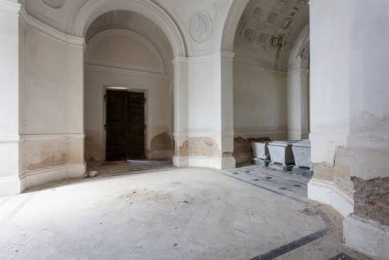
The tomb, designed by Viennese architects Otto Hofer and Wilhelm Zech, already has its roof and exterior shell repaired. Work on the interior began last year with the cleaning and inspection of damaged layers. The building had long been deteriorating. Thieves of precious metals accelerated the ruin by damaging the roof, causing water to leak into the building and damaging the entire interior decoration, Chadim said.
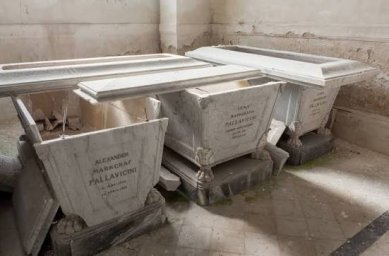
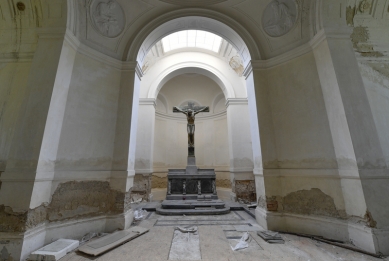
In the plinth section, it was necessary to apply desalination plasters, which will later be replaced with new plasters. The plasters also need to be supplemented on the walls and vaults of the building, which has a floor plan in the shape of an isosceles cross and a central dome. The interior features plaster profiles and stucco decorative embellishments. The most preserved within the tomb were the reliefs of the evangelists made of brilliantly white alabaster. In contrast, the marble sarcophagi, of which there are seven in the tomb, are devastated. The bodies are no longer in them; after 1991, they were returned to the descendants of the family in Hungary from the damaged and looted sarcophagi. According to conservationists, the only untouched part is the underground tomb of Gabriela Pallavicini, who was buried in the ground in the 1940s when it became clear that her body was not sufficiently embalmed to lie in a coffin and sarcophagus. According to Chadim, the broken marble coffin shells can be reassembled; one larger missing piece was found at the castle.
The tomb was completed in 1902, and over time, eight family members were interred there, including margrave Karel Pallavicini, who died at the age of 23 in 1900. His death was the impetus for the construction of the tomb.
The restoration of the building began in 2020 with the repair of the roof. Since then, it has cost over 15 million crowns. The Vysočina Region also financially supports the work, contributing 400,000 crowns this year.
"We could certainly include the tomb among our other monuments. It would be accessible perhaps not every day and not all day, but there would be two or three tours a day. The person who guides at the castle or in the church of St. Vitus could come here, and those interested could walk through it, because it's a shame not to show it," said Nevrkla.
According to restorer Daniel Chadim, who is working on the restoration of the monument, the Jemnice tomb is unique and has no comparison in the Czech Republic. It involved construction experts who previously worked at the imperial court in Vienna. The building is interesting for its artistic concept, the use of enormous blocks of limestone in the exterior, and the dome's construction, which is not brick-built but consists of a riveted iron structure. The metal structure covered with plaster also replaces the commonly brick-built crowning cornice.
The tomb, designed by Viennese architects Otto Hofer and Wilhelm Zech, already has its roof and exterior shell repaired. Work on the interior began last year with the cleaning and inspection of damaged layers. The building had long been deteriorating. Thieves of precious metals accelerated the ruin by damaging the roof, causing water to leak into the building and damaging the entire interior decoration, Chadim said.
In the plinth section, it was necessary to apply desalination plasters, which will later be replaced with new plasters. The plasters also need to be supplemented on the walls and vaults of the building, which has a floor plan in the shape of an isosceles cross and a central dome. The interior features plaster profiles and stucco decorative embellishments. The most preserved within the tomb were the reliefs of the evangelists made of brilliantly white alabaster. In contrast, the marble sarcophagi, of which there are seven in the tomb, are devastated. The bodies are no longer in them; after 1991, they were returned to the descendants of the family in Hungary from the damaged and looted sarcophagi. According to conservationists, the only untouched part is the underground tomb of Gabriela Pallavicini, who was buried in the ground in the 1940s when it became clear that her body was not sufficiently embalmed to lie in a coffin and sarcophagus. According to Chadim, the broken marble coffin shells can be reassembled; one larger missing piece was found at the castle.
The tomb was completed in 1902, and over time, eight family members were interred there, including margrave Karel Pallavicini, who died at the age of 23 in 1900. His death was the impetus for the construction of the tomb.
The restoration of the building began in 2020 with the repair of the roof. Since then, it has cost over 15 million crowns. The Vysočina Region also financially supports the work, contributing 400,000 crowns this year.
The English translation is powered by AI tool. Switch to Czech to view the original text source.
0 comments
add comment