
Three days, three nights, and three villas in the glow of lights
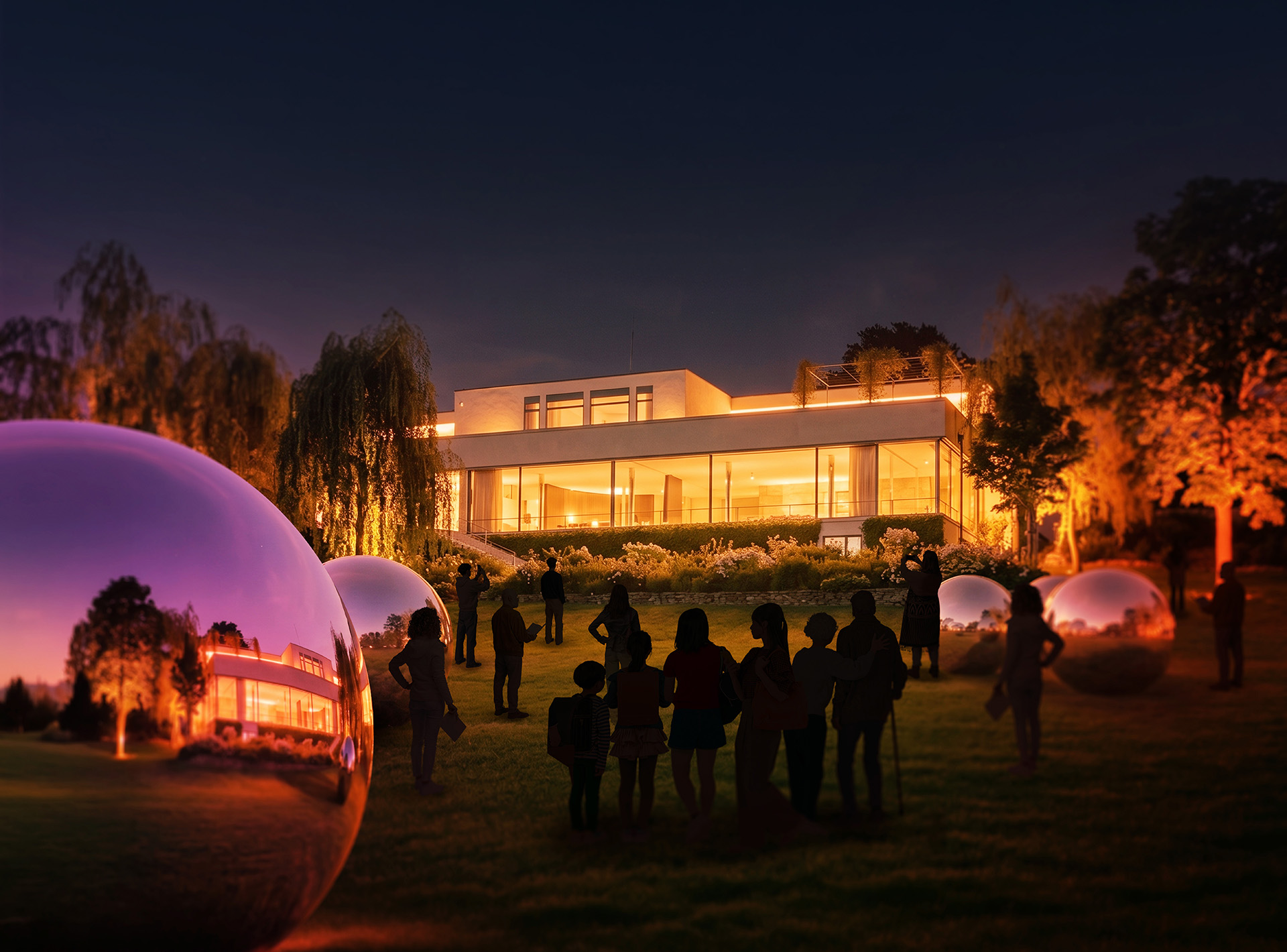
The highlight of the year-round celebrations of the inscription of the Tugendhat Villa on the UNESCO World Heritage List will be a unique video mapping that will project its iconic materials and famous ideas onto the facade.
 |
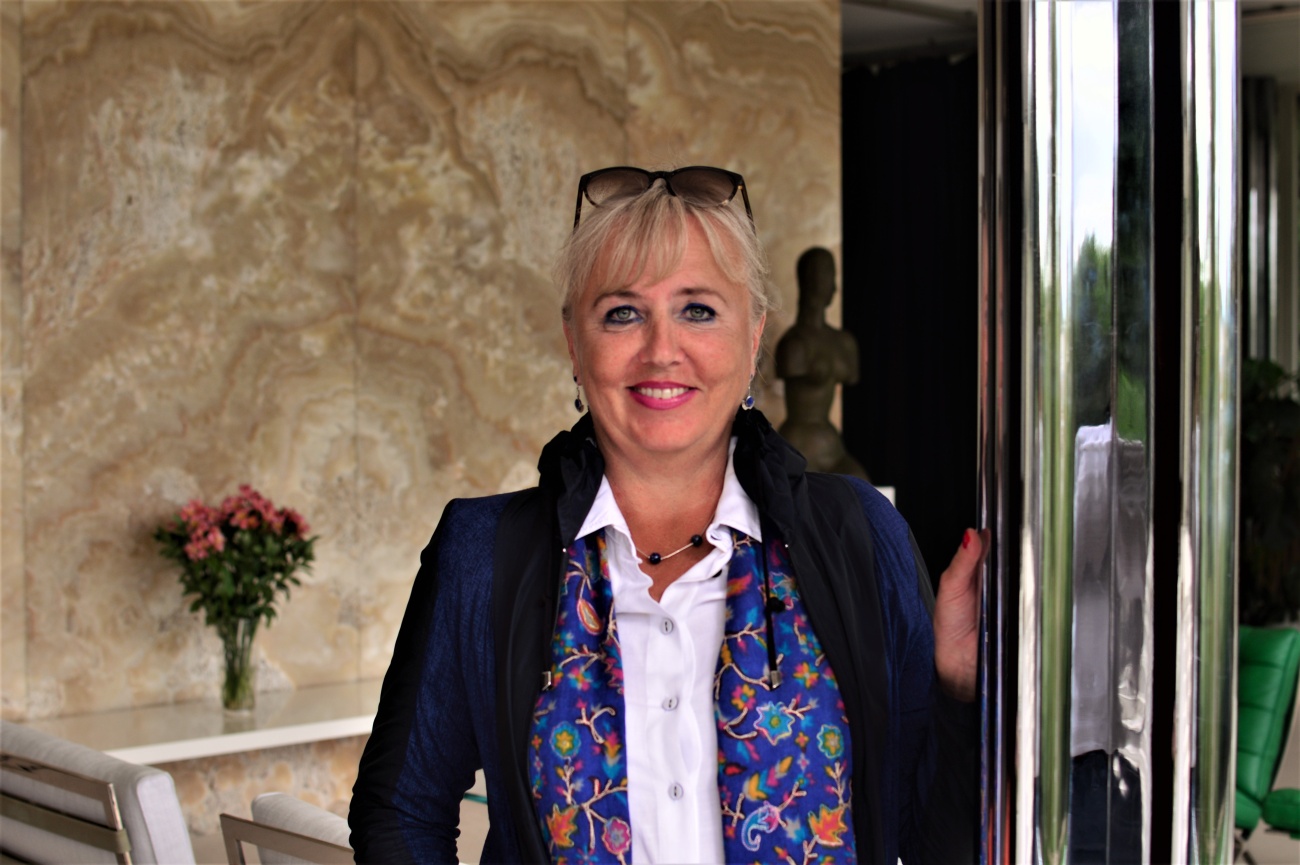
It has been 25 years since the Tugendhat Villa was inscribed on the UNESCO World Heritage List. On this occasion, we talked with the head of the Tugendhat Villa, Ing. arch. Iveta Černá
 |
The history of the Tugendhat Villa is a mosaic full of stories; which one is your favorite?
I love authentic memory sources – interviews, photographs, plans, and real source materials, that is, "stories" that truthfully and scientifically depict the villa. For example, the lecture by Greta Tugendhat from 1969, which she delivered at the House of Arts in Brno as part of an exhibition dedicated to the work of Ludwig Mies van der Rohe, is invaluable. Her "story" goes back to the time of the building's creation, describing repeated meetings with Mies and the respect the Tugendhat couple had for the architect, whom they call a genius. The snippets from the family atmosphere describing the happy, but unfortunately only eight years lasting family life in the house are also deeply emotional. Greta first wrote the text in German, then translated it into Czech herself and presented it in Czech as well. Equally surprising is the interview with the ninety-year-old Karel Haimann from 1985, who worked in his youth for the Berlin company Johann B Bacon, which advertised itself as a "factory for central heating, ventilation, and humidity control (air conditioning)." In his "story," even with a significant time distance, the meeting with Fritz Tugendhat resonates, as he meticulously controlled the technical implementation of heating devices, but also with his contemporaries, architect Ernst Wiesner, the Eisler brothers, Bohuslav Fuchs.
A separate series of "stories" comes from Mies's original planning documentation. It deserves admiration for its scope, detail, and precision. I admire not only that which is stored in the depositary of the Museum of the City of Brno, but especially that which is preserved by the Museum of Modern Art in New York.
What is your favorite place in the villa?
I cannot say that I have one preferred spot. What I love about the house is the changing atmosphere over time, whether daily or seasonally. The interior, thanks to the large windows, intensely reacts to the surrounding garden and the view of the city. Seeing a summer storm or quiet snowfall from the glass room is a very strong experience. You are simply a part of the surroundings, even when you are inside. In contrast, being in the technical part of the house gives you a feeling that you are in the hold of a historic ocean ship with its sophisticated and timeless air-conditioning technologies, air filters, Strebel boilers, elevators – not only for food but also for ash. The Tugendhat Villa has the image of an unattainable icon; does it have any weaknesses? Has something aged in such a way that it would be bothersome today?
The Tugendhat Villa was not an experimental building, but a number of unusual, then modern and progressive, technologies and materials were used here, including a steel skeletal supporting structure with cross-section columns. Today, the house is highly valued for the high degree of originality that has been preserved in the precisely and exemplary conducted heritage restoration from 2010 to 2012. This, however, entails a commitment to continuous maintenance, frequent repairs, and restoration interventions. We also perceive a slight user discomfort caused, for example, by the simple glazing of all the windows. So far, we have successfully managed to extend the lifespan of the material substance of the house. However, this will not last forever, and some aging materials have already been replaced, such as the roof insulation.The villa is presented as the pinnacle of modernism, which discarded decoration from the facade, yet during the celebrations, you will project something onto it using video mapping. Can you share what roughly? What will be part of the celebrations?
The highlight of the year-round celebrations is the August event Light Up Tugendhat. For three days and nights, this space will transform into a place full of art and creativity. During the day, visitors can look forward to a kinetic and mirror installation, a musical program organized by the Music Marathon, and accompanying activities in the individual villas. Every evening at nine o'clock, the gardens will be illuminated with a light installation, laser show, and video mapping on the facades of all three villas: Tugendhat, Löw-Beer, and the Arnold Villa.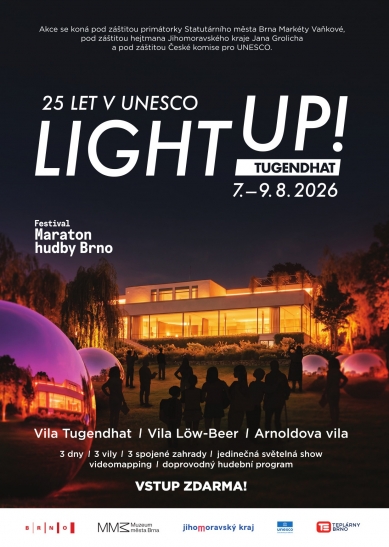
The English translation is powered by AI tool. Switch to Czech to view the original text source.
0 comments
add comment