
Semler Residence in Plzeň represents Japanese interwar architecture
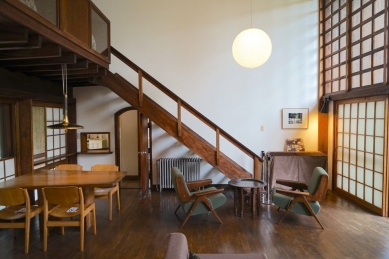
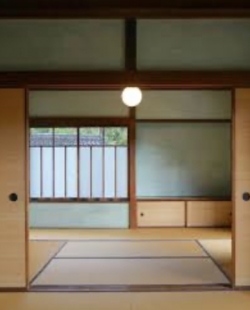
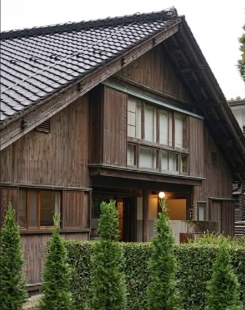
Plzeň – A new exhibition at the Semler Residence in Plzeň reveals the form of Japanese modernist architecture between the world wars and its connection to European and American avant-garde movements. The exhibition titled "At the Crossroads: Interwar Architecture in Japan" features light wooden constructions and traditional Japanese paper. It builds on the long-term research of Japanese architecture by curator Adam Štech. It is accessible for free in the community hall of the residence until November 1, said Kateřina Štulc Modrá, spokeswoman for the West Bohemian Gallery in Plzeň, under which the Semler Residence falls.
The exhibition focuses on interwar residential architecture, in which domestic building traditions intertwined with new architectural trends coming from Europe and the United States. It presents works of Japanese architects as well as the influence of foreign figures, including one of the most influential American architects of the 20th century, Frank Lloyd Wright, and the French designer of the Art Deco period, Henri Rapin. In contrast, it intentionally does not focus on significant Czech architects Jan Letzel and Antonín Raymond, whose activities in Japan have already been adequately covered in the Czech Republic, according to the authors.
"Interwar Japan was literally at a crossroads between its own tradition and the fascination with Western modernity. This very dynamic and tension creates extraordinarily inspiring architectural results, which we aimed to present in all their diversity,” said Štěch. The houses highlighted in the exhibition are, according to him, very different examples of Japanese modernity, where the metaphorical clash and synthesis of Eastern and Western influences manifest in various ways.
The historical background of the exhibition shows the fundamental transformations of Japanese society from the Meiji period, when the country underwent intense modernization, to the era of Emperor Hirohito, who ascended to the throne in 1926 and ruled until 1989. Thus, according to Štěch, interwar architecture emerged in the context of rapid Westernization, societal changes, and the development between modernization efforts and imperial politics.
The exhibition made its way to Plzeň from the Winternitz Villa in Prague, where it was held earlier this year. For the Semler Residence, the creative team of the group Okolo expanded it with panels dedicated to public buildings and residential architecture of early modernism and Art Deco.
The exhibition focuses on interwar residential architecture, in which domestic building traditions intertwined with new architectural trends coming from Europe and the United States. It presents works of Japanese architects as well as the influence of foreign figures, including one of the most influential American architects of the 20th century, Frank Lloyd Wright, and the French designer of the Art Deco period, Henri Rapin. In contrast, it intentionally does not focus on significant Czech architects Jan Letzel and Antonín Raymond, whose activities in Japan have already been adequately covered in the Czech Republic, according to the authors.
"Interwar Japan was literally at a crossroads between its own tradition and the fascination with Western modernity. This very dynamic and tension creates extraordinarily inspiring architectural results, which we aimed to present in all their diversity,” said Štěch. The houses highlighted in the exhibition are, according to him, very different examples of Japanese modernity, where the metaphorical clash and synthesis of Eastern and Western influences manifest in various ways.
The historical background of the exhibition shows the fundamental transformations of Japanese society from the Meiji period, when the country underwent intense modernization, to the era of Emperor Hirohito, who ascended to the throne in 1926 and ruled until 1989. Thus, according to Štěch, interwar architecture emerged in the context of rapid Westernization, societal changes, and the development between modernization efforts and imperial politics.
The exhibition made its way to Plzeň from the Winternitz Villa in Prague, where it was held earlier this year. For the Semler Residence, the creative team of the group Okolo expanded it with panels dedicated to public buildings and residential architecture of early modernism and Art Deco.
The English translation is powered by AI tool. Switch to Czech to view the original text source.
0 comments
add comment
Related articles
0
24.03.2023 | The Semler Residence has been accepted into the international network of Iconic Houses
0
19.09.2022 | In Pilsen, Semler's residence designed by architect Loose will reopen after renovation
0
16.03.2022 | Plzeňský region wants to help with 5 million CZK for the additional equipment of the Semler Residence