Glass partitions Digero – industrial spirit in a modern guise

27.04.2026 11:50
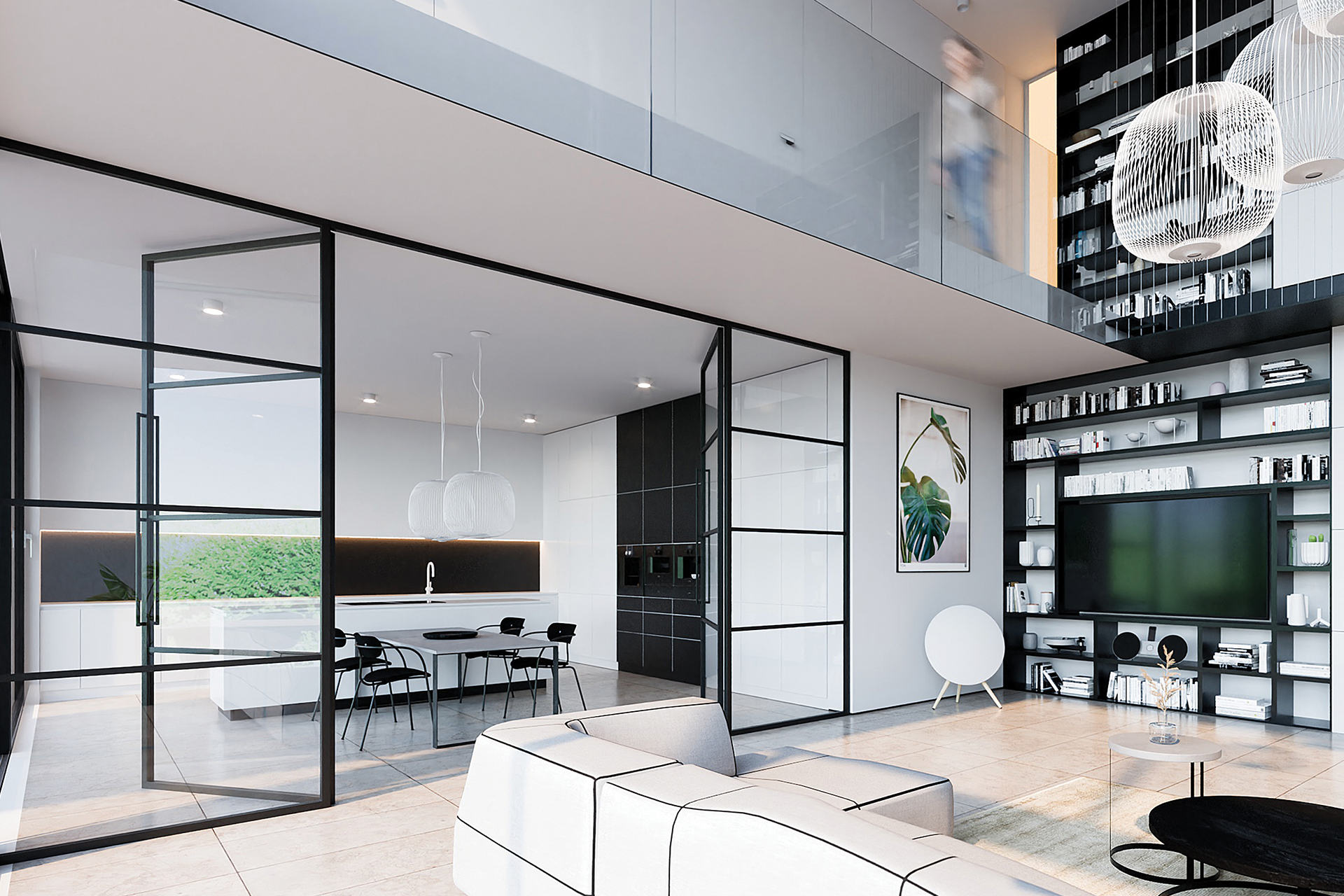 |
Modern architecture is permeated by a constant dialogue between the need for openness and the necessity of functional division. Glass partitions from DORSIS do not just enter this discourse as a dividing element, but as a sophisticated tool that combines minimalism with authentic industrial aesthetics while maintaining the overall luminosity of the interior.
"Glass partitions embody the authenticity and integrity of materials and strive to create maximum aesthetic arrangement and clarity within the interior," explains Jan Krejčí, managing director of Dorsis. "With Digero partitions, it is really easy to adapt the open concept of living space to the needs of a specific project and create elegantly balanced zones with their own distinct character."
 |
Geometry as an Individual Manifest
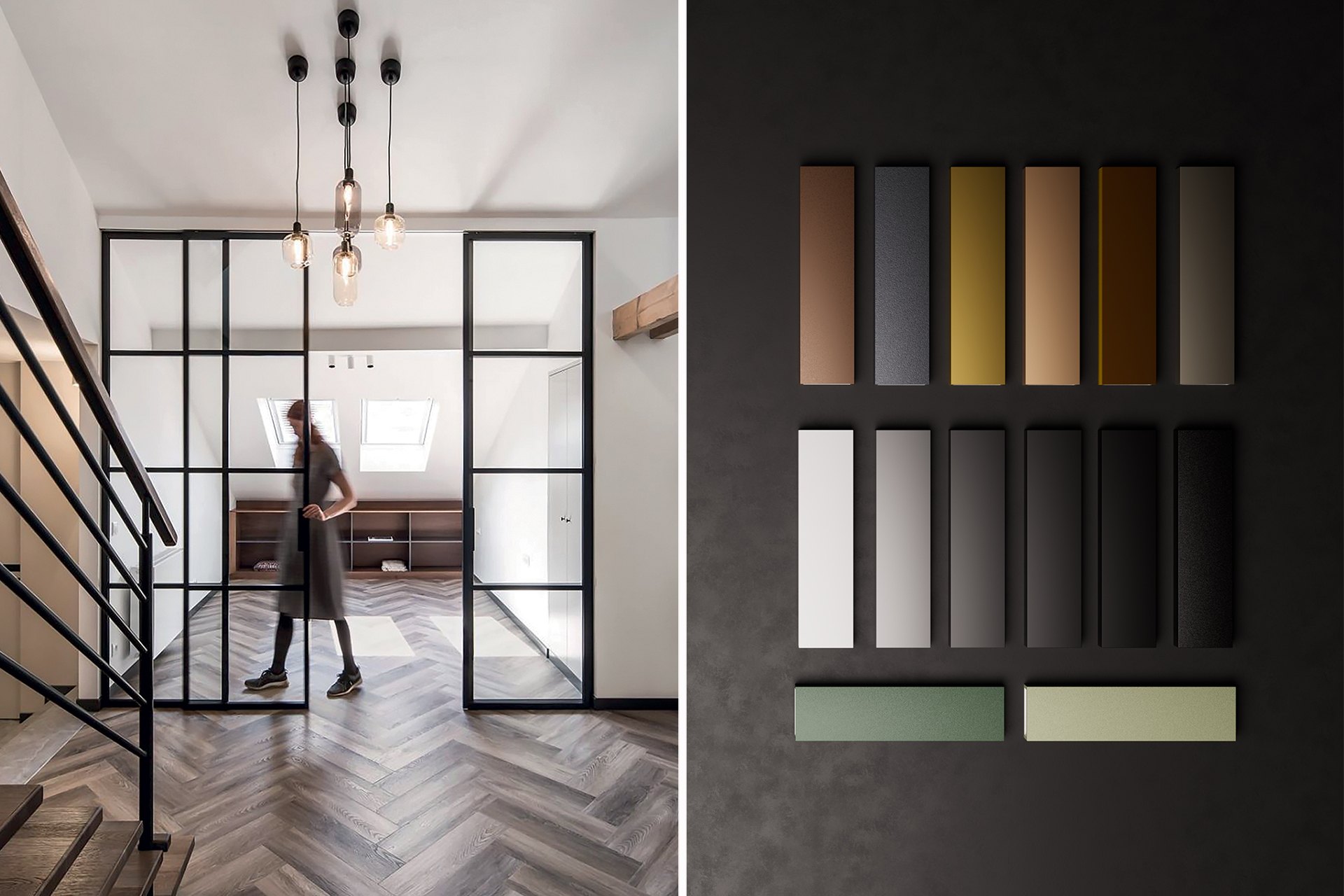
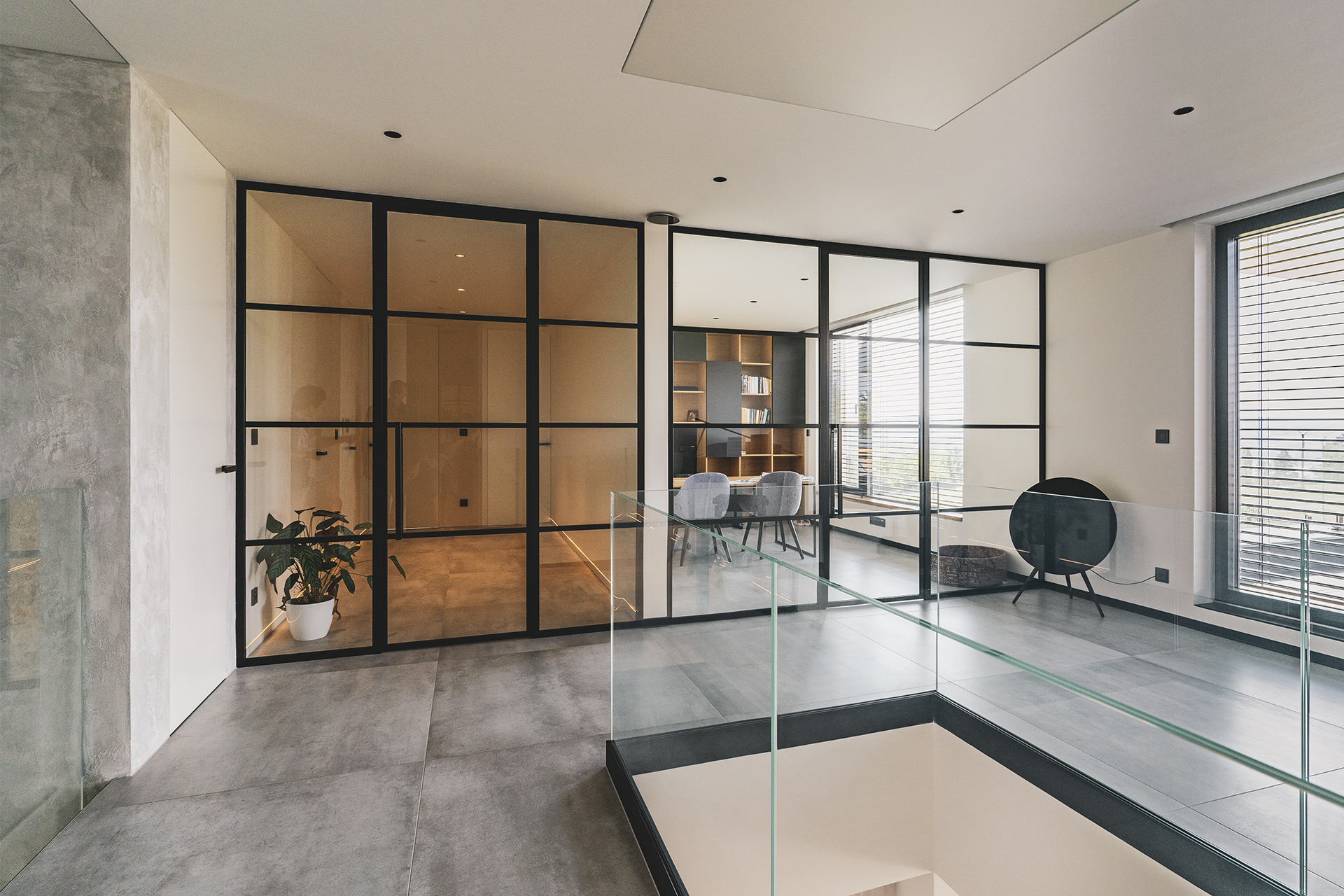
For an architect, the Digero partition is not just a catalog product, but a canvas for individual composition. The division of glass panes is completely variable – from large-format surfaces for pure minimalist interiors to a distinctly rhythmized arrangement that emphasizes the character of reconstructions or loft apartments.The color solution of the aluminum frame can be customized to a specific aesthetic concept – from neutral tones to bold accents across the entire RAL spectrum, with profiles available in thicknesses of 10, 15, and 30 mm.
 |
Technical Parameters in the Hands of the Creator
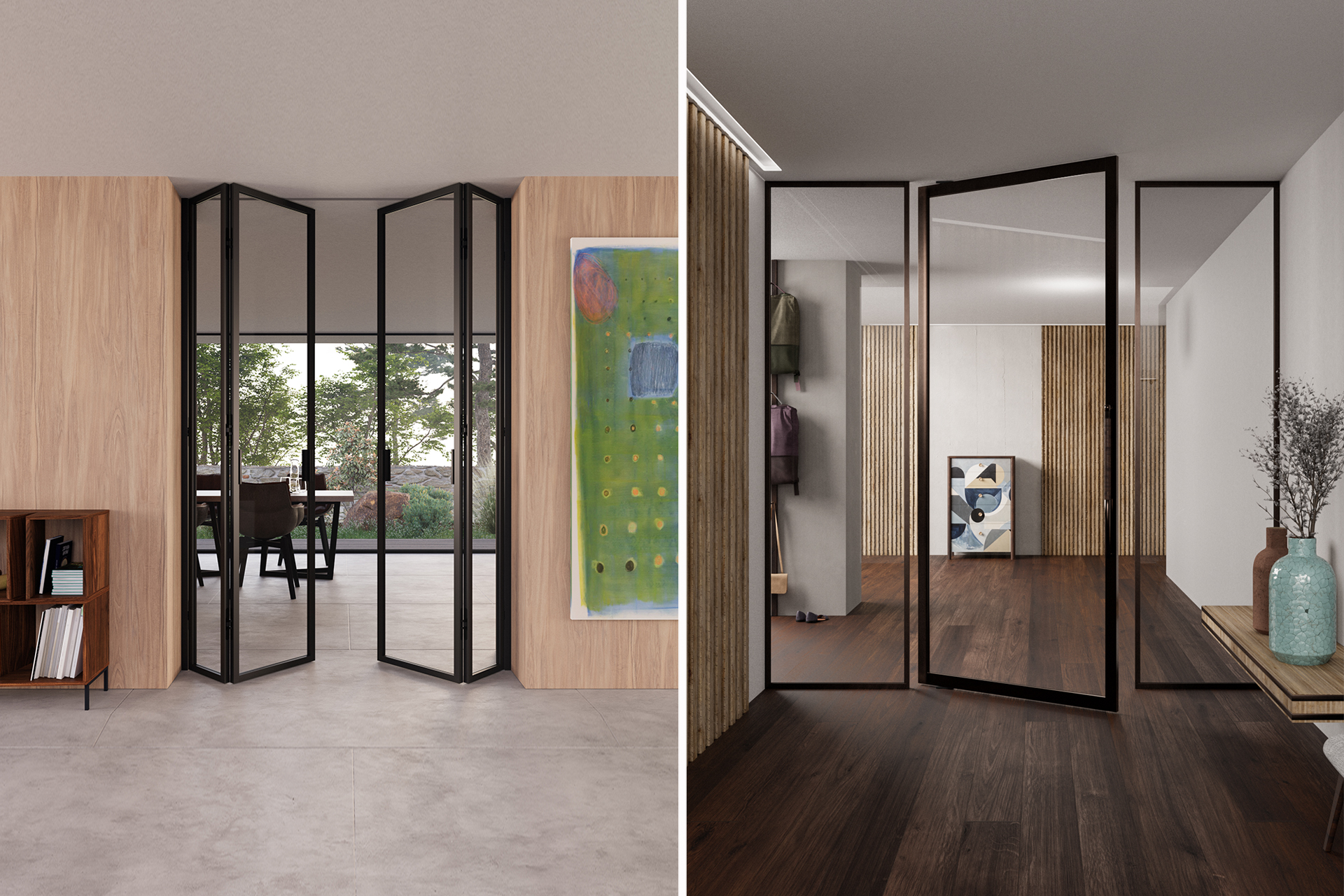
A strong point of the Digero partition is its dimensional variability – it offers practically unlimited width and a maximum height of 3000 mm, allowing the partition to connect directly to the ceiling plane, thus creating a compact architectural whole.A key aspect for spatial ergonomics is the choice of door leaves – options include sliding, pivot, and classic hinged varieties, allowing for responses to spatial possibilities and operational needs. Smaller layouts will appreciate the compact solutions, while in generous interiors, doors can serve as a prominent architectural element.
 |
Programmatic Use: From Acoustics to Intimacy
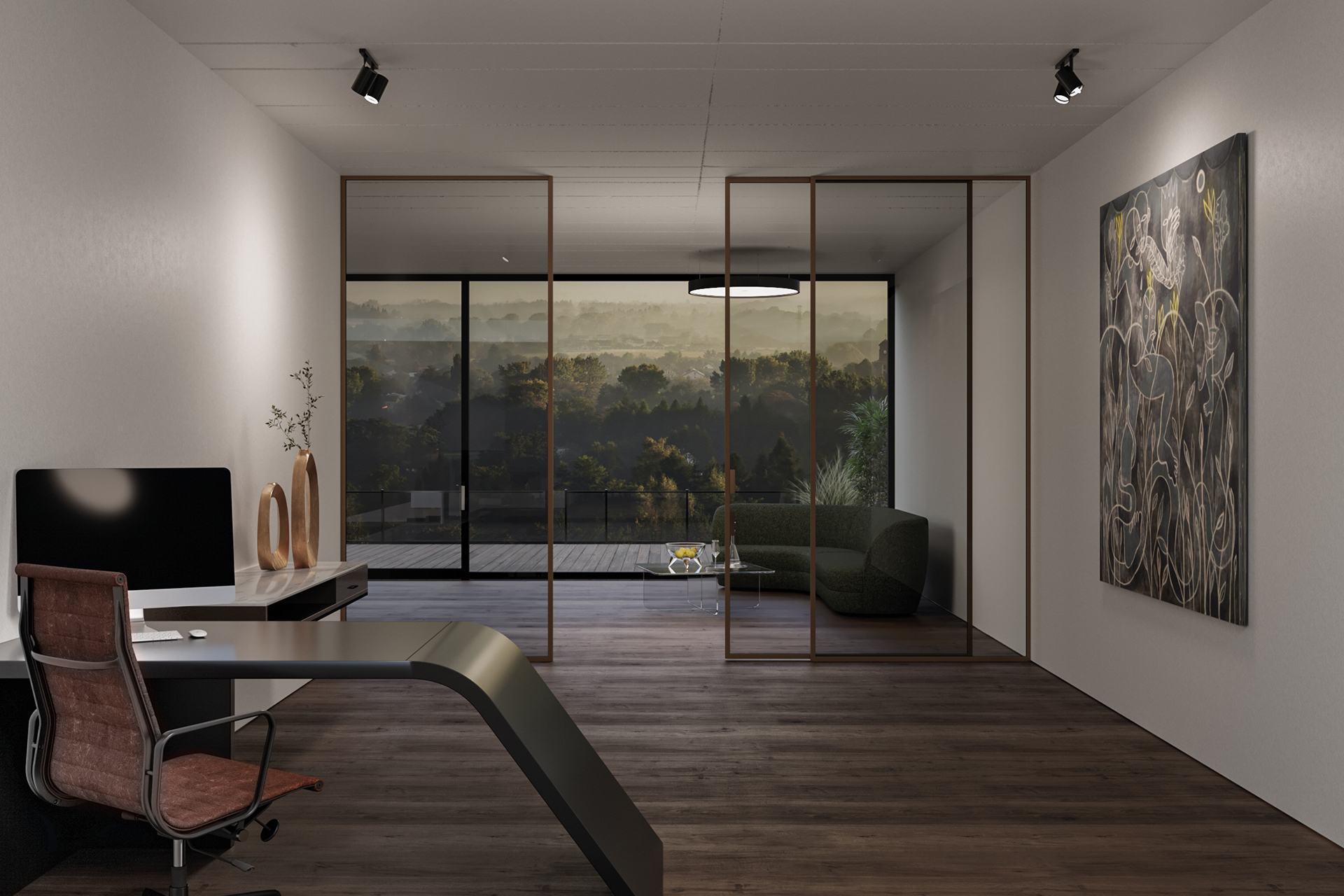
Glass partitions address not only the visual aspect but also respond to specific functional requirements of modern operations:- Acoustic Barrier in Kitchens: Effectively eliminates the transmission of odors and noise to living zones without compromising the visual continuity of the space.
- Work Enclaves: Creates quiet zones for home offices that nevertheless maintain essential contact with the surrounding activity.
- A Play with Intimacy: In bedrooms or bathrooms, one can work with tinted, smoky, or frosted glass, which offers privacy while also supporting the overall luminosity of the space.
 |
Rawness and Truthfulness of Material
The industrial character is not perceived as a decoration but as an acknowledgment of the true nature of metal and glass. It refers to the architecture of manufacturing halls, where the structures and surfaces bear traces of time and function."It is precisely the rawness of industrial design that is transforming today into residential and working spaces, becoming a conscious design decision," says Jan Krejčí from Dorsis. "The Digero partitions develop this approach through subtle lines, precise processing, and technical solutions that reflect current demands for variability and aesthetics."
Thus, Digero represents not just a construction element but a comprehensive architectural tool. It allows for redefining open layouts, working with light and privacy, while also creating aesthetically balanced interiors that respond to the individual needs of each project.
DESIGN CATALOG DIGERO VIEW HERE
www.dorsis.czThe English translation is powered by AI tool. Switch to Czech to view the original text source.
0 comments
add comment