
Floor heating in historical buildings

Publisher
Tisková zpráva
25.02.2026 21:30
Tisková zpráva
25.02.2026 21:30
 |
Designing a heating system in listed buildings places extraordinary demands on the designer. It is essential to balance the requirements for thermal comfort, energy efficiency, the protection of historical structures, and respect for the architectural value of the building. Underfloor heating in this context is not only an aesthetic solution but primarily a technically advanced low-temperature system with a wide range of operational advantages.
Hidden system that does not obstruct
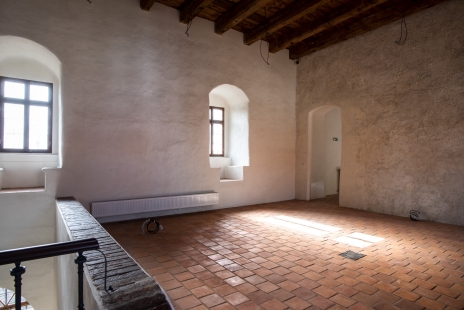
From an operational-technical perspective, a key fact is that the heating system is fully integrated into the floor structure, and thus does not affect the authenticity of historical constructions. Therefore, there is no installation of heating bodies, their anchoring into the masonry, or conduits running along the walls. This is a significant and truly unmatched advantage. The designer can anticipate minimizing interventions in listed structures, thereby reducing the risk of damaging historical artifacts (plasters, paintings, etc.). The absence of radiators also simplifies the architectural solution of the space, including details. A typical example is the installation of underfloor heating in the Museum of the Middle Pootaví at the castle in Strakonice, where over 5 kilometers of RAUTHERM piping were installed in all rooms combined.
Thermal-technical advantages of the radiant system
Another benefit is the low-temperature radiation mode that underfloor heating offers. The result is a uniform temperature field in both horizontal and vertical directions and a lower temperature gradient between the floor and the ceiling. This uniformity has a fundamentally positive effect on historical constructions, as it prevents thermal shocks. This fact is certainly appreciated not only by conservationists but also by visitors and operators, as the system creates a more natural impression. At the system's entry point, significantly lower heating water temperatures are used (around 30-35 °C), which significantly affects operating costs compared to standard systems. Additionally, in uniformly heated spaces, it is possible to work with lower interior temperatures (around 1-2 °C lower), as the perceived comfort is equivalent to that of standard systems.
Construction compositions and height restrictions
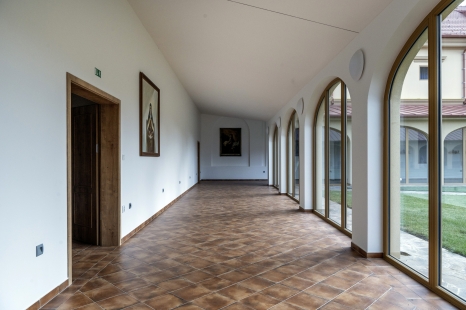
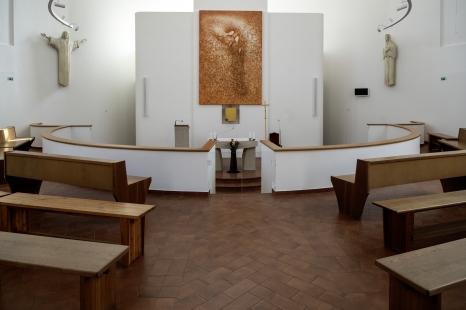
From the design perspective, a key parameter is the composition of the floor and its interaction with the original structure. Limited structural height of the floor and the requirement to preserve the original floors (tiles, stone elements, parquet) are therefore often addressed. In higher floors, the static load-bearing capacity of ceiling structures also plays a role. However, the designer has the option to choose from a range of REHAU systems that will match the actual situation. The most commonly used system is the so-called wet method based on the fixation of pipes on the Varionova system board with an anhydrite or cement screed – as in the case of the conversion of a former farmhouse into a monastery in the village of Drasty. Here, RAUTHERM 17 × 2.0 m pipes were used. However, other wet systems as well as dry methods with various types of pipe fixation are also available. There are even systems with minimized construction height – RAUTHERM SPEED plus (construction height 41 mm) or RAUTHERM SPEED PLUS RENOVA. Alternatively, there is a completely dry system with a laying system board of VA 12.5 mm. The choice must always be based on a detailed construction-technical survey. In listed buildings, a lightweight dry composition with lower loading on the ceiling and the possibility of reversible intervention is often more suitable.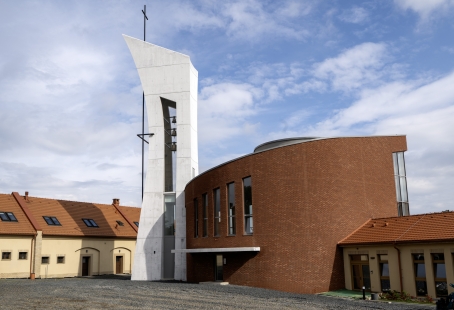
Regulation and zoning in objects with variable usage
Historic buildings – castles, monasteries, museums – often have irregular usage. From an energy efficiency perspective, high-quality regulation is therefore crucial. Modern systems allow for zone regulation according to functional units, time program control, remote monitoring, and optimization of operation. In exhibition spaces, a stable temperature regime with minimal fluctuations can be set. In administrative or accommodation areas, it is possible to work with reduction modes. In new constructions within a historic context, such as the Drasty monastery, underfloor heating is fully integrated into the design solution from the beginning. This allows for optimization of the structure, heat source, and regulation as a single functional unit without compromises.Collaboration with heritage conservation
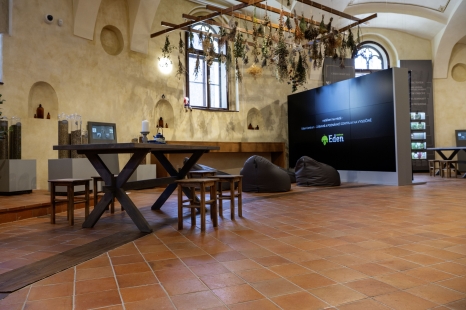
From practice, it follows that heritage conservation authorities do not perceive underfloor heating as a problematic solution, provided that no irreversible damage occurs to historical structures and the original flooring is respected or professionally maintained. Gradual temperature increase and smaller temperature fluctuations contribute to a more stable internal environment, suitable for wood, plasters, frescoes, and historical furnishings. An example is the information center at the Church of Our Lady Victorious and Saint Anthony of Padua, known as the Church of the Infant Jesus of Prague. The advantage of the system is always its "invisibility" and the absence of visual impact on the historical space.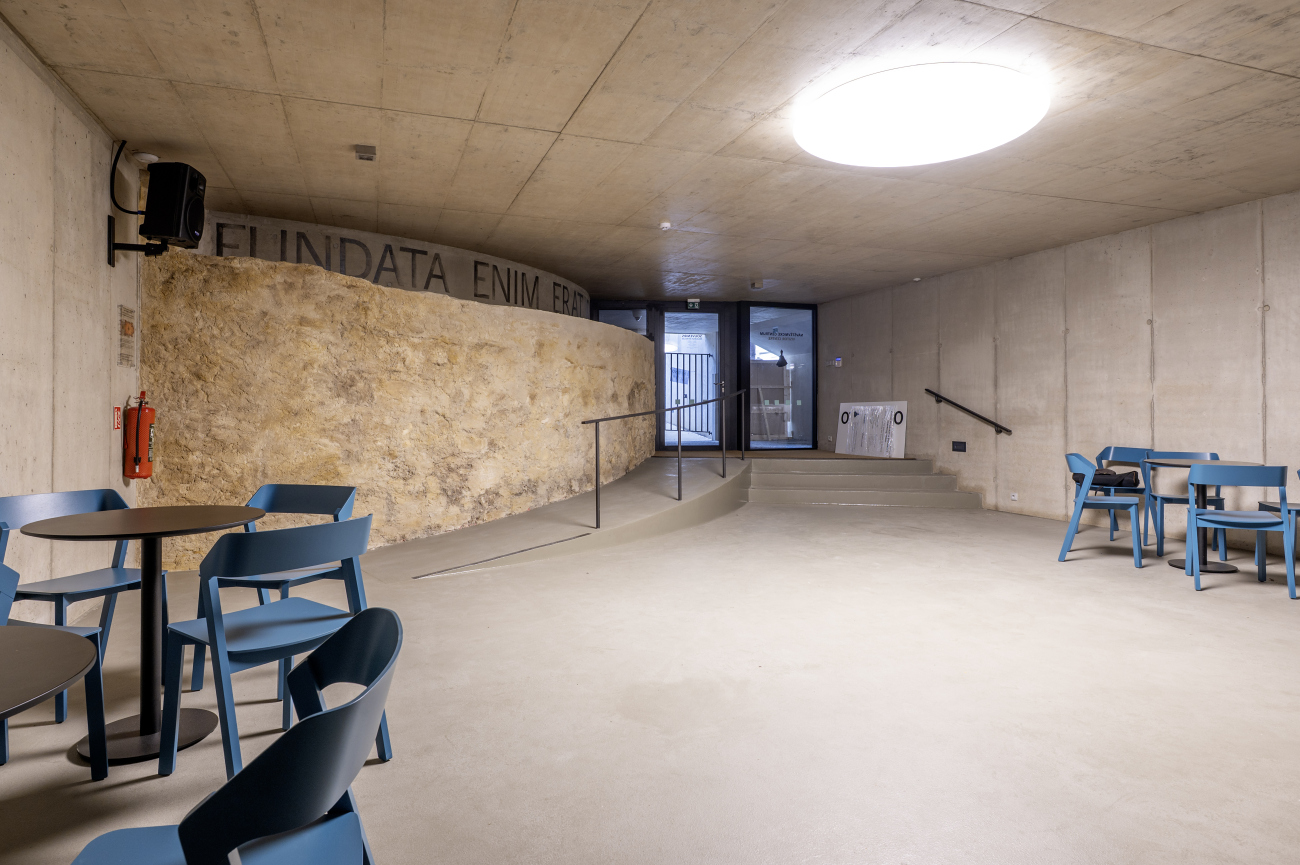 |
| Information center at the Church of Our Lady Victorious and Saint Anthony of Padua – RAUTHERM + NEA SMART 2.0 regulation |
www.rehau.cz
The English translation is powered by AI tool. Switch to Czech to view the original text source.
0 comments
add comment