
40 years ago, a tennis complex was opened in Prague on Štvanice
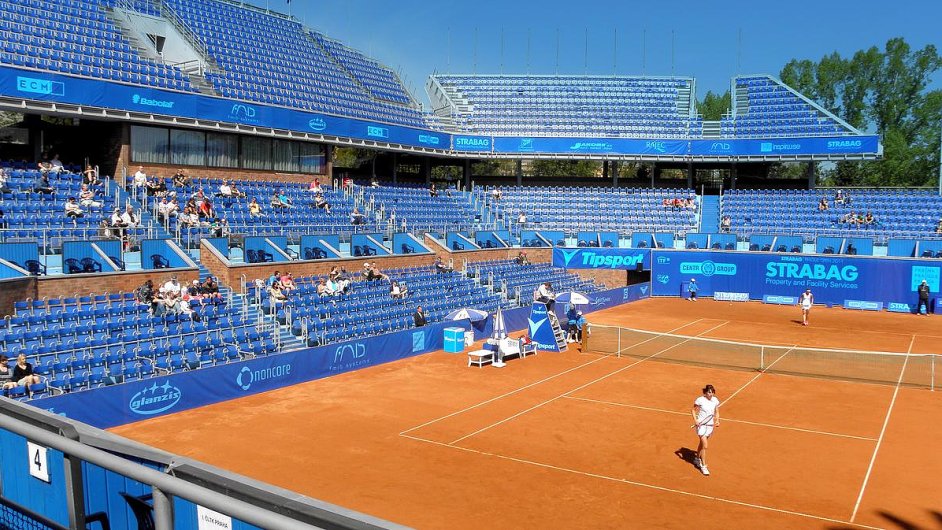 |
The original dominant feature of the tennis complex in Štvanice was a wooden central court from 1927, which had an unmistakable atmosphere with its temporarily erected stands. The beginning of the end for this traditional tennis oasis came in 1983, when, alongside the construction of the metro under the Vltava, the demolition of the old complex began. In its place, a new modern clay court with a capacity of 8,000 spectators was built in 1986. Later, the clay was replaced with a hard surface. The construction of the complex also led to the closure of the prestigious Štvanice maternity hospital.
The new look of Štvanice was presented in 1986 during the Federation Cup, and right at its premiere, the stadium experienced some of the most emotional moments in its history. Czechoslovakia lost to the USA 0:3, but it was the return of Martina Navrátilová that left a lasting impression, as she appeared on courts in her home country for the first time since her emigration as a representative of the USA. In the following years, several editions of the Grand Prix and ATP Tour tournaments, as well as Davis Cup and Fed Cup matches were held here, attracting many players from the top ranks of the world rankings.
Currently, according to the 1. ČLTK club, there are 13 outdoor clay courts, three hard courts, and two courts in a solid hall located at Štvanice. The central court belongs to the Czech Tennis Association, while the other courts are owned by the 1. ČLTK, whose honorary members include Wimbledon winner Markéta Vondroušová, former president Václav Klaus, and several Grand Slam winners Jan Kodeš and Jan Drobný. Kodeš, for example, also participated as a trained engineer in the construction of the tennis complex in Štvanice. The complex also includes a restaurant, gym, offices, and several multifunctional sports facilities.
The complex is accessible from the Hlávků Bridge or from Karlín and Holešovice via the newly built Štvanická footbridge, opened in July 2023. A major blow to the complex came from the floods in August 2002, which completely devastated it. For example, there was over four meters of water in the tennis hall. The damage amounted to 100 to 120 million crowns.
In December 2024, the chairman of the tennis association, Jakub Kotrba, stated that the association plans to establish a Hall of Fame in the complex. According to Kotrba, the first inductees should include Martina Navrátilová, Ivan Lendl, Jan Kodeš, Petr Korda, Hana Mandlíková, Petra Kvitová, Barbora Krejčíková, Markéta Vondroušová, and in memoriam Jana Novotná with Jaroslav Drobný.
For this July's WTA tournament, the tennis court at Štvanice will have renovated stands and a new surface. The renovation will be funded from the rentals paid by the organizers of previous events to the association. Štvanice will host, among other events, the World Cup in sport climbing and an MMA tournament. The WTA tournament will return to Štvanice for the first time since 2009, where it was last played on clay and will now be on a hard surface.
Štvanice is a Vltava island in Prague between Karlín and Holešovice. Originally, there was not a single island in the area, but a system of islands, islets, and river branches known as the Great Venice. The other islands disappeared during the regulation of the Vltava in the first third of the 20th century. The island got its name from the controversial and later banned hunting of dogs for game, bears, boars, or deer.
The English translation is powered by AI tool. Switch to Czech to view the original text source.
0 comments
add comment
Related articles
0
30.05.2011 | Due to the demolition of Štvanice, councilor Udženija faces a criminal complaint
1
28.05.2011 | In Prague, the demolition of the ice rink in Štvanice began today
0
28.05.2011 | The winter stadium on Štvanice has served sports and entertainment since 1932
1
13.05.2011 | The fate of the winter stadium on Štvanice is still unclear
0
14.06.2006 | Twenty years ago, the most modern tennis complex was opened in Štvanice